Method for testing microcystin (MC) toxin in M1rA gene cDNA sequence, deduced amino acid and water body
What is AI technical title?
AI technical title is built by Patsnap AI team. It summarizes the technical point description of the patent document.
A technology of microcystin and detection method, applied in the field of environmental detection, can solve the problems of large workload, high cost, inability to completely remove MC and the like
Inactive Publication Date: 2010-07-14
JINAN UNIVERSITY
View PDF0 Cites 6 Cited by
Summary
Abstract
Description
Claims
Application Information
AI Technical Summary
This helps you quickly interpret patents by identifying the three key elements:
Problems solved by technology
Method used
Benefits of technology
Problems solved by technology
These degradation technologies have many problems such as high cost, heavy workload, and inability to completely remove MC.
Method used
the structure of the environmentally friendly knitted fabric provided by the present invention; figure 2 Flow chart of the yarn wrapping machine for environmentally friendly knitted fabrics and storage devices; image 3 Is the parameter map of the yarn covering machine
View more
Image
Smart Image Click on the blue labels to locate them in the text.
Viewing Examples
Smart Image
Click on the blue label to locate the original text in one second.
Reading with bidirectional positioning of images and text.
Smart Image
Examples
Experimental program
Comparison scheme
Effect test
Embodiment 1
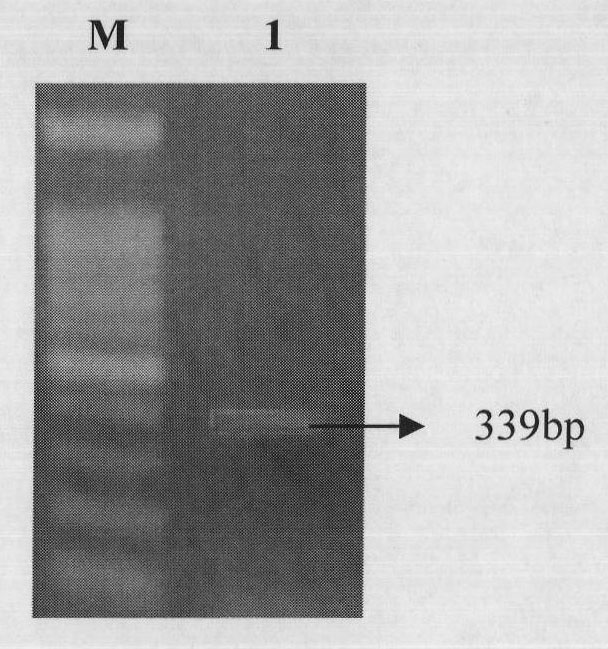
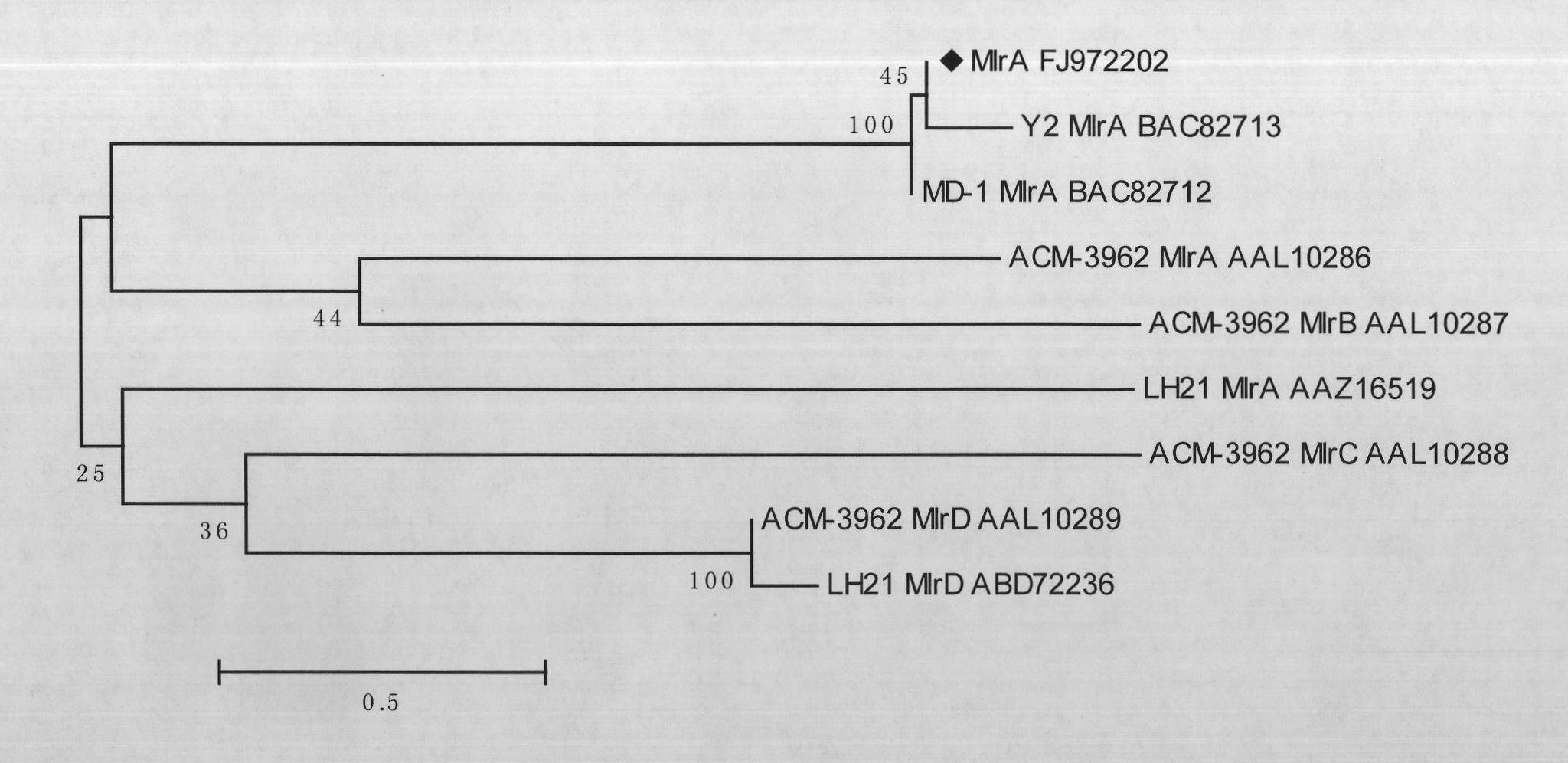
[0045] Example 1 Obtaining of cDNA sequence of MlrA gene and its encoded amino acid sequence
[0047] The water samples used in the experiment were collected from Xiangang Reservoir, Huizhou City, Guangdong Province, Minghu Lake, Jinan University, Guangzhou City, and Guangdong Tilapia Breeding Farm, and fish gut samples were collected from Xiangang Reservoir, Huizhou City, Guangdong Province.
[0048] Water samples and fish intestinal samples were collected in March, April, May, July, August, October, November and December, covering four seasons of the year.
[0049] Water samples were collected from surface water bodies at various locations with sampling bottles.
[0050] The fish intestines were killed on the spot, and the hindguts (about 10 cm) were taken, and the excreta in the intestines were picked out and mixed with 15 ml of distilled water to obtain fish intestine samples.
[0051] After mixing the above water sample and f...
Embodiment 2
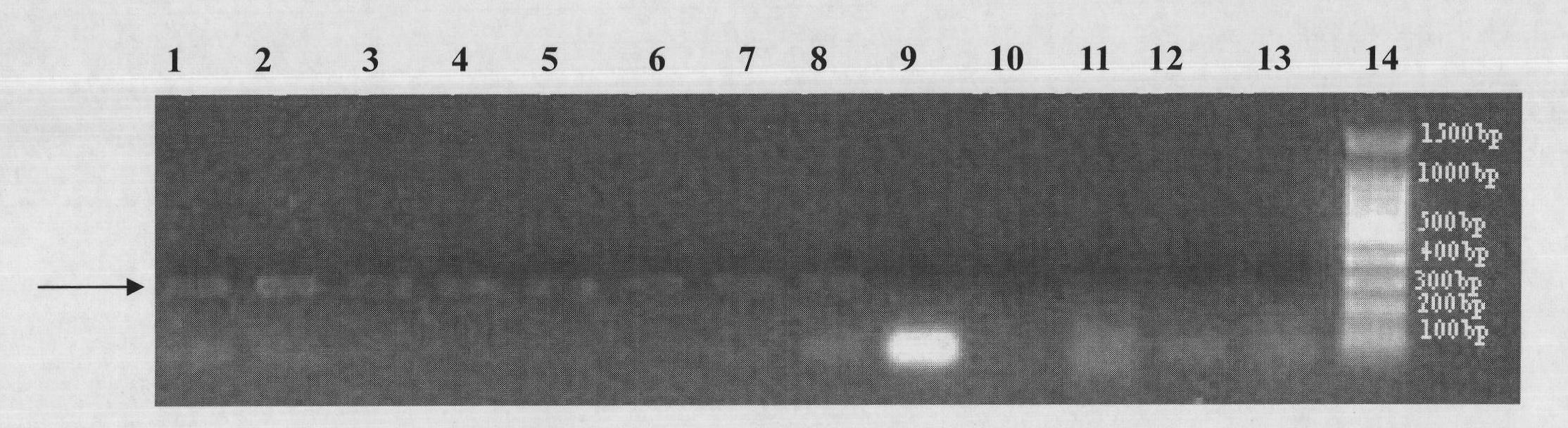
[0069] Example 2 MlrA detection results in water bodies and fish bodies in different seasons
[0071] The water samples used in the experiment were collected from Xiangang Reservoir, Huizhou City, Guangdong Province, Minghu Lake, Jinan University, Guangzhou City, and Guangdong Tilapia Breeding Farm, and fish gut samples were collected from Xiangang Reservoir, Huizhou City, Guangdong Province.
[0072] In March, April, May, July, August, October, November and December, water samples and fish intestinal samples were collected respectively.
[0073] Water samples were collected from surface water bodies at various locations with sampling bottles.
[0074] The fish gut samples were killed on the spot, and the hindguts (about 10 cm) were taken, and the excreta in the guts were picked out and mixed with 15 ml of distilled water to obtain the fish gut samples.
[0075] After the water samples and fish intestinal samples in the water envi...
the structure of the environmentally friendly knitted fabric provided by the present invention; figure 2 Flow chart of the yarn wrapping machine for environmentally friendly knitted fabrics and storage devices; image 3 Is the parameter map of the yarn covering machine
Login to View More
PUM
Login to View More
Abstract
The invention provides a method for testing microcystin (MC) toxin in an M1rA gene cDNA sequence, a deduced amino acid and a water body. In the M1rA gene cDNA sequence, the nucleotide sequence is as shown in SEQ ID No: 1, and the deduced amino acid sequence is as shown in SEQ ID NO: 3. By the research of water environment samples in different seasons under different environments, the invention finds that the existence of the M1rA gene cDNA sequences in the surface water body microorganism and the fish intestinal canal has the certain relationship with the content of the MC toxin in the water body, thus a segment of new M1rA gene cDNA sequence and the deduced amino acid sequence thereof are finally obtained by selecting and searching primer designs, polymerasechain reaction (PCR) amplification reaction conditions and reaction systems, and the MC toxin in the water body is tested by combining the characteristics of uniqueness and specificity of the M1rA gene cDNA sequence on the MC toxin and utilizing the simple PCR amplification technology.
Description
technical field [0001] The invention relates to the technical field of environmental detection, in particular to the detection of microcystins in the environment by biological methods, in particular to the cDNA sequence of the MlrA gene, the coded amino acid and the detection method of the microcystins in water. Background technique [0002] Microcystin (MC) is a type of algal toxin that occurs most frequently in cyanobacterial blooms and causes the most serious harm. It can cause poisoning and death of wild animals, livestock, poultry, etc., and cause human liver damage and high incidence of liver cancer. . More than 60 isomers of this toxin have been identified, the most common of which are MC-LR, MC-RR, and MC-YR. [0003] Regarding the biodegradation of MC, Bourne et al. believed that the degradation of MC-LR was at least caused by three hydrolytic enzymes in the cell. Bourne et al. (Bourne D G, Riddles P, Jones G J, et al.2001.Characterization of a gene cluster involv...
Claims
the structure of the environmentally friendly knitted fabric provided by the present invention; figure 2 Flow chart of the yarn wrapping machine for environmentally friendly knitted fabrics and storage devices; image 3 Is the parameter map of the yarn covering machine
Login to View More
Application Information
Patent Timeline
Application Date:The date an application was filed.
Publication Date:The date a patent or application was officially published.
First Publication Date:The earliest publication date of a patent with the same application number.
Issue Date:Publication date of the patent grant document.
PCT Entry Date:The Entry date of PCT National Phase.
Estimated Expiry Date:The statutory expiry date of a patent right according to the Patent Law, and it is the longest term of protection that the patent right can achieve without the termination of the patent right due to other reasons(Term extension factor has been taken into account ).
Invalid Date:Actual expiry date is based on effective date or publication date of legal transaction data of invalid patent.



 Login to View More
  Login to View More