
Breeding method of pinctada martensi black-shell strain for sea pearl cultivation
A technology of Pinctada martensii and black shell, applied in the field of breeding of black shell strains of Pinctada martensii, which can solve problems such as confusion, high cost, and unstable inheritance
- Summary
- Abstract
- Description
- Claims
- Application Information
AI Technical Summary
Problems solved by technology
Method used
Image

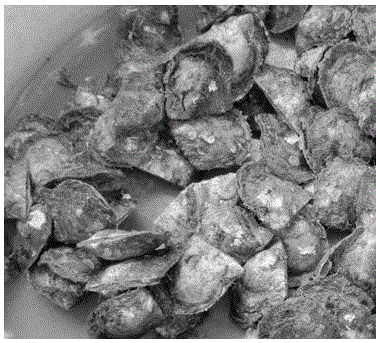
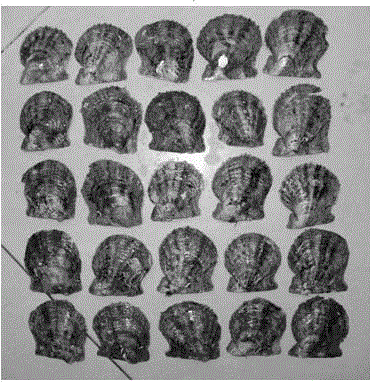
Examples
Embodiment
[0045] 1. Determine breeding goals and programs
[0046] Breeding goal: use black shell color as the genetic marker, and use large shell height, large shell width, large weight, and high survival rate as the breeding objectives to breed obvious morphological characteristics, excellent economic traits, stable genetic performance, and can be used to breed high-yield and high-quality seawater. A new variety of pearl oyster;
[0047] Breeding program: Two geographical populations in China, namely Lingshui wild population in Hainan and Leizhou cultured population in Beibu Gulf, were used to take advantage of the wild population's high heterozygosity and rich diversity and the advantages of the cultured population adapting to the artificial breeding environment. The target traits of the breeding are selected at a certain intensity, and then the F1 generation is cultivated by reciprocal hybridization and self-crossing. By comparing the target traits of the F1 generation, the offsprin...
PUM
 Login to View More
 Abstract
Description
Claims
Application Information
 Login to View More