
A method for quickly predicting the frequency-domain dynamic characteristics of vehicle wiring harness crosstalk
A dynamic characteristic, vehicle-used technology, applied in electromagnetic field characteristics, special data processing applications, instruments, etc.
- Summary
- Abstract
- Description
- Claims
- Application Information
AI Technical Summary
Problems solved by technology
Method used
Image

Examples
Embodiment Construction
[0059] The method for quickly predicting the dynamic characteristics of crosstalk frequency domain of vehicle wiring harness described in the present invention, its specific method is as follows:
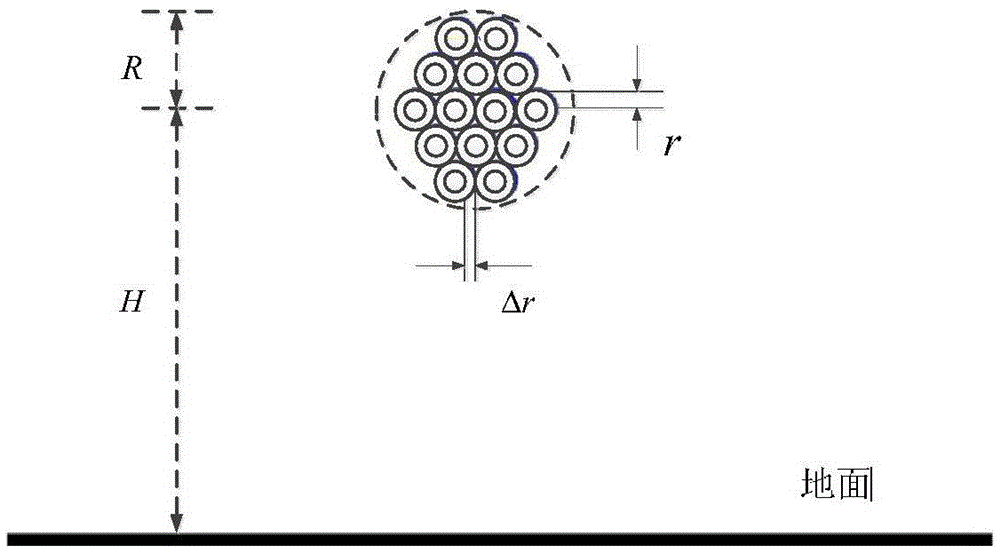
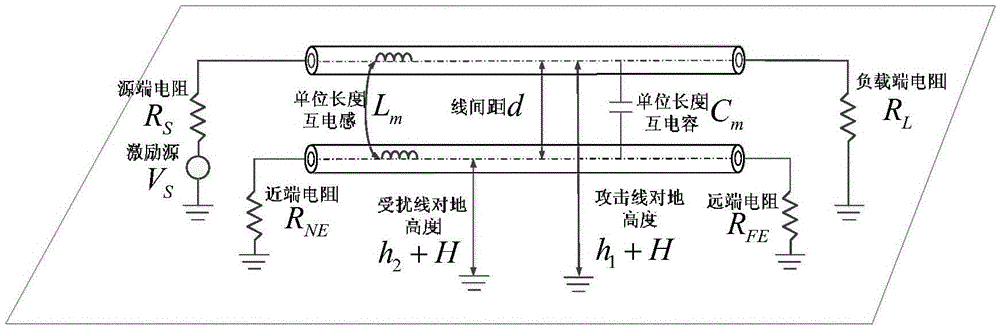
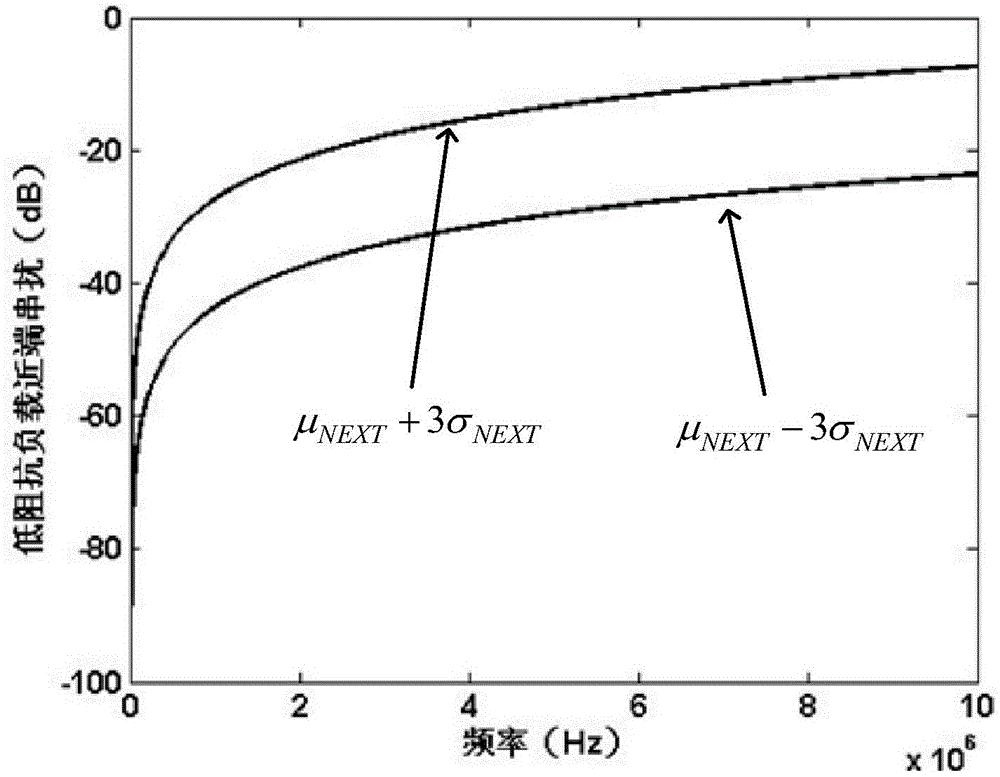
[0060] Step 1: The automotive wiring harness selected in this example complies with the automotive cable standard. It contains 14 wires, the length L=1m, the wire harness radius R=4.1mm, the overall center-to-ground height of the wire harness is H, and the wire material in the wire harness is Copper, insulation layer is PVC (polyvinyl chloride), relative permittivity ε r is 3.0, the radius of the wire is about 1mm, the radius of the conductor (copper) in the wire is r=0.45mm, the thickness of the insulating layer is Δr=0.45mm, and the excitation voltage of the emission line is Vs=1V, and the source impedance and terminal impedance are divided into high impedance and low impedance In two cases, Rs=R L =R NE =R FE = 50Ω and Rs = R L =R NE =R FE =1kΩ, such as figure 1 As shown, ...
PUM
 Login to View More
 Abstract
Description
Claims
Application Information
 Login to View More