A kind of method for acetylene carbonylation to synthesize methyl acrylate

A technology for the synthesis of methyl acrylate, which is applied in chemical instruments and methods, carbon monoxide or formate reaction preparation, organic compound/hydride/coordination complex catalysts, etc., can solve the problem that homogeneous catalysts are difficult to recycle, Affecting industrial applications and other issues

CN105753700BActive Publication Date: 2018-06-08DALIAN INST OF CHEM PHYSICS CHINESE ACAD OF SCI
2 Cites 0 Cited by

Patent Information

Authority / Receiving Office
CN · China
Patent Type
Patents(China)
Current Assignee / Owner
Publication Date
2018-06-08

Smart Images

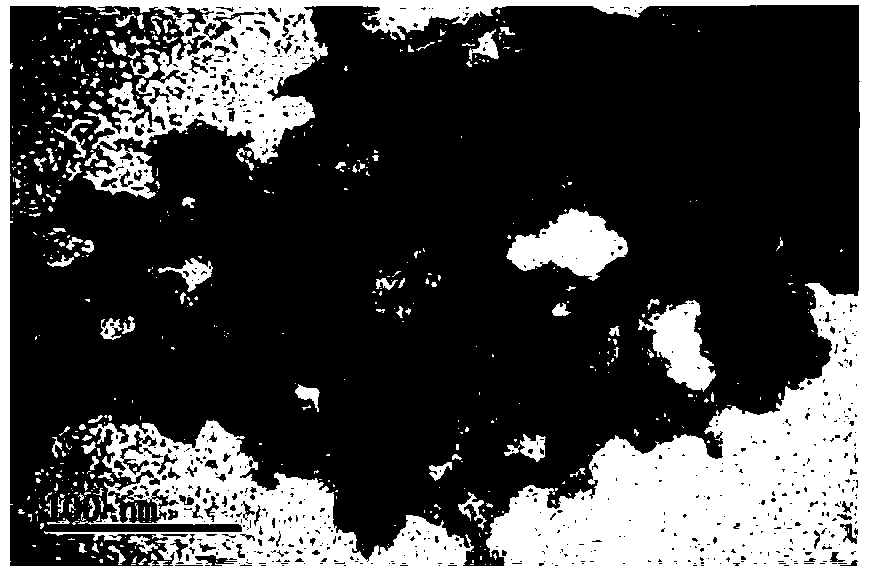
  • Figure 1
    Figure 1
  • Figure 2
    Figure 2
  • Figure 3
    Figure 3
Patent Text Reader

Abstract

A method for synthesizing methyl acrylate by carbonylation of acetylene. The invention provides a method for synthesizing methyl acrylate by carbonylation of acetylene, using acetylene, methanol and carbon monoxide as reaction raw materials, under the condition of reaction temperature of 30-80°C and initial pressure of 1.2-6.5MPa, using organic ligands A polymer-supported palladium-based catalyst catalyzes the carbonylation of acetylene to synthesize methyl acrylate. The present invention adopts 2-pyridyl diphenylphosphine (2-PyPPh2) as an organic ligand, connects a vinyl group to prepare vinyl 2-pyridyl diphenylphosphine, and performs hinge polymerization under certain conditions to form a solid organic ligand. The organic ligand polymer (N-PPOL) is prepared by complexing the organic ligand polymer and immobilizing palladium acetate to prepare the organic ligand polymer-immobilized palladium-based catalyst. The one-step carbonylation of acetylene into methyl acrylate has the advantages of high activity, high selectivity, and excellent performance of easy separation and recycling.
Need to check novelty before this filing date? Find Prior Art

Description

technical field

[0001] The invention relates to a method for synthesizing methyl acrylate by carbonylation of acetylene, in particular to a method using acetylene, methanol and carbon monoxide as reaction raw materials, under the conditions of a reaction temperature of 30-80°C and an initial pressure of 1.2-6.5MPa. A palladium-based catalyst supported by an organic ligand polymer can catalyze the carbonylation of acetylene to prepare methyl acrylate. Background technique

[0002] Methyl acrylate is the simplest aliphatic unsaturated ester. Since its molecular structure has unsaturated double bonds, it can form many different types of polymers through self-polymerization or copolymerization. These polymers have the characteristics of good transparency, light stability and water absorption, and are widely used in the fields of coatings, textiles, adhesives, papermaking additives, glazing agents, leather additives, detergents, and superabsorbent materials. At present, propylen...

Examples

Embodiment 1

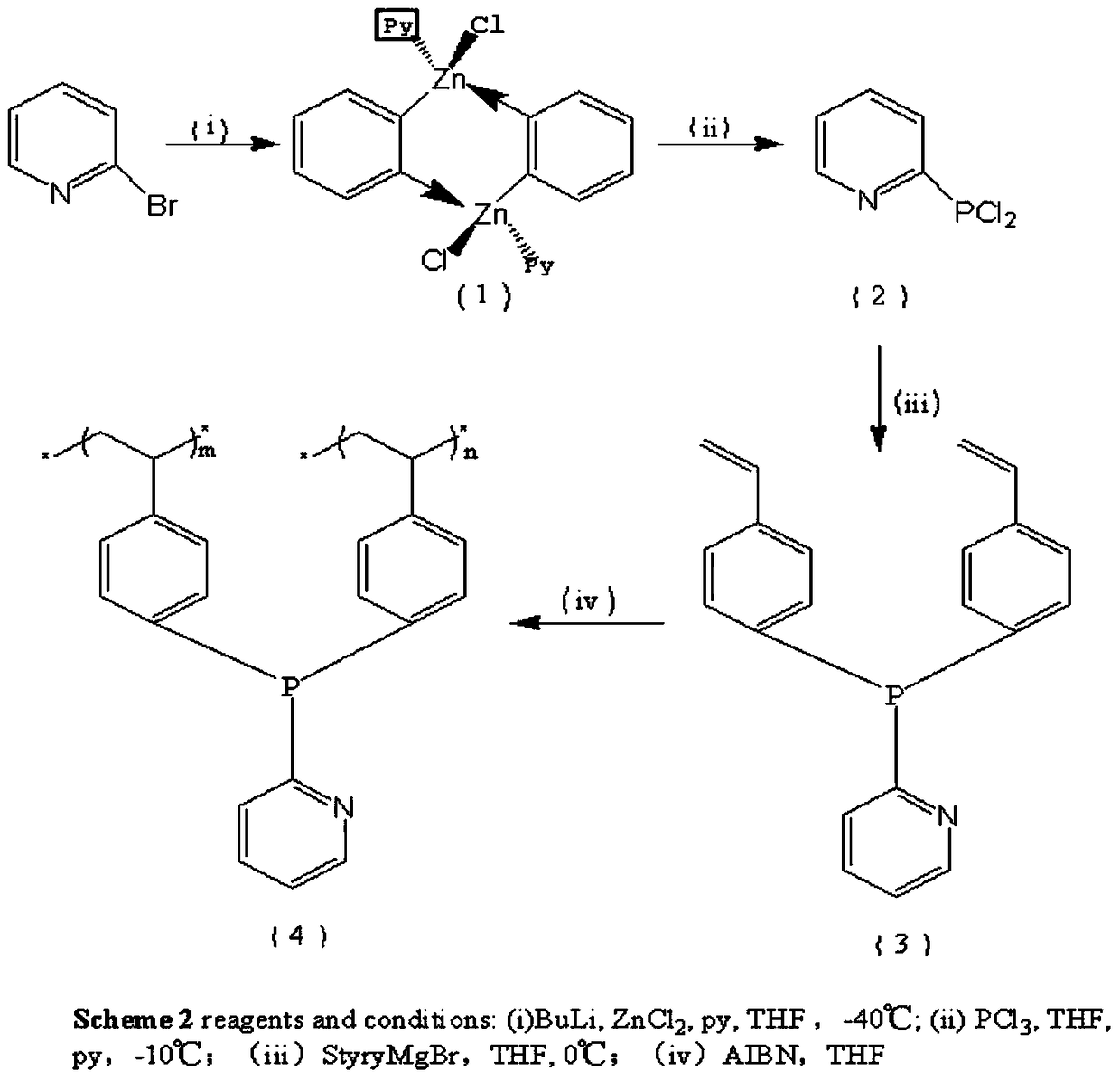
[0020] N-PPOL preparation method: In a liquid nitrogen bath and a nitrogen atmosphere, add 45ml of tetrahydrofuran, 0.12mol of n-butyllithium, 0.1mol of o-bromopyridine, 0.135mol of ZnCl 2 , 45ml pyridine, 90ml tetrahydrofuran, and react at room temperature for 14h. Pour out the liquid in the bottle under nitrogen protection, then add 60ml of pyridine, 180ml of tetrahydrofuran, and 0.12mol of PCl3 solution (dissolved in 60ml of pyridine and 60ml of tetrahydrofuran) successively under the condition of a liquid nitrogen bath, and then react at room temperature for 26h (named as reaction Liquid 1). In a liquid nitrogen bath and a nitrogen atmosphere, add 0.22mol (5.4g) of magnesium chips, 35ml of tetrahydrofuran, and 36.6g (0.2mol) of p-bromostyrene to another 1L three-necked round-bottomed flask with a magnetic stirring bar. (named as reaction solution 2). After the reaction solution 1 was filtered, it was added to the reaction solution 2 in a liquid nitrogen bath and a nitro...

Embodiment 2

[0023] Tetrahydrofuran was used instead of acetone as the solvent, and other conditions were the same as in Example 1.

Embodiment 3

[0025] Adopt normal hexane to replace acetone as solvent, other conditions are the same as embodiment 1.