
Endosperm-specific down-regulation of osmads7 gene expression to improve the tolerance of rice amylose content to high temperature
A technology of amylose content and specificity, applied in genetic engineering, plant genetic improvement, botanical equipment and methods, etc., can solve problems that have not yet been found, and achieve the effect of filling technical gaps and strong tolerance
- Summary
- Abstract
- Description
- Claims
- Application Information
AI Technical Summary
Problems solved by technology
Method used
Image

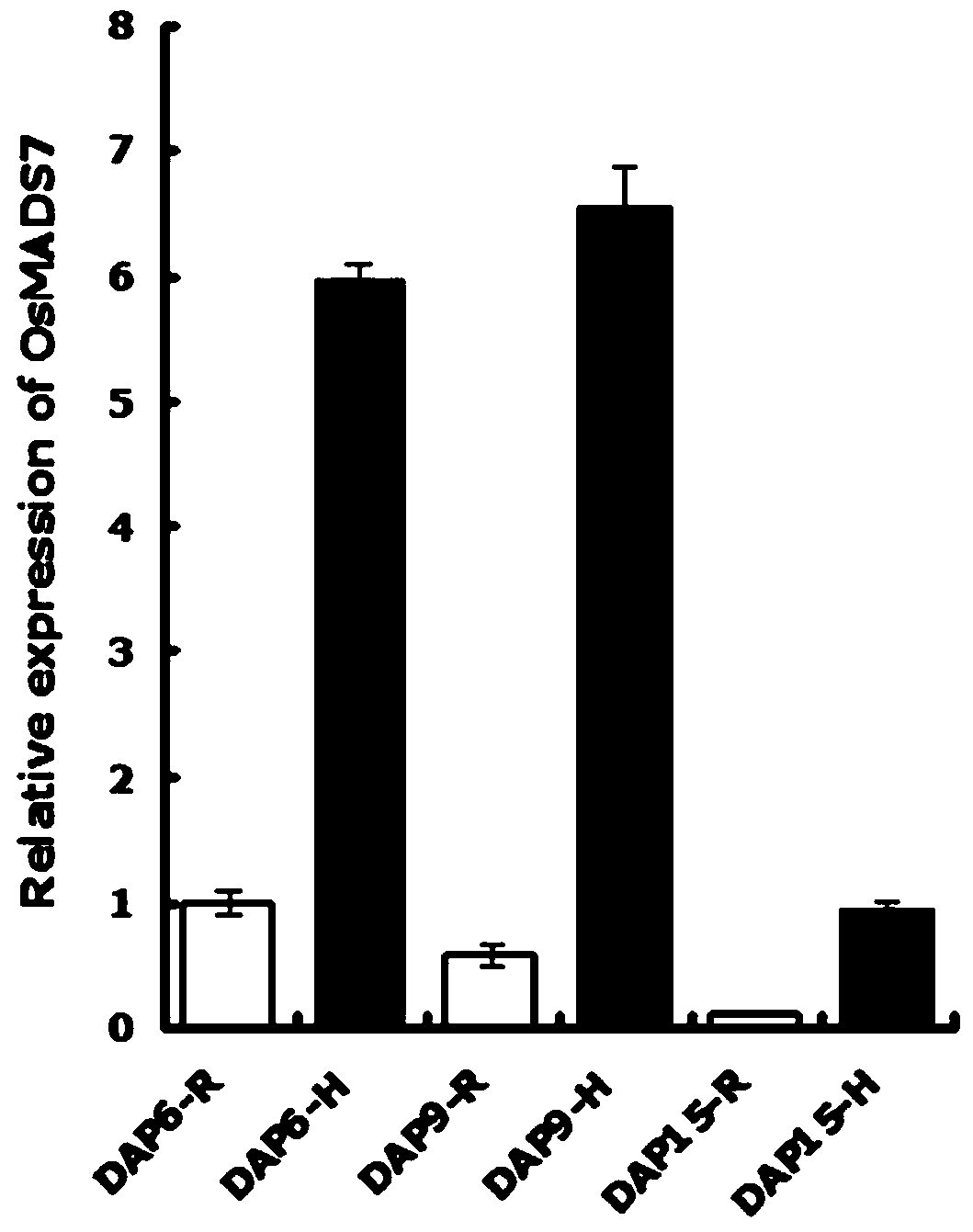
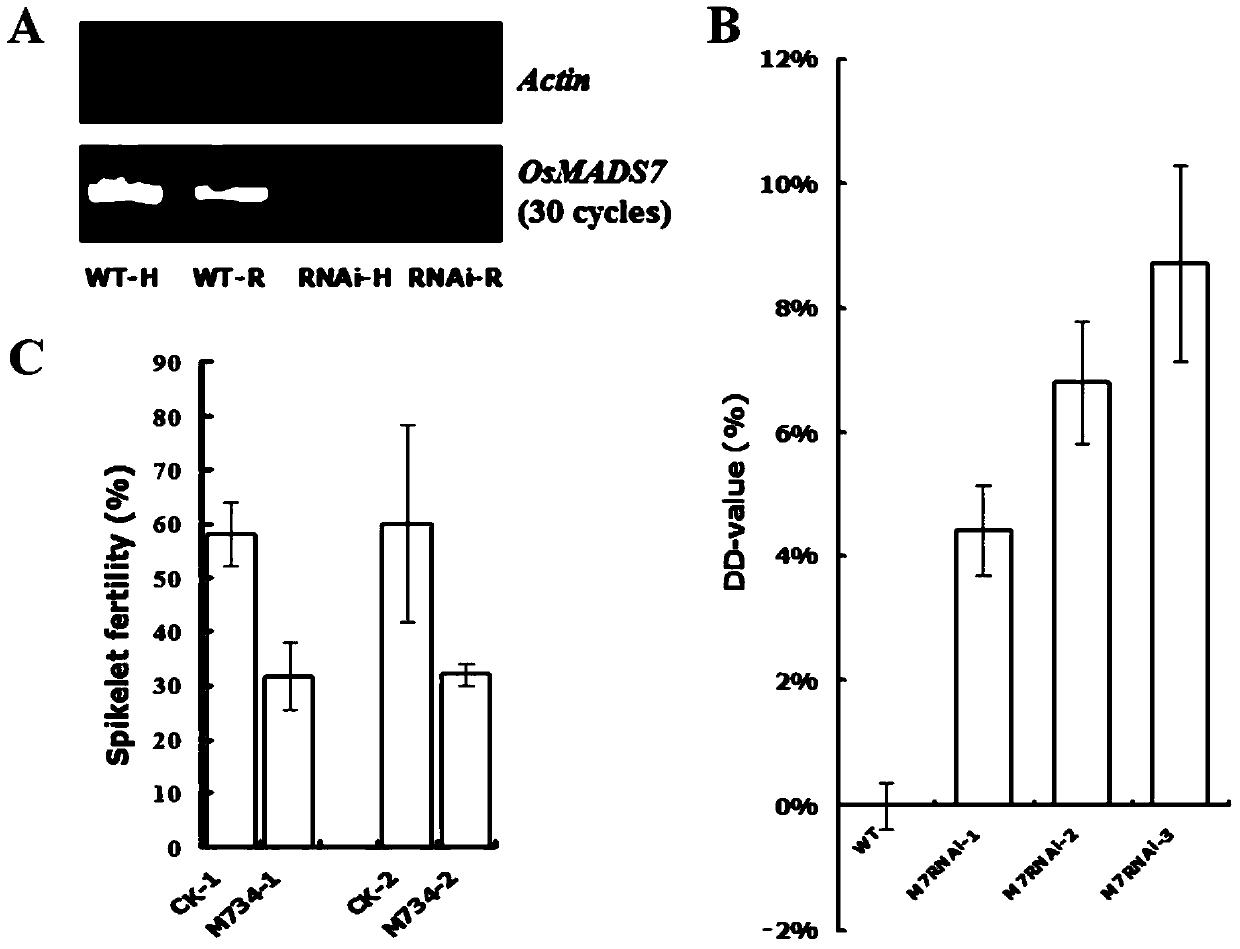
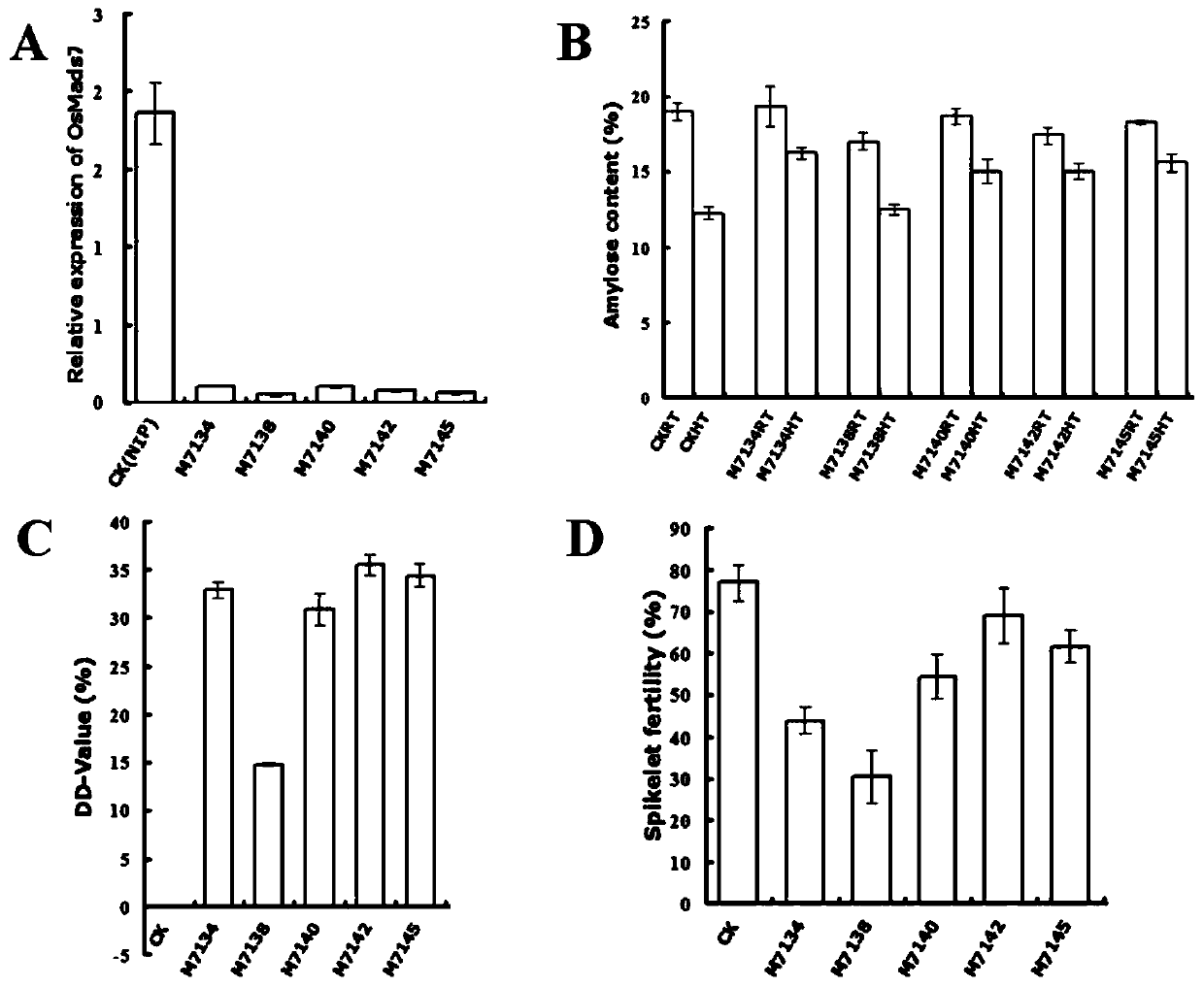
Examples
Embodiment Construction
[0029] The present invention will be described in detail below in conjunction with accompanying drawing:
[0030] 1. Rice material
[0031] The wild-type materials of rice (Oryza sativa) were japonica varieties Zhonghua 11 (ZH11) and Nipponbare (NIP). The high-temperature greenhouse is set at 35°C during the day, 12 hours of light; at night, 28°C, and 12 hours of darkness. The room temperature control was set at 28°C during the day, 12 hours of light; at night, 22°C, and 12 hours of darkness. On the 9th day after flowering, that is, after 6 days of temperature treatment, samples were taken, quickly frozen with liquid nitrogen, and stored in a -80°C ultra-low temperature refrigerator, and then taken out when ready to use.
[0032] 2. Rice processing and quality determination
[0033] The mature rice seeds were thoroughly dried, and the amylose determination and gelatinization temperature analysis were carried out after shelling and embryo removal.
[0034] Because the chang...
PUM
 Login to View More
 Abstract
Description
Claims
Application Information
 Login to View More