
Open LATARJET for correction of anterior-inferior glenoid bone loss
A glenoid and bone graft technology, applied in the field of surgical systems, can solve problems such as joint pain and fixation, and affect patients' lifestyles
- Summary
- Abstract
- Description
- Claims
- Application Information
AI Technical Summary
Problems solved by technology
Method used
Image

Examples
Embodiment Construction
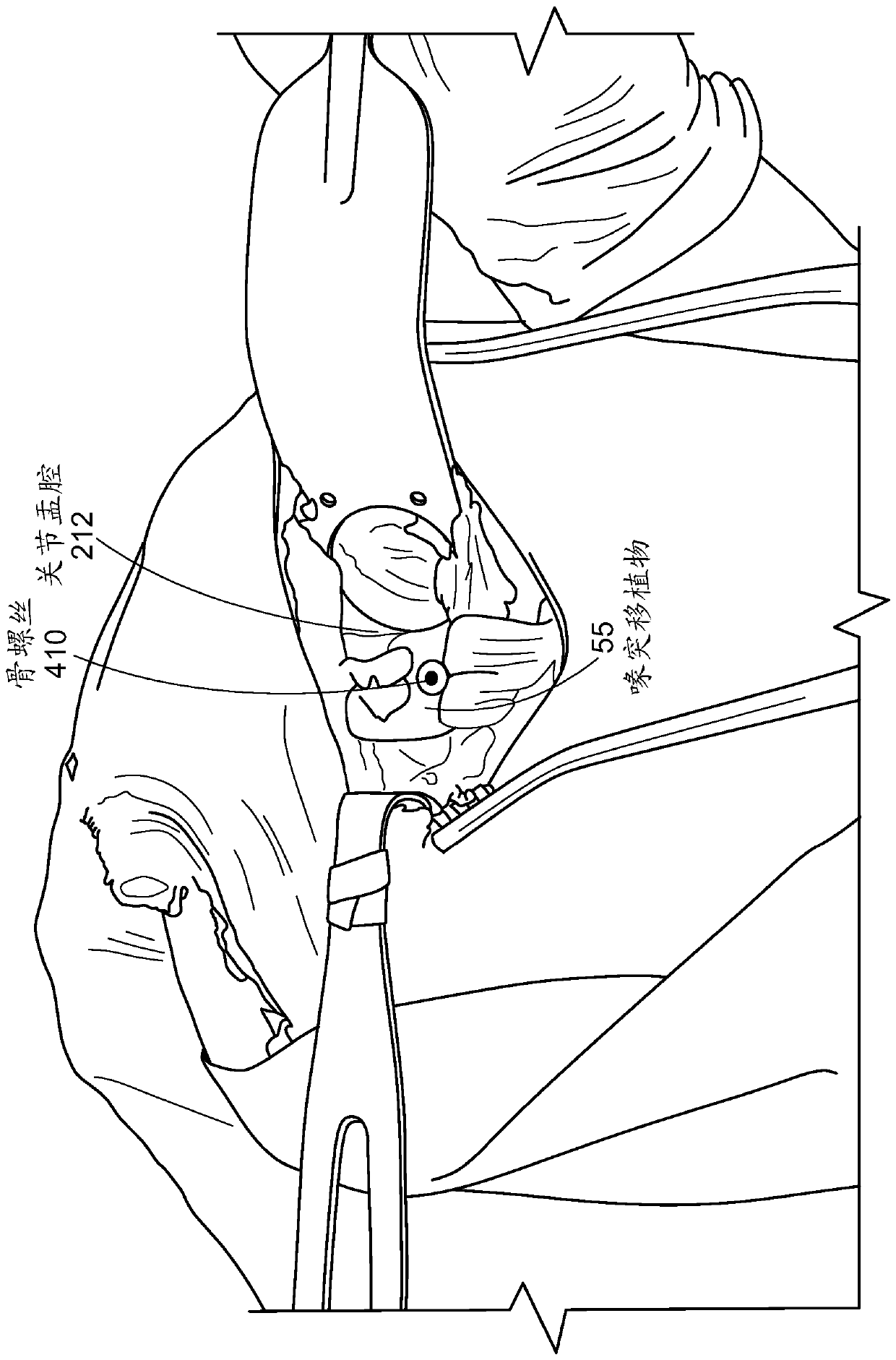
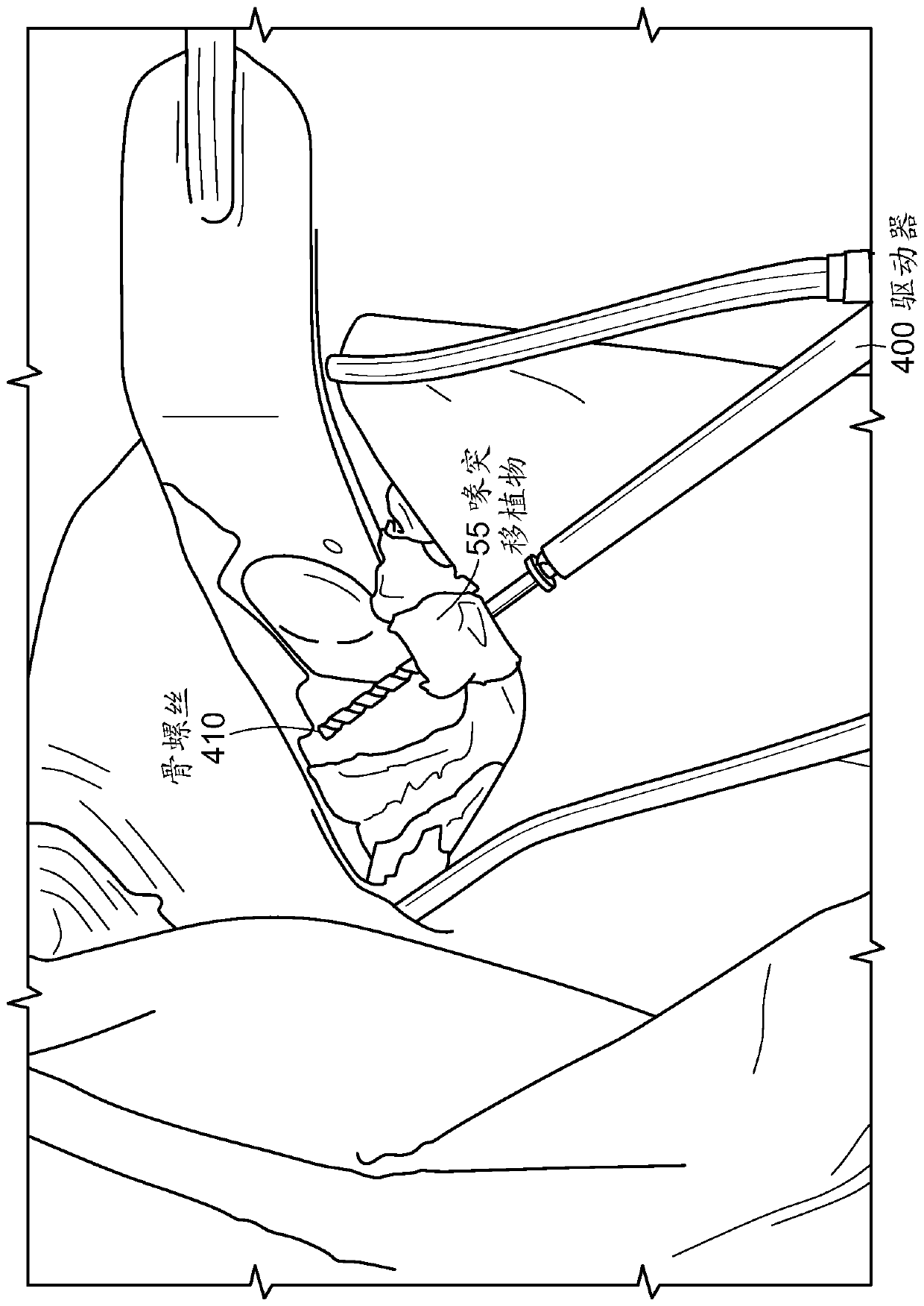
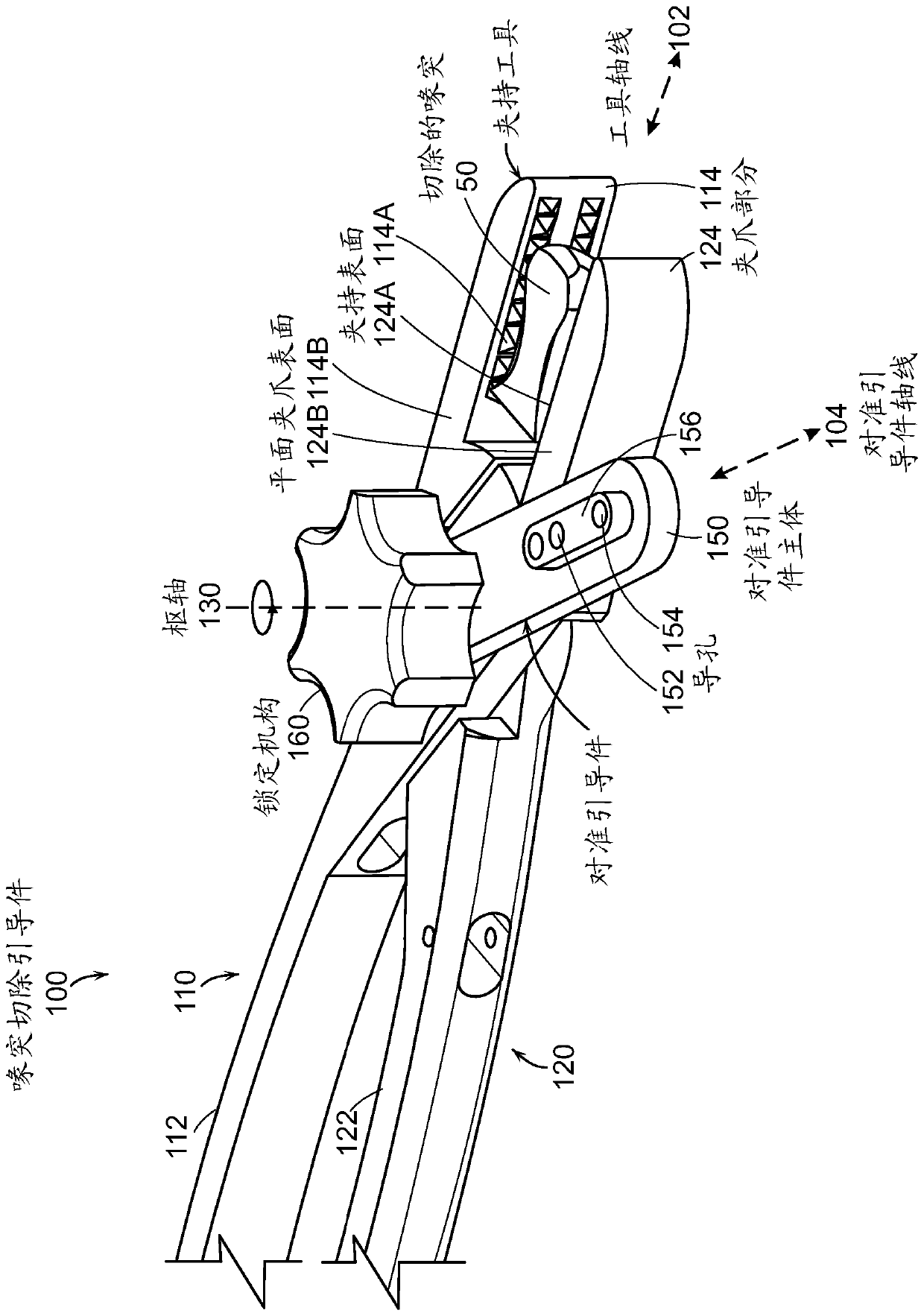
[0042] As noted above, the present application relates to improved devices, systems and methods for performing open Latarjet-type surgery, eg, to correct glenoid bone loss. In an exemplary embodiment of a Latarjet-type surgery, the coracoid may be secured to the glenoid, typically by screws. In particular, the surgeon may drill two or more holes into each of the coracoid and glenoid, and align the coracoid and glenoid holes. Subsequently, screws may be positioned within the bone holes for fixation. Notably, in such procedures, the likelihood of successful bony fusion may depend on the orientation and alignment of the coracoid and glenoid holes used to position the coracoid graft surface on the glenoid graft surface. For example, misalignment of the coracoid and glenoid foramina may result in poor contact between the glenoid and coracoid graft surfaces or insufficient contact pressure at the graft interface, reducing the likelihood of successful bony fusion. Accordingly, impr...
PUM
 Login to View More
 Abstract
Description
Claims
Application Information
 Login to View More