A moisture-retaining self-curing concrete pouring material
What is AI technical title?
AI technical title is built by Patsnap AI team. It summarizes the technical point description of the patent document.
A self-curing and concrete technology, which is applied in the field of building materials, can solve the problems of insufficient use of mixing water and large water demand, and achieve the effects of good work performance, reduced mixing water consumption, and reduced drying shrinkage
Active Publication Date: 2019-08-20
YELLOW RIVER ENG CONSULTING +1
View PDF4 Cites 0 Cited by
Summary
Abstract
Description
Claims
Application Information
AI Technical Summary
This helps you quickly interpret patents by identifying the three key elements:
Problems solved by technology
Method used
Benefits of technology
Problems solved by technology
[0003] The invention provides a moisture-retaining self-maintaining concrete pouring material, aiming to solve the problems that the current concrete moisture-retention maintenance requires a large amount of water and the mixing water is not fully utilized
Method used
the structure of the environmentally friendly knitted fabric provided by the present invention; figure 2 Flow chart of the yarn wrapping machine for environmentally friendly knitted fabrics and storage devices; image 3 Is the parameter map of the yarn covering machine
View more
Image
Smart Image Click on the blue labels to locate them in the text.
Viewing Examples
Smart Image
Click on the blue label to locate the original text in one second.
Reading with bidirectional positioning of images and text.
Smart Image
Examples
Experimental program
Comparison scheme
Effect test
Embodiment 1
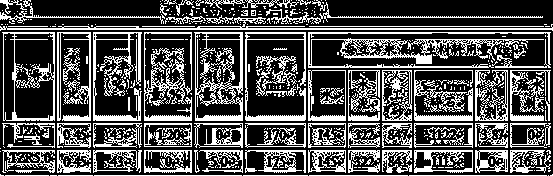
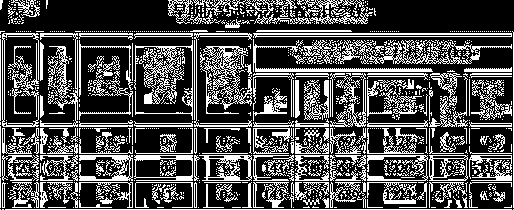
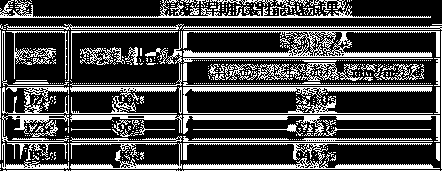
[0021] Concrete lining construction of water delivery channel of a water conservancy project in Huanxian County, Gansu Province. The project is located in an arid zone, with dry climate, evaporation far exceeds precipitation, and requires high maintenance and crack resistance of concrete. The preparation method of the channel lining concrete pouring material used is as follows:
[0022] The first step is to accurately weigh 145kg of water, 322kg of cement, 821kg of natural medium sand, 1095kg of gravel, and 16.11kg of hydrophobic agent;
[0023] In the second step, add the weighed cement, sand, gravel, and hydrophobic agent into the mixer, and dry mix for 1 minute;
[0024] In the third step, slowly add the mixing water taken in the first step into the material of the mixer, and stir for 3 minutes;
[0025] In the fourth step, the mixed material obtained in the third step is taken out, and the slump and workability tests are carried out, and pouring can be carried out after m...
Embodiment 2
[0027] For the construction of a water conservancy project reservoir in Lanzhou, Gansu, the bottom plate of the reservoir is a large-area thin-walled structure, and the requirements for impermeability and crack resistance are high. The preparation method of the concrete pouring material used is:
[0028] The first step is to accurately weigh 150kg of water, 267kg of cement, 67kg of fly ash, 758kg of artificial medium sand, 1148kg of gravel, and 8.33kg of hydrophobic agent;
[0029] In the second step, add the weighed cement, fly ash, sand, gravel, and hydrophobic agent into the mixer, and dry mix for 1 minute;
[0030] In the third step, slowly add the mixing water taken in the first step into the material of the mixer, and stir for 3 minutes;
[0031] In the fourth step, the mixed material obtained in the third step is taken out, and the slump and workability tests are carried out, and pouring can be carried out after meeting the requirements.
[0032] In this case, the mass...
the structure of the environmentally friendly knitted fabric provided by the present invention; figure 2 Flow chart of the yarn wrapping machine for environmentally friendly knitted fabrics and storage devices; image 3 Is the parameter map of the yarn covering machine
Login to View More
PUM
Login to View More
Abstract
The present invention discloses a moisture-retaining self-curing concrete pouring material. The moisture-retaining self-curing concrete pouring material is prepared by blending base materials consisting of, by weight, 120-180 parts of water, 233-514 parts of cement, 0-103 parts of fly ash, 651-912 parts of sand and 938-1318 parts of crushed stone, and then adding a hydrophobic agent accounting for2-5% of the total weight of the cement and the fly ash. The hydrophobic agent is prepared through the following steps: weighing, by weight, 63 parts of SiO2, 20 parts of Al2O3, 8 parts of Na2O, 6 parts of Fe2O3, 2 parts of CaO and 1 part of TiO2, then successively carrying out mixing, melting, liquefying and atomizing so as to obtain fine particles, cooling the fine particles to 1000 DEG C, and then rolling the fine particles into a sheet so as to obtain an inorganic substrate; diluting 0.5 to 2 parts of a silane coupling agent with 100 parts of a 70% alcohol solution and then carrying out hydrolysis to prepare a coupling agent solution; and mixing the coupling agent solution and the inorganic substrate according to a ratio of 10: 1, and successively carrying out stirring, filtering and drying so as to obtain the finished hydrophobic agent. The pouring material does not maintenance or needs simple maintenance after mold removal.
Description
technical field [0001] The invention relates to the technical field of building materials, in particular to a moisture-retaining self-curing concrete pouring material. Background technique [0002] The hydration rate of cement directly affects the hardening and strength of concrete. When the poured concrete is exposed to air with low humidity, the cement particles that have formed a gel cannot continue to be fully hydrated due to the rapid evaporation of water. If the concrete does not have sufficient strength at this time, the rapid evaporation of water will It leads to the formation of plastic shrinkage cracks in concrete, which seriously affects the strength and appearance of concrete. In order to provide suitable hardening conditions for the concrete and make its strength continuously increase, maintenance measures such as water storage, water sprinkling, film covering or spraying of curing agents must be taken immediately after the concrete formwork is removed to keep ...
Claims
the structure of the environmentally friendly knitted fabric provided by the present invention; figure 2 Flow chart of the yarn wrapping machine for environmentally friendly knitted fabrics and storage devices; image 3 Is the parameter map of the yarn covering machine
Login to View More
Application Information
Patent Timeline
Application Date:The date an application was filed.
Publication Date:The date a patent or application was officially published.
First Publication Date:The earliest publication date of a patent with the same application number.
Issue Date:Publication date of the patent grant document.
PCT Entry Date:The Entry date of PCT National Phase.
Estimated Expiry Date:The statutory expiry date of a patent right according to the Patent Law, and it is the longest term of protection that the patent right can achieve without the termination of the patent right due to other reasons(Term extension factor has been taken into account ).
Invalid Date:Actual expiry date is based on effective date or publication date of legal transaction data of invalid patent.



 Login to View More
  Login to View More