
Compressing seismic wavefields in three-dimensional reverse time migration
A technology for decompressing and seismic data, applied in seismology, seismic signal processing, geophysical measurement, etc., can solve the problem of consuming large computing resources and achieve the effect of improving imaging results
- Summary
- Abstract
- Description
- Claims
- Application Information
AI Technical Summary
Problems solved by technology
Method used
Image

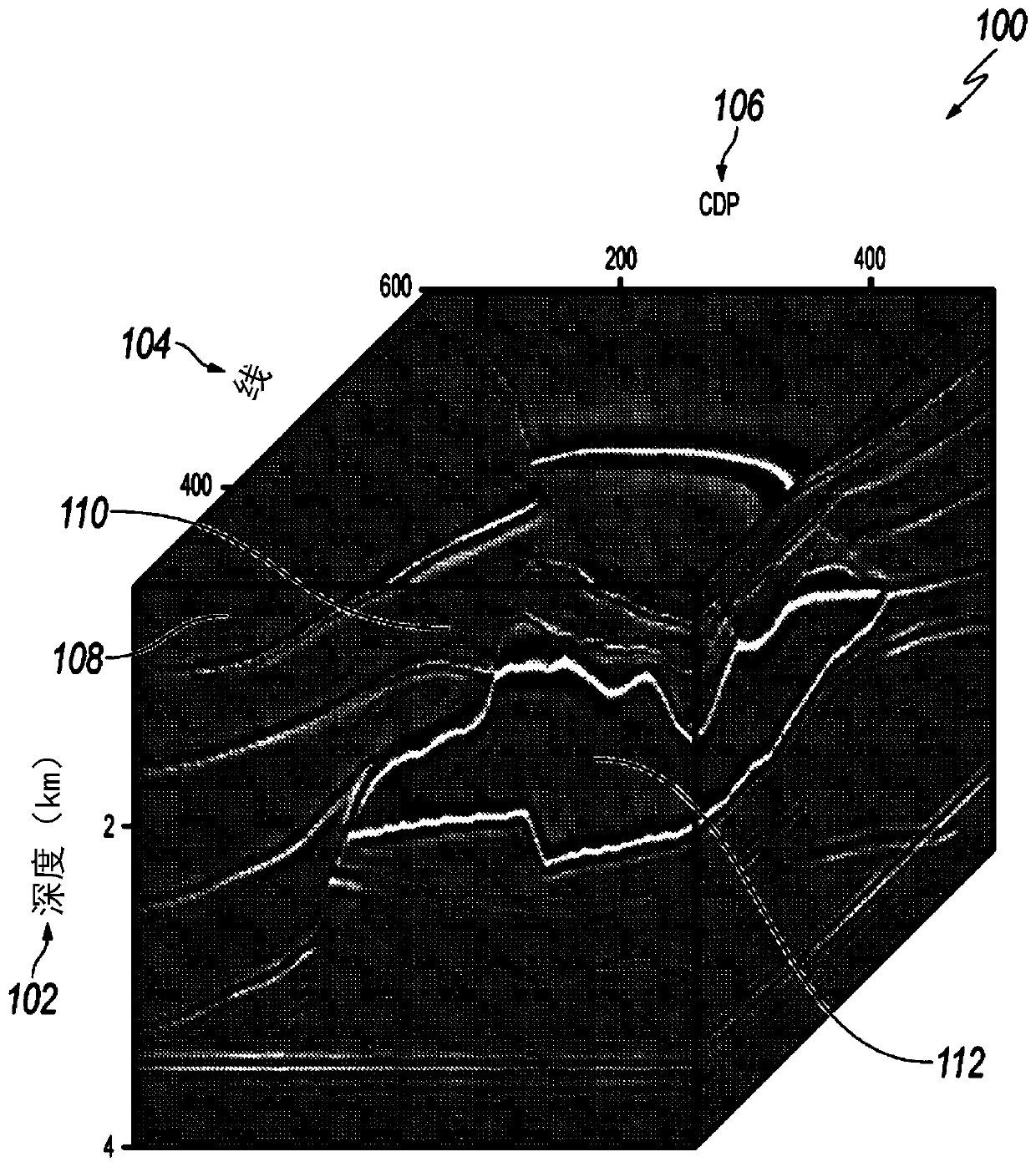
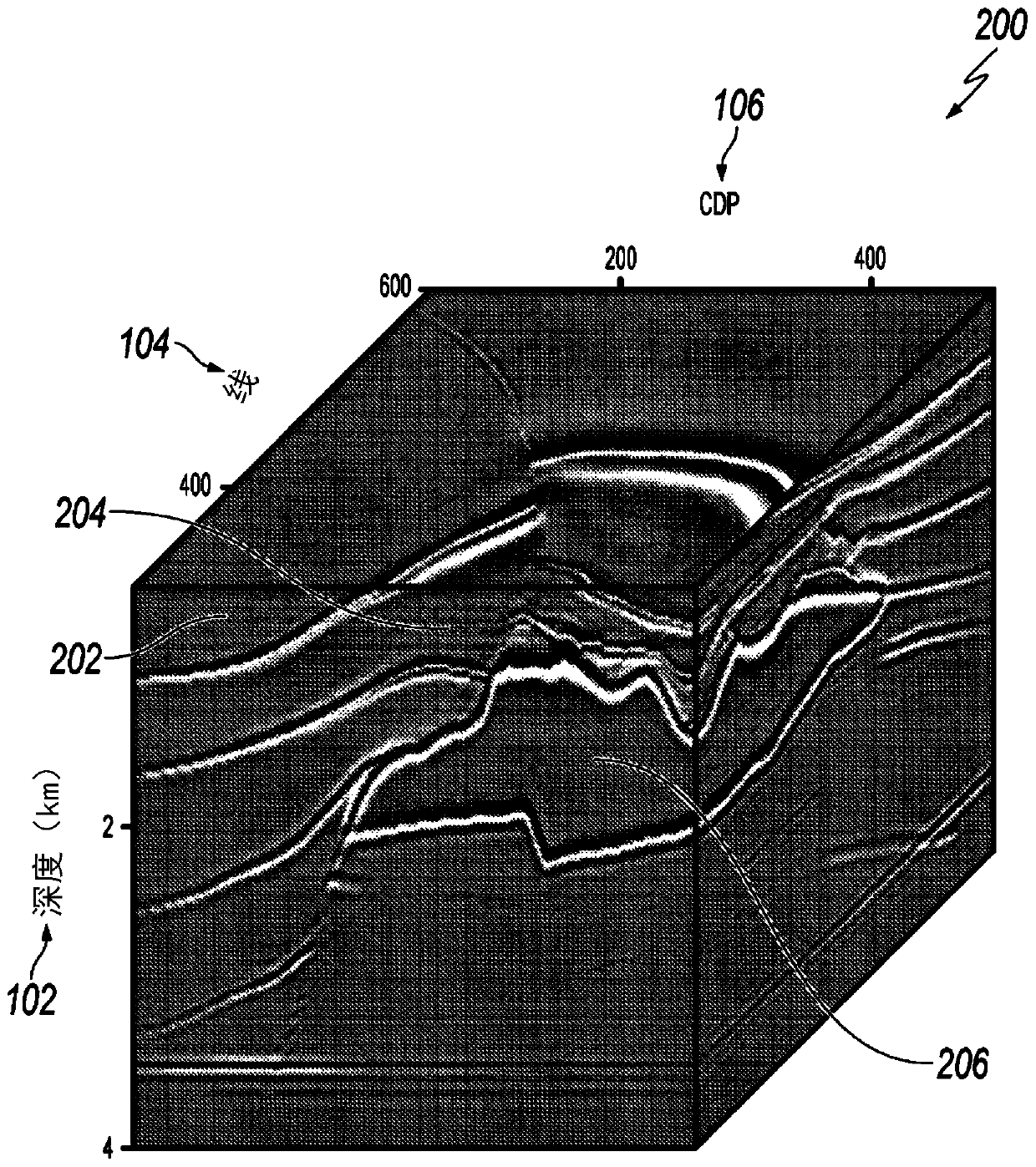
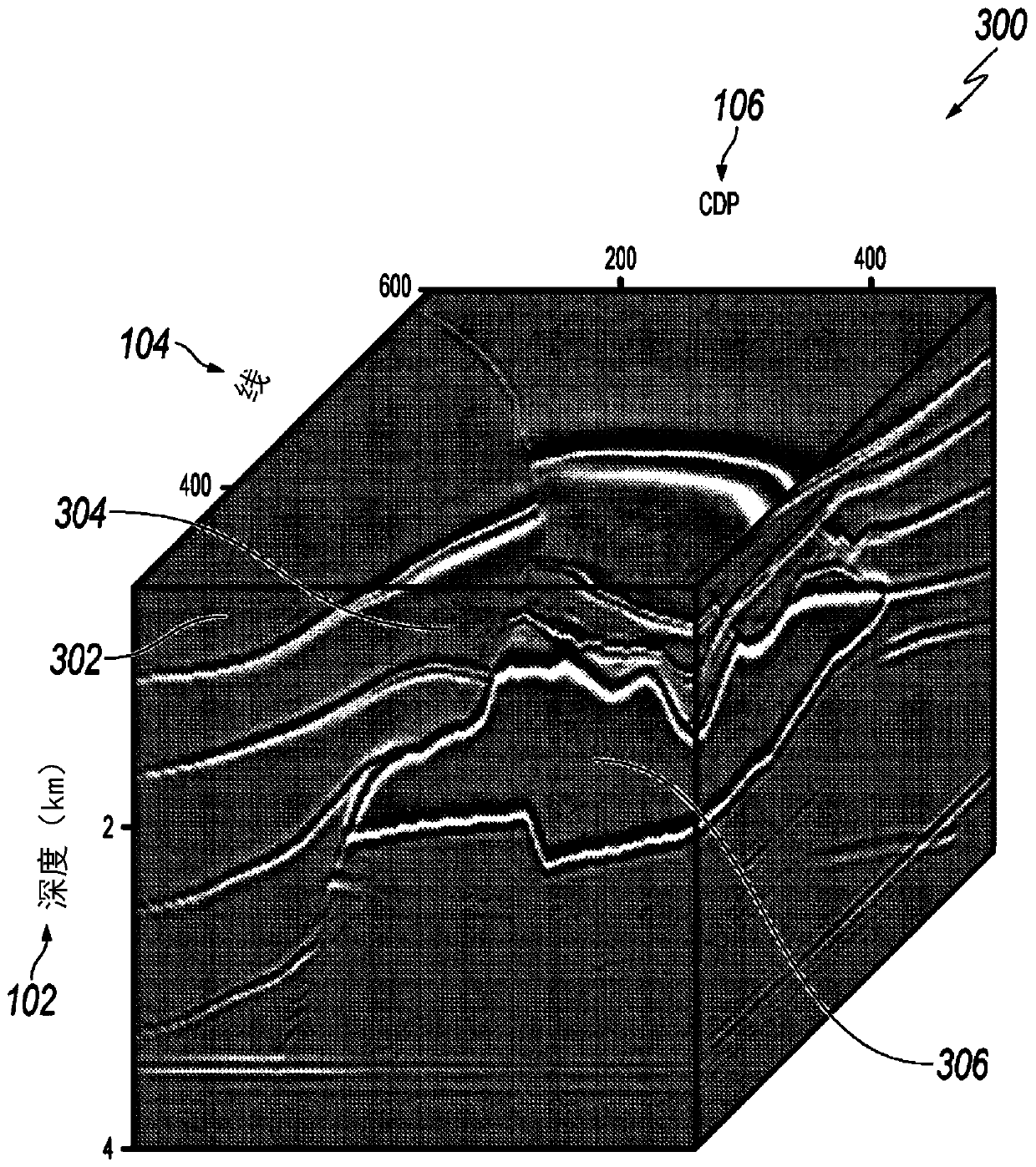
Examples
Embodiment Construction
[0018] The following detailed description describes compressed seismic data and is presented to enable one skilled in the art to make and use the disclosed subject matter in the context of one or more specific implementations. Various modifications, changes, and substitutions may be made to the disclosed implementations and will be apparent to those of ordinary skill in the art, and the general principles defined may be applied to other implementations and applications without departing from the scope of the present disclosure. . In some cases, one or more technical details that are not necessary to gain an understanding of the described subject matter and are within the purview of one of ordinary skill in the art may be omitted so as not to obscure one or more described implementations. The disclosure is not intended to be limited to the implementations described or shown, but is to be accorded the widest scope consistent with the principles and features described.
[0019] ...
PUM
 Login to View More
 Abstract
Description
Claims
Application Information
 Login to View More