
Method for quantifying Apis mellifera honey MRJP2 through liquid chromatography-tandem mass spectrometry
A technology of tandem mass spectrometry and liquid chromatography, applied in the field of quantitative Italian honey MRJP2 by liquid chromatography tandem mass spectrometry, to achieve high specificity and sensitivity, good accuracy and precision, and high sensitivity
- Summary
- Abstract
- Description
- Claims
- Application Information
AI Technical Summary
Problems solved by technology
Method used
Image

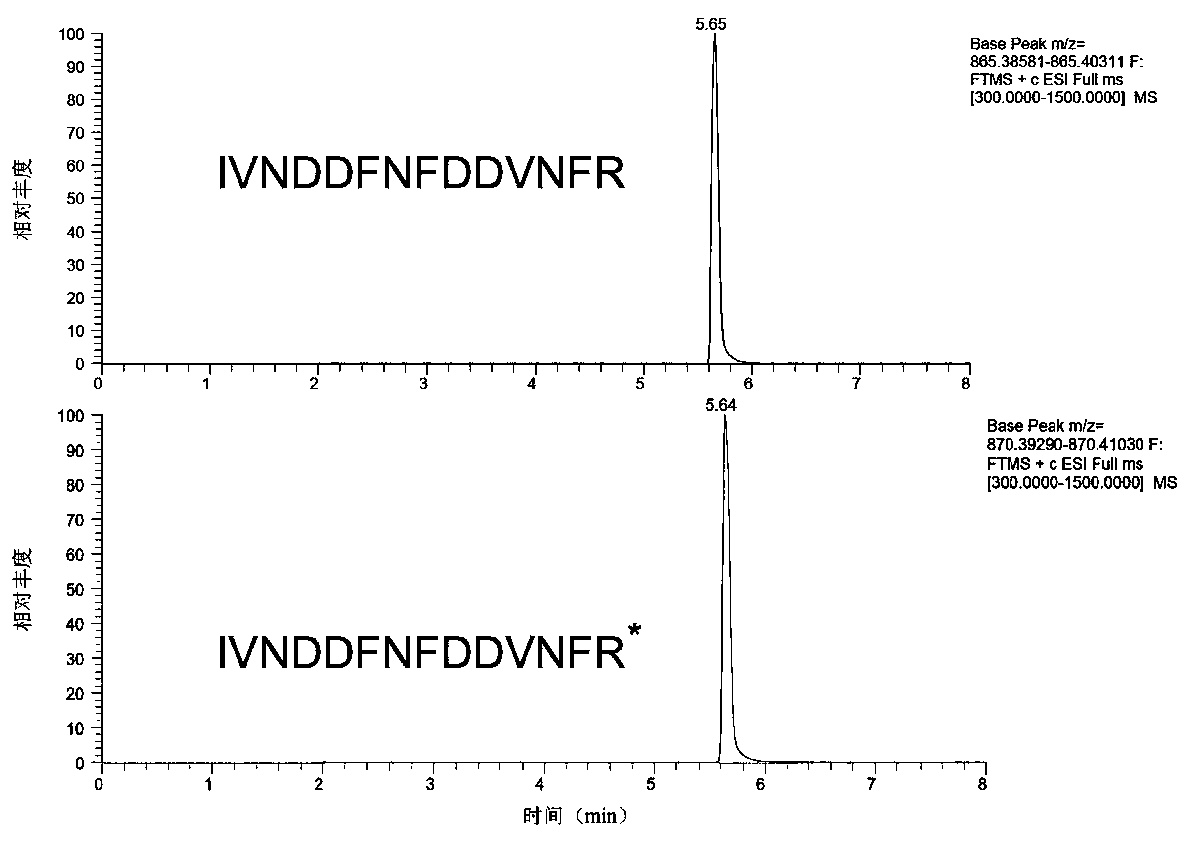
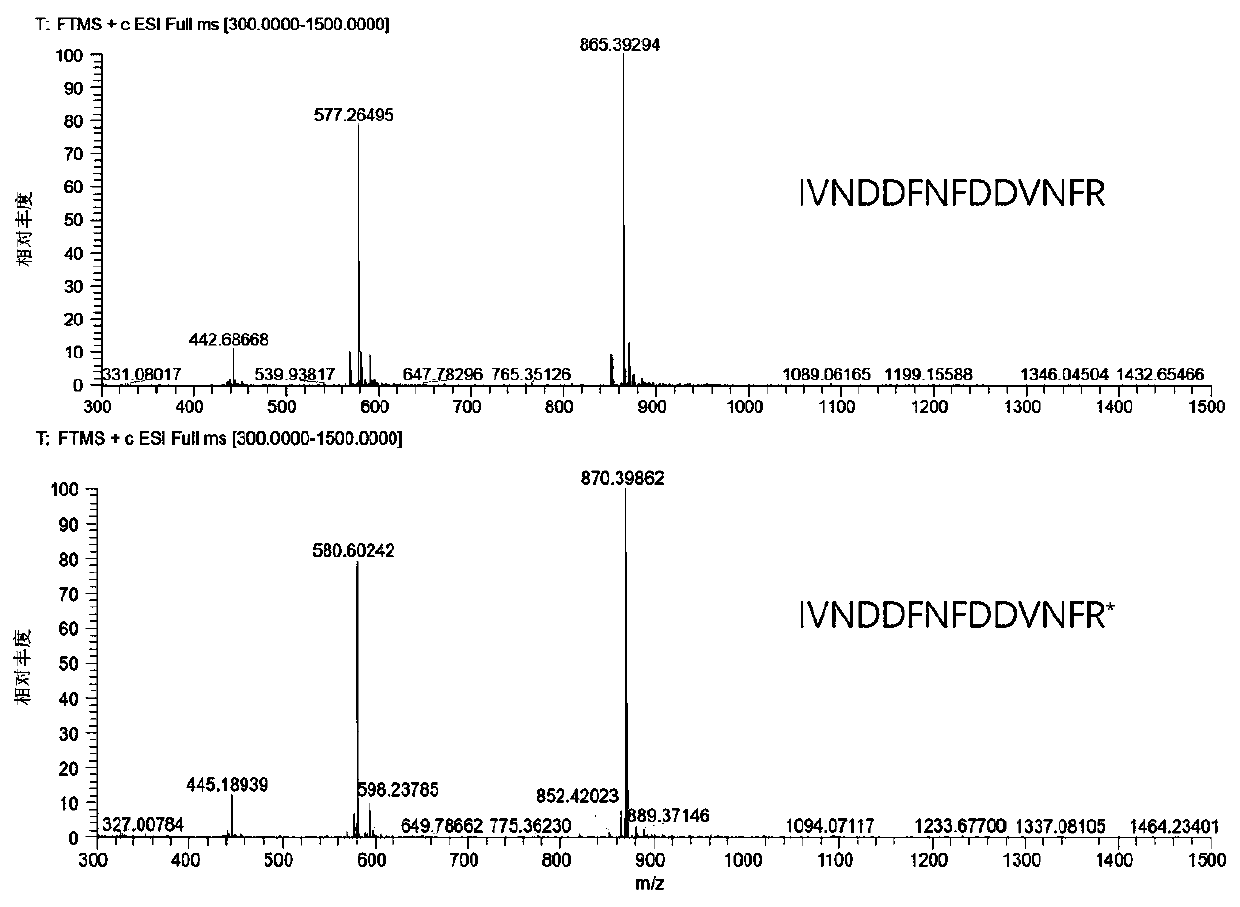
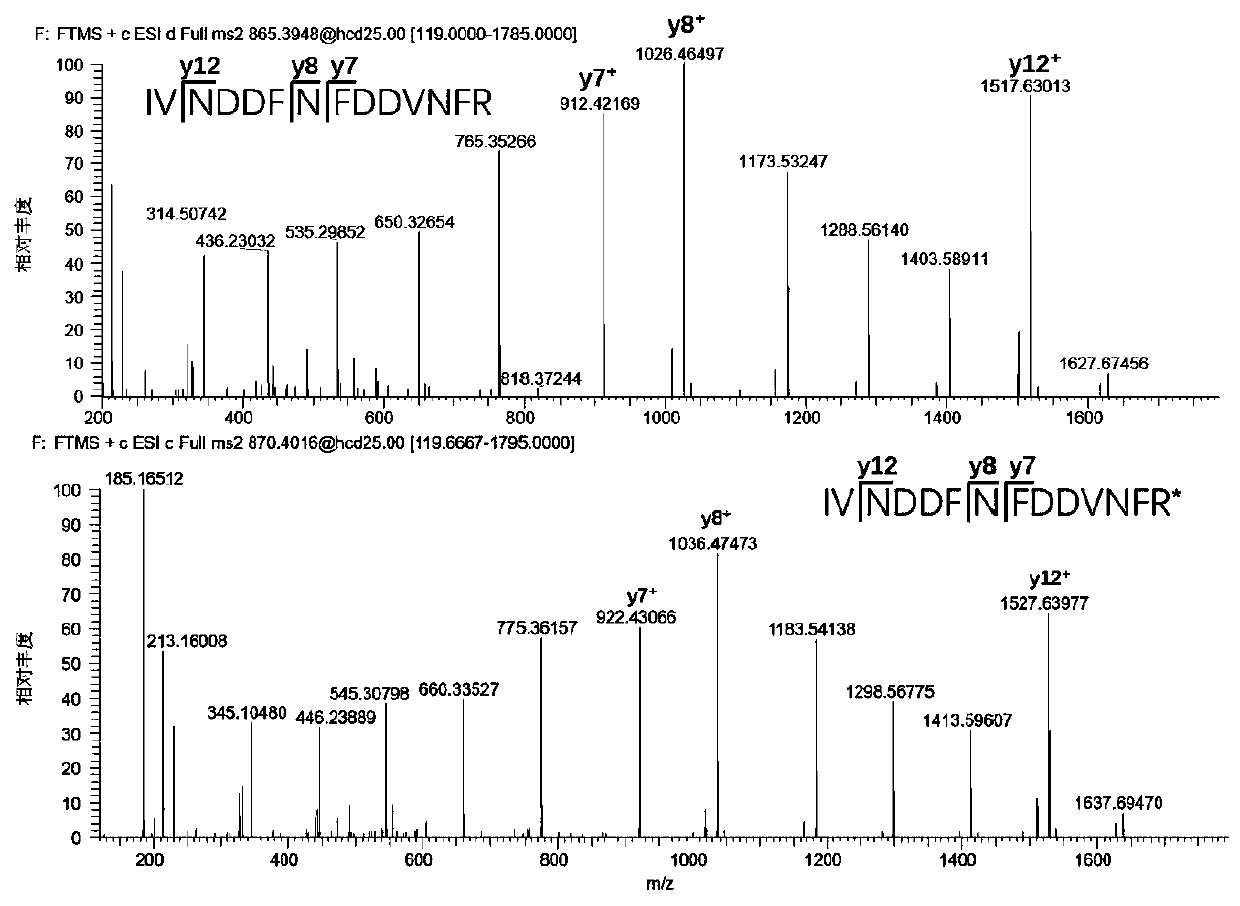
Examples
Embodiment 1
[0056] Example 1 Method for Determining the Content of Italian Bee MRJP2 Using Liquid Chromatography Tandem Mass Spectrometry
[0057] 1. Sample source
[0058] A total of 20 samples of real Italian honey were purchased from the market or beekeepers.
[0059] 2. Experimental procedure
[0060] (1) Solution preparation
[0061] 5M Urea solution: Weigh 4.5 g of Urea, and dilute to 15 mL with ultrapure water.
[0062] 100 mM DTT: Weigh 308.5 mg DTT, 40 mM NH 4 HCO 3 Dilute the solution to 20 mL, dispense 1 mL into each tube, and store in a -20°C refrigerator until use.
[0063] 40 mM NH 4 HCO 3 Solution: weigh 0.316 g NH 4 HCO 3 , dilute to 100 mL with ultrapure water, and store in a 4°C refrigerator until use.
[0064] 100 mM IAA solution: Weigh 0.39 g of IAA, add 40 mM NH 4 HCO 3 The solution was fixed to 20 mL, and stored in a -20°C refrigerator until use.
[0065] 5% of B. Flow rate: 0.3 mL / min; injection volume: 5.0 µL.
[0066] The mass spectrometry condition...
Embodiment 2
[0074] Example 2 Authenticity detection of Italian honey samples by quantifying Italian bee MRJP2
[0075] 1. Sample source
[0076] Buy real samples of honey from the market
[0077] 2. Experimental procedure
[0078] (3) Pretreatment of honey samples
[0079] ① Accurately weigh 10 g of the honey to be tested into a 50 mL centrifuge tube, add 10 mL of deionized water, and vortex until the honey is fully dissolved. Centrifuge at 12000 rpm for 10 min at 4°C. Collect the supernatant in a new 2 mL centrifuge tube.
[0080] ② Pipette 200 μL of the protein solution and add 4 μL of 100 μg / mL internal standard peptide (IVNNDFNFNDVNFR*), and mix with 800 μL of 40 mM NH 4 HCO 3 mix. Add 100 μL of 30 mM DTT solution to the above mixed solution, react at room temperature for 60 min, and then add 500 μL of 100 mM IAA solution and react in dark at room temperature for 60 min.
[0081] ③Add 30 μL of trypsin solution to each sample, and digest at 37°C overnight. When the digestion r...
PUM
 Login to View More
 Abstract
Description
Claims
Application Information
 Login to View More