Display panel, method for driving the same, and display device

A display panel and sub-pixel technology, applied in the field of display devices and display panels, can solve the problems of insufficient charging time for scanning signals, vertical lines on the display screen, less than 0.5 microseconds, etc., and achieve improved display effect, high screen-to-body ratio and narrow The effect of borders and eliminating vertical lines

CN110931543BActive Publication Date: 2022-07-29XIAMEN TIANMA MICRO ELECTRONICS
5 Cites 0 Cited by

Patent Information

Authority / Receiving Office
CN · China
Patent Type
Patents(China)
Current Assignee / Owner
Publication Date
2022-07-29

Smart Images

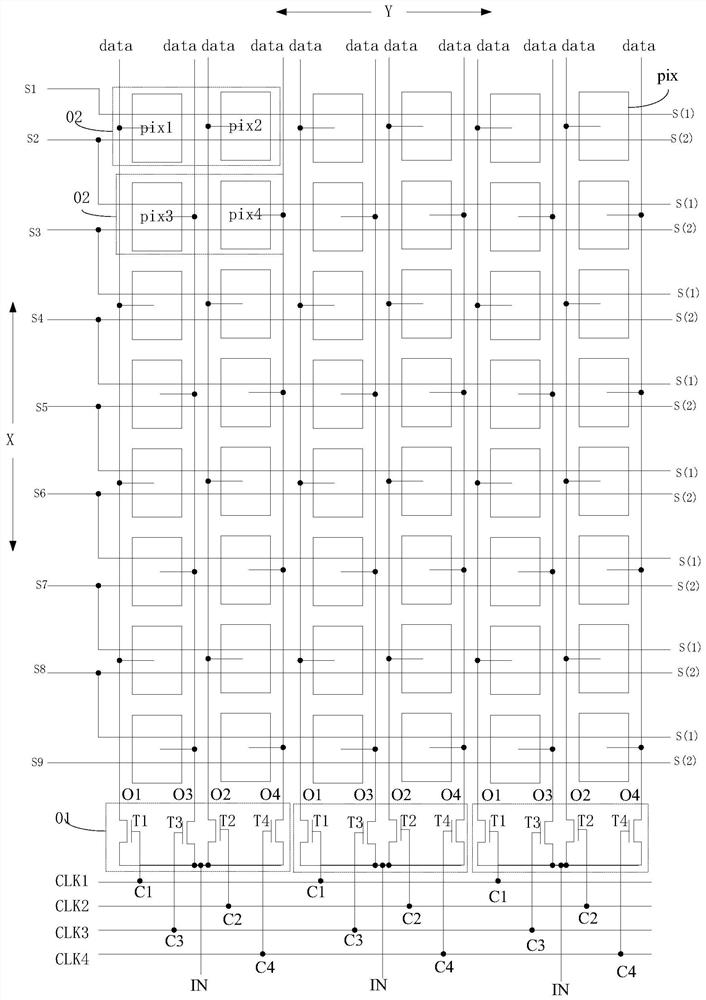
  • Figure 1
    Figure 1
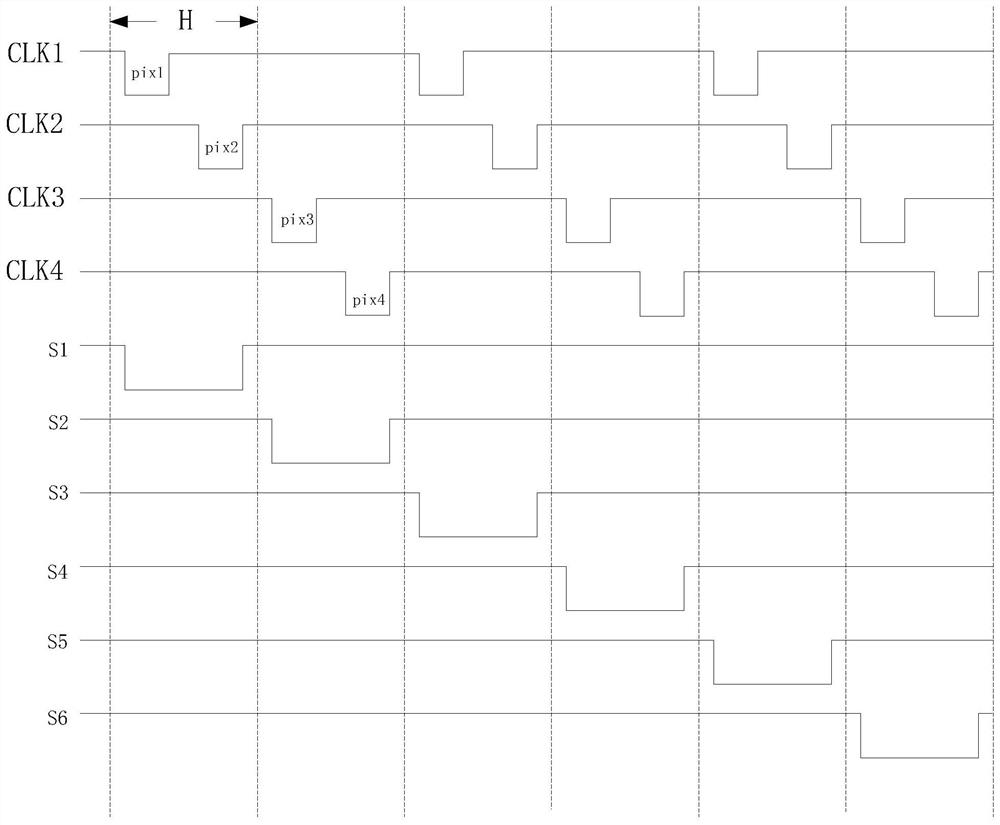
  • Figure 2
    Figure 2
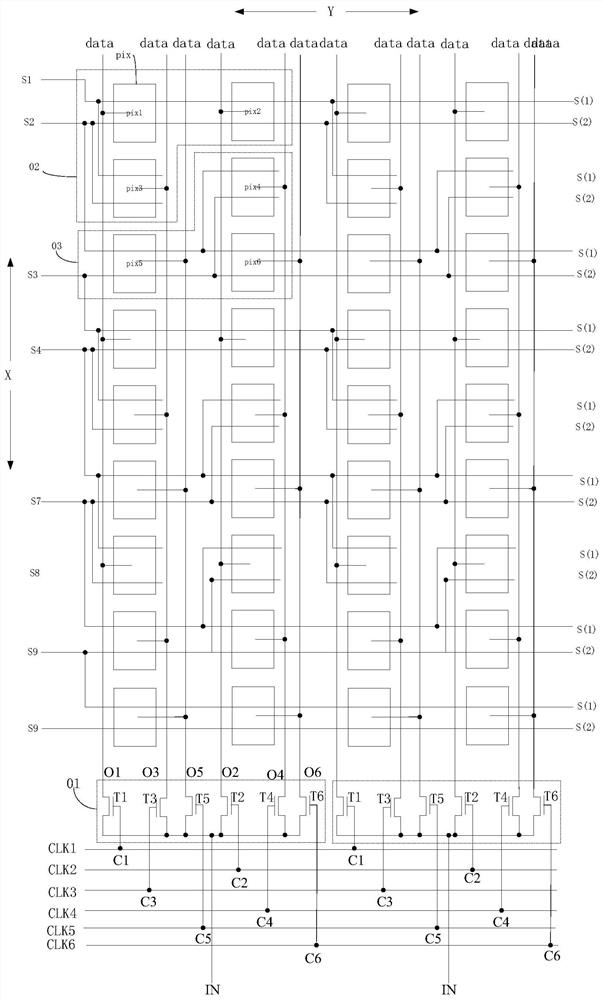
  • Figure 3
    Figure 3
Patent Text Reader

Abstract

The invention discloses a display panel, a driving method thereof and a display device, which utilize a plurality of gating circuits to provide data signals to data lines, which is beneficial to realize the design of high screen ratio and narrow frame. In addition, for the same sub-pixel group connected to the same gating circuit, the gating circuit sequentially outputs data signals to the sub-pixel group when the first scan line corresponding to the sub-pixel group outputs the scan signal, and the sub-pixel group corresponds to the sub-pixel group. Before the second scan line outputs the scan signal, the output of the data signal to the sub-pixel group is completed. That is, for the same sub-pixel group, the time when the first scan line outputs the scan signal and the time when the gate circuit outputs the data signal is in an overlapping relationship. Therefore, it can be ensured that the charging time of the scan signal is the time to scan a row of pixels, that is, to ensure that the scan signal is charged. There is enough charging time, so that while realizing high-frequency display, vertical stripes that appear due to the short charging time of the scanning signal can be eliminated, thereby improving the display effect.
Need to check novelty before this filing date? Find Prior Art

Description

technical field

[0001] The present invention relates to the field of display technology, and in particular, to a display panel, a driving method thereof and a display device. Background technique

[0002] The electroluminescent display is a self-luminous device, which can realize the display function without setting a backlight module, which makes the display have the characteristics of light weight and thinness, and has a wide range of applications in various fields.

[0003] Electroluminescent displays generally have two specifications: conventional products and high-frequency products. Conventional products can be understood as products with a scanning frequency of 60 Hz, and high-frequency products can be understood as products with a scanning frequency of 120 Hz. At present, conventional products are usually equipped with a gate circuit, and the charging time of the corresponding scanning signal is generally less than 0.5 microseconds; and if the high-frequency product ...

Examples

Embodiment Construction

[0027] At present, for products with a conventional scanning frequency (such as a product with a scanning frequency of 60Hz), in order to reduce the width of the frame, a gating circuit design is generally used, and the corresponding time when displaying a frame is generally 16.67ms. When it is 1080*2340, the time for scanning a line of pixels is 16.67ms / 2340, that is, the time for scanning a line of sub-pixels is 7.1μs. However, in the actual scanning process, factors such as the time interval between adjacent scanning lines inputting scanning signals need to be considered, so in practice, the time for scanning a row of sub-pixels is generally less than 5 μs.

[0028] For high-frequency products (such as products with a scanning frequency of 120Hz), if the gating circuit design is also used, when the corresponding time when displaying one frame of picture remains unchanged, the time for scanning a row of sub-pixels is at least less than that of low-frequency products. 1 / 2, an...