Check patentability & draft patents in minutes with Patsnap Eureka AI!

Tomosar dual-frequency defuzzification method for sparse non-uniform baseline

A non-uniform, de-blurring technology, applied in the reflection/re-radiation of radio waves, radio wave measurement systems, instruments, etc., can solve the lack of sparse non-uniform baseline elevation direction, increase the difficulty of de-blurring, blur and other problems

Active Publication Date: 2022-02-08
BEIJING INSTITUTE OF TECHNOLOGYGY
View PDF3 Cites 0 Cited by
  • Summary
  • Abstract
  • Description
  • Claims
  • Application Information

AI Technical Summary

Problems solved by technology

For many cases, the elevation baseline position distribution is non-uniform and not easy to change, the fuzzy position distribution lacks regularity, and the corresponding mathematical modeling is complicated, which increases the difficulty of understanding fuzzy
[0004] In summary, there is currently a lack of effective means to solve the elevation-oriented ambiguity problem of sparse non-uniform baselines

Method used

the structure of the environmentally friendly knitted fabric provided by the present invention; figure 2 Flow chart of the yarn wrapping machine for environmentally friendly knitted fabrics and storage devices; image 3 Is the parameter map of the yarn covering machine
View more

Image

Smart Image Click on the blue labels to locate them in the text.
Viewing Examples
Smart Image
  • Tomosar dual-frequency defuzzification method for sparse non-uniform baseline
  • Tomosar dual-frequency defuzzification method for sparse non-uniform baseline
  • Tomosar dual-frequency defuzzification method for sparse non-uniform baseline

Examples

Experimental program
Comparison scheme
Effect test

Embodiment Construction

[0043] The present invention will be described in detail below with reference to the accompanying drawings and examples.

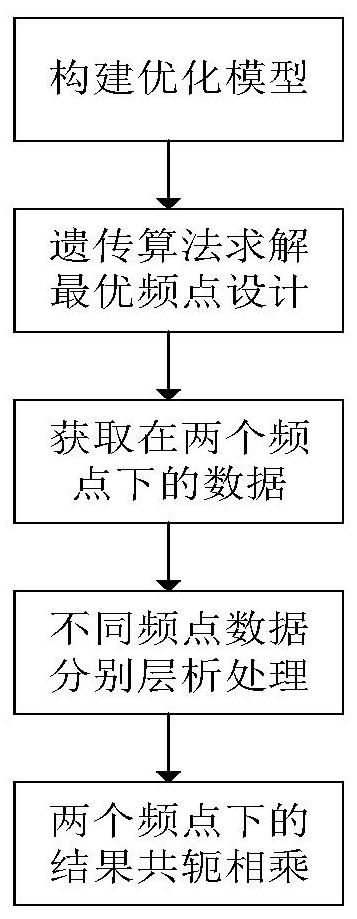
[0044] The present invention provides a tomographic SAR dual-frequency defuzzification method for sparse non-uniform baselines, the process of which is as follows figure 1 shown, including:

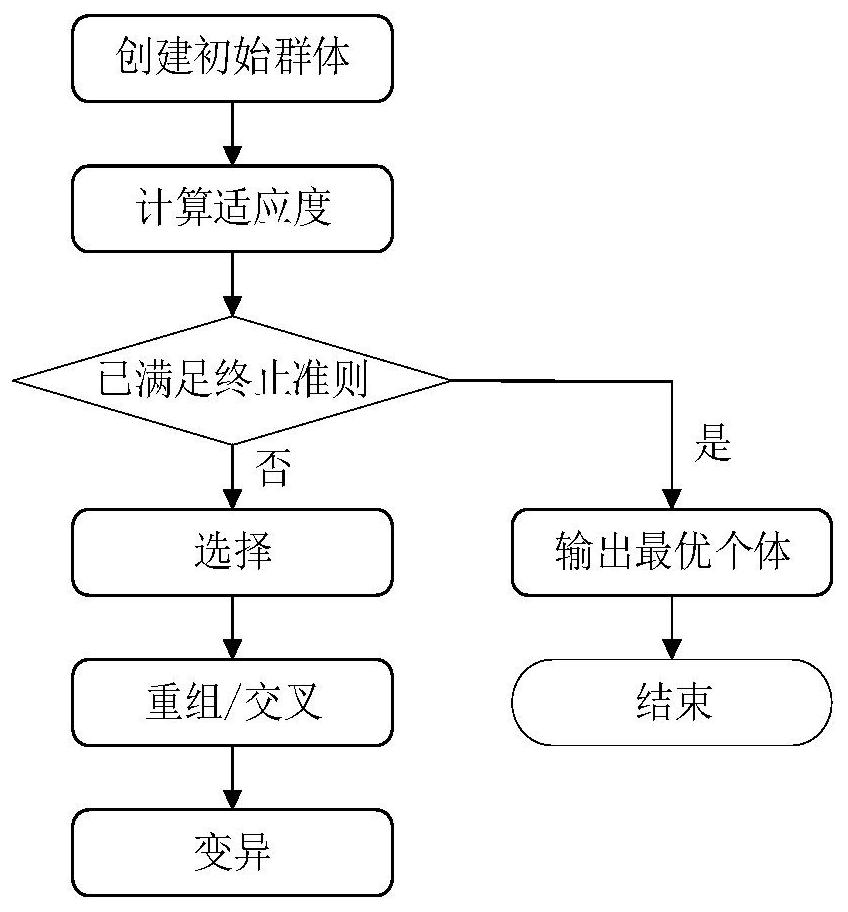
[0045] Step 1. Obtain the position distribution of the sparse non-uniform baseline; take the result image of the conjugate multiplication of the back-projected BP image at the two frequency points, take the peak side lobe ratio as the cost function for the result image, and use the SAR limit Frequency is used as a constraint to construct the optimization equation.

[0046]Specifically: set the first frequency point f 1 and the second frequency point f 2 , written as a frequency point vector f=[f1,f2] T .

[0047] For a single-point target with an altitude of 0, its frequency point f 1 , f 2 The elevation backprojection BP images of are respectively

[0048] ...

the structure of the environmentally friendly knitted fabric provided by the present invention; figure 2 Flow chart of the yarn wrapping machine for environmentally friendly knitted fabrics and storage devices; image 3 Is the parameter map of the yarn covering machine
Login to View More

PUM

No PUM Login to View More

Abstract

The invention discloses a tomographic SAR dual-frequency defuzzification method for sparse non-uniform baselines, relates to the technical field of radar signal processing, can suppress a large number of false targets in three-dimensional imaging caused by sparse non-uniform baselines, and improve image quality. Obtain the position distribution of the sparse non-uniform baseline; take the result image of the conjugate multiplication of the elevation backprojection BP image at two frequency points, take the peak side lobe ratio as the cost function for the result image, and use the SAR limit frequency as the constraint Conditionally build the optimization equation and solve it to get the optimal value f of the two frequency points 1 * ,f 2 * . get in f 1 * ,f 2 * TomoSAR data of each sparse non-uniform baseline under the frequency point. Group the TomoSAR data belonging to the same frequency point into one group, and perform chromatographic processing separately to obtain f 1 * ,f 2 * The estimated value of the backscatter coefficient of the grid whose elevation coordinate is z under the frequency point is conjugated and multiplied to obtain the deblurred image.

Description

technical field [0001] The invention relates to the technical field of radar signal processing, in particular to a tomographic SAR dual-frequency defuzzification method for sparse and non-uniform baselines. Background technique [0002] Tomosynthetic aperture radar (TomoSAR) is an extension of the traditional two-dimensional synthetic aperture radar (SAR) in the third dimension. The tomography technology uses the two-dimensional SAR data obtained by a certain number of radar motion trajectories satisfying a certain distribution, and performs aperture synthesis again in the height direction to realize three-dimensional imaging. However, in some scenarios, the position distribution and number of baselines are limited, and there is a contradiction between the amount of data collected and the resolution. Insufficient number of baselines will lead to blurring, and the non-uniform distribution of baselines will make the blur position distribution irregular, which improves the unde...

Claims

the structure of the environmentally friendly knitted fabric provided by the present invention; figure 2 Flow chart of the yarn wrapping machine for environmentally friendly knitted fabrics and storage devices; image 3 Is the parameter map of the yarn covering machine
Login to View More

Application Information

Patent Timeline
no application Login to View More
Patent Type & Authority Patents(China)
IPC IPC(8): G01S13/90
CPCG01S13/904G01S13/9021
Inventor 王岩丁泽刚李莹曾涛龙腾
Owner BEIJING INSTITUTE OF TECHNOLOGYGY
Features
  • R&D
  • Intellectual Property
  • Life Sciences
  • Materials
  • Tech Scout
Why Patsnap Eureka
  • Unparalleled Data Quality
  • Higher Quality Content
  • 60% Fewer Hallucinations
Social media
Patsnap Eureka Blog
Learn More