Channel convolutional coding method of digital communication system
A convolution coding and channel technology, applied in digital transmission system, using convolution code error correction/error detection, transmission system, etc., can solve the problem of consuming precious resources of the processor, and achieve the effect of convenient segmented convolution
- Summary
- Abstract
- Description
- Claims
- Application Information
AI Technical Summary
Problems solved by technology
Method used
Image

Examples
Embodiment Construction
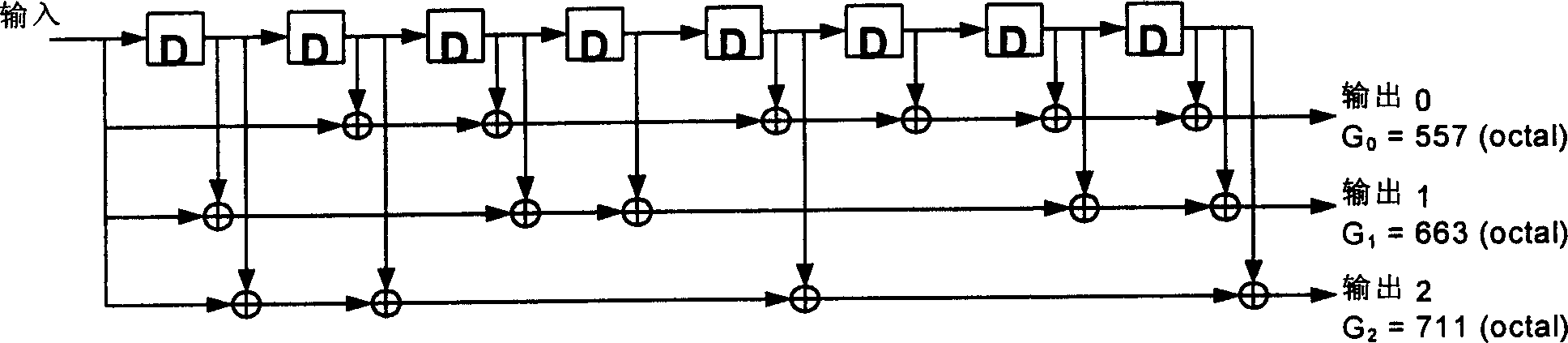
[0039] figure 1 The shown 3G TS 25.212 v3.1.1 specification of 3GPP is a hardware implementation circuit of a 1 / 3 convolutional code whose rate is lower than 32 kbps. It can be seen from the knowledge of the coding principle that the coding storage of the encoder is 8, and the coding constraint degree N is 9. It is widely used in data communication systems, especially the third generation mobile communication systems. The following will specifically explain how to use the impulse response to implement convolutional coding.
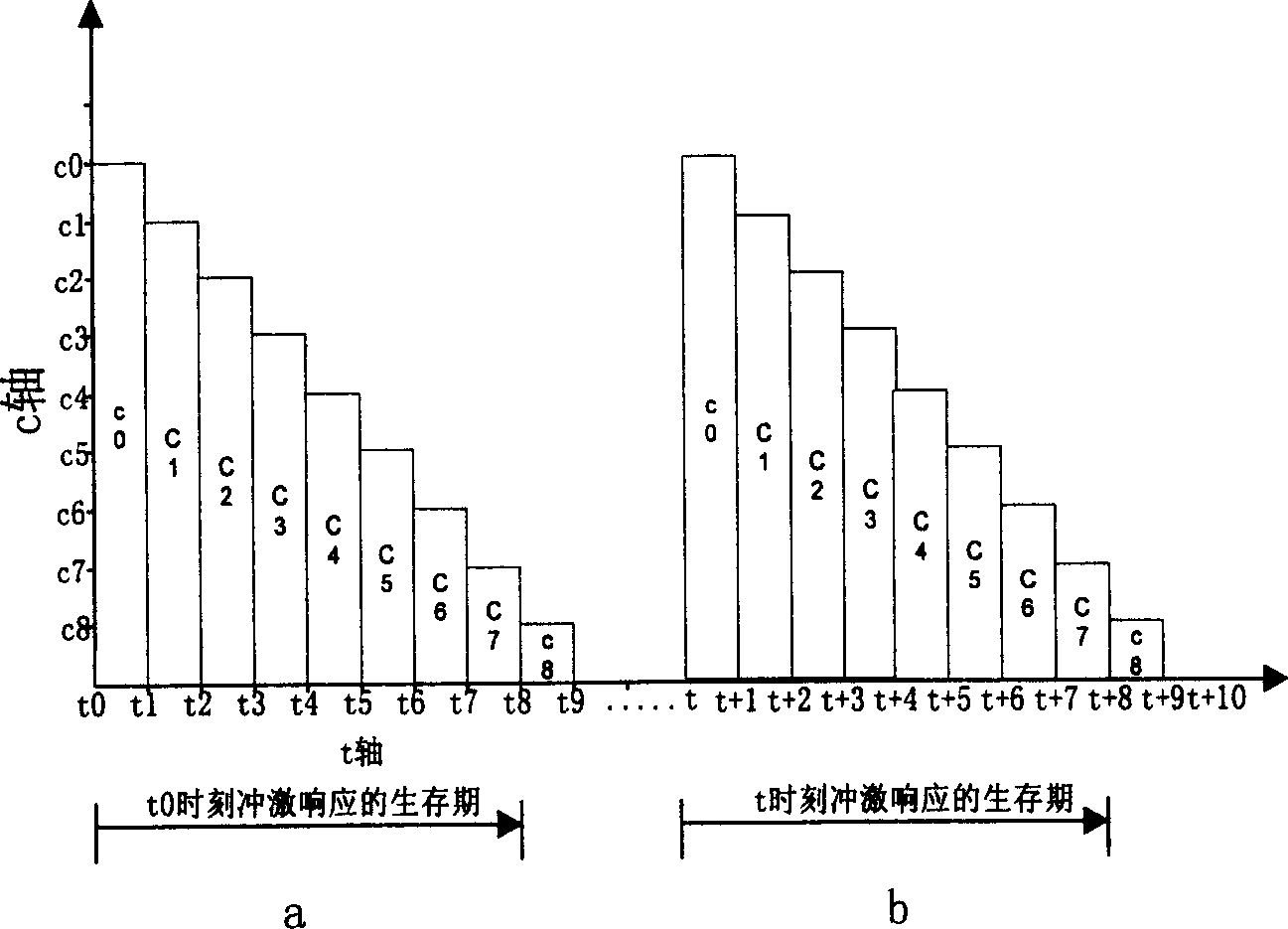
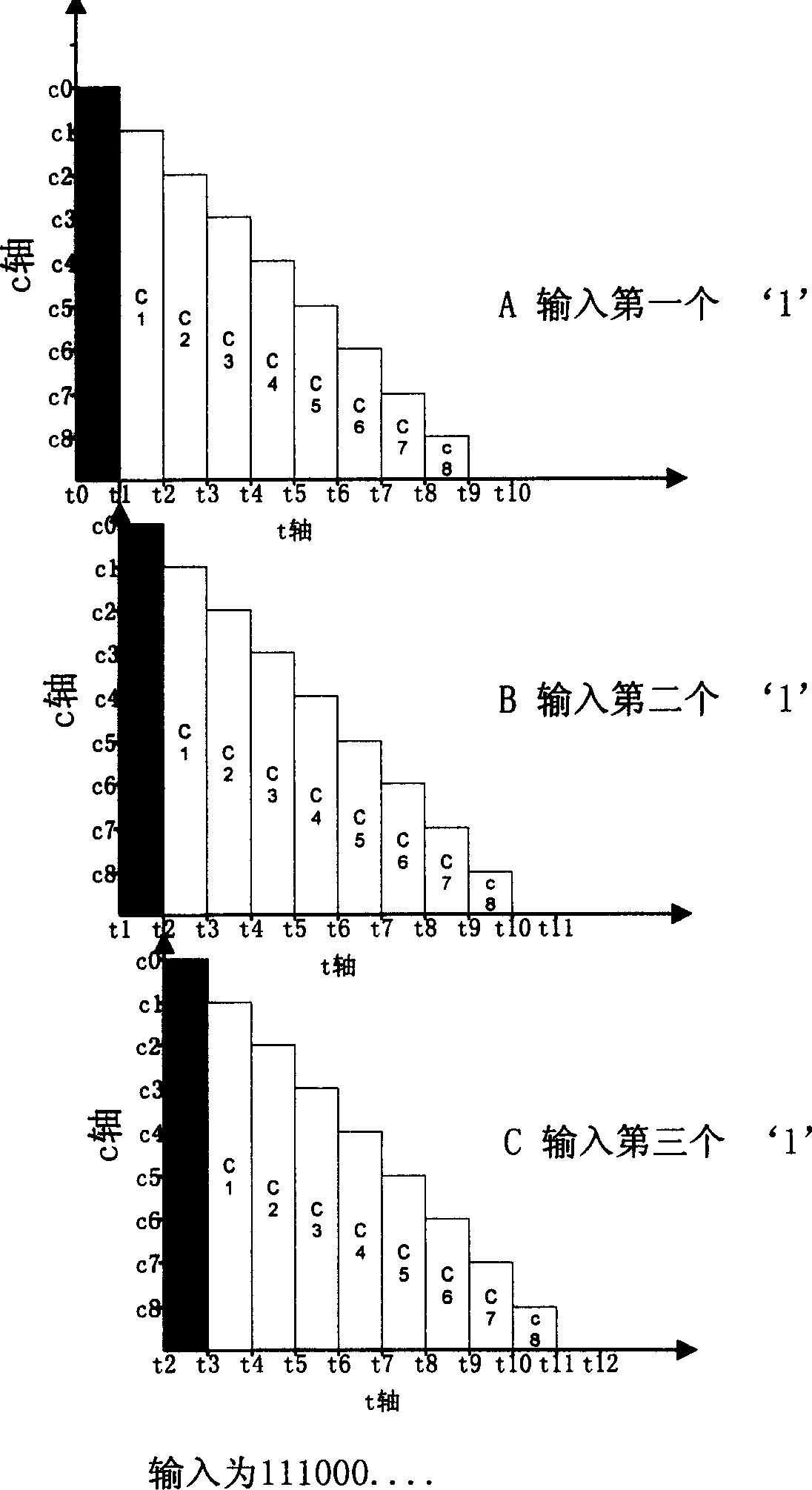
[0040] by figure 2 For example, inputting a bit M(t) at any time t is equivalent to figure 1 The encoder generates an impulse, and the corresponding '1' impulse response is the nine codewords c0...c8 corresponding to t, t+1, ..., t+8; when the input bit is 0, The '0' impulse response is t, t+1,..., t+8 corresponding to c0...c8 nine codewords (except that the code elements are all 0 at this time), called t...t+ 8 is the survival period of the impulse,...
PUM
 Login to View More
 Abstract
Description
Claims
Application Information
 Login to View More
 - R&D
- Intellectual Property
- Life Sciences
- Materials
- Tech Scout
- Unparalleled Data Quality
- Higher Quality Content
- 60% Fewer Hallucinations
Browse by: Latest US Patents, China's latest patents, Technical Efficacy Thesaurus, Application Domain, Technology Topic, Popular Technical Reports.
© 2025 PatSnap. All rights reserved.Legal|Privacy policy|Modern Slavery Act Transparency Statement|Sitemap|About US| Contact US: help@patsnap.com