
Vibration damping device for motor vehicle transmission drivetrain
a technology of vibration damping and transmission drivetrain, which is applied in the direction of mechanical equipment, low internal friction springs, and gear details, etc., can solve the problems of limited angular deflection of damping devices as described in the document fr 3000155, and the filtering performance of damping devices as described, so as to reduce angular stiffness and increase filtering performance
- Summary
- Abstract
- Description
- Claims
- Application Information
AI Technical Summary
Benefits of technology
Problems solved by technology
Method used
Image

Examples
Embodiment Construction
)
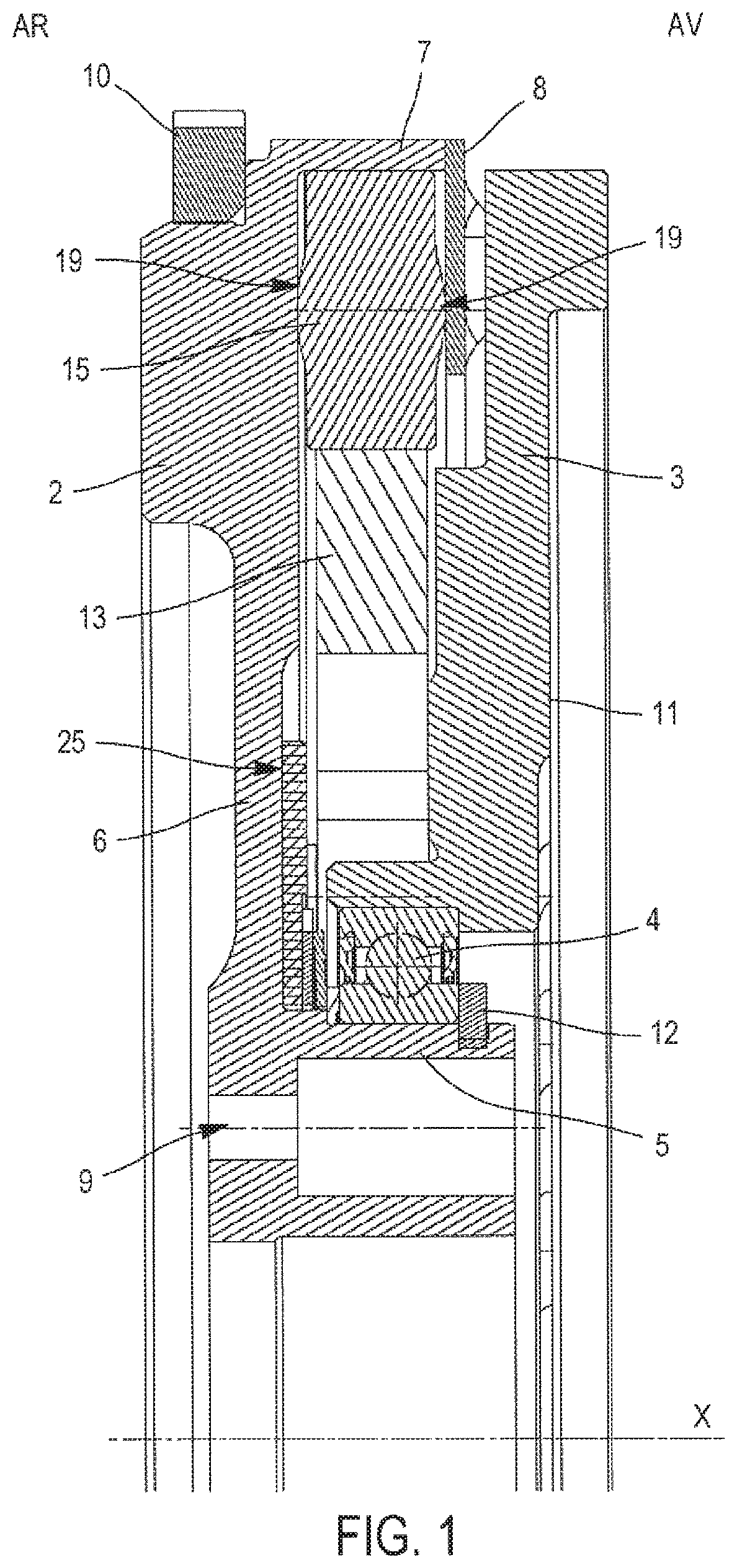
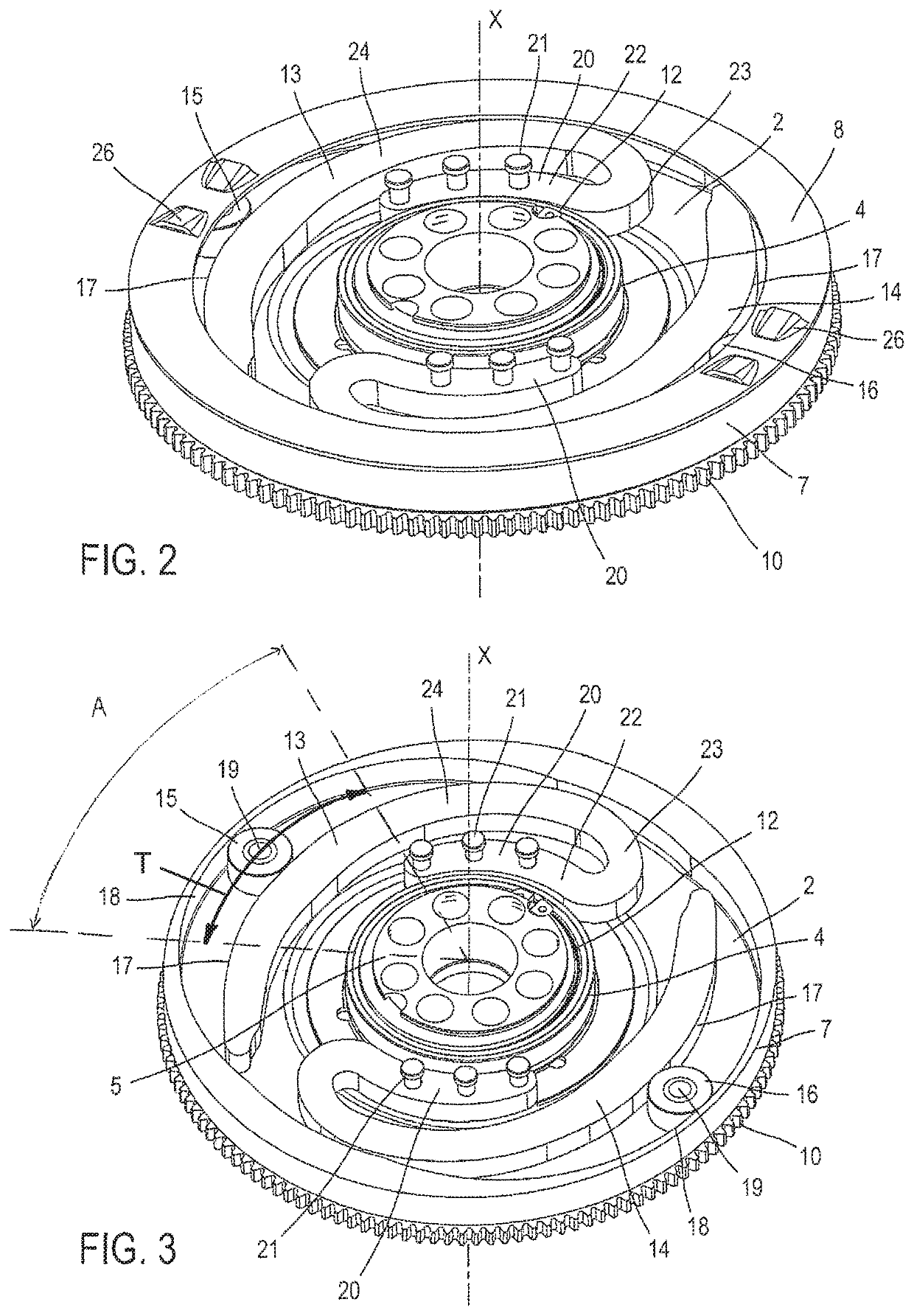
[0068]In the description and the claims, the terms “outer” and “inner,” as well as the “axial” and “radial” orientations, will be used to designate elements of the vibration damping device in accordance with the definitions given in the description. By convention, the “radial” orientation is directed orthogonally to the rotation axis X of the damping device which determines the “axial” orientation; and, moving away from said axis from inside to outside, the “circumferential” orientation is directed orthogonally to the axis of the damping device and orthogonally to the radial direction. The terms “outer” and “inner” are used to define the relative position of one element with respect to another with reference to the rotation axis X of the damping device; an element close to the axis is thus categorized as “inner” as opposed to an “outer” element situated radially at the periphery. The terms “rear” (AR) and “front” (AV) are also used to define the relative position of one element wit...
PUM
 Login to View More
 Abstract
Description
Claims
Application Information
 Login to View More