
Treatment of solid containing material derived from effluent
a technology of solid containing materials and effluent, which is applied in the direction of inorganic compound addition, pulp liquor regeneration, separation devices, etc., can solve the problems of affecting the optical properties of particulate products
- Summary
- Abstract
- Description
- Claims
- Application Information
AI Technical Summary
Benefits of technology
Problems solved by technology
Method used
Image

Examples
example
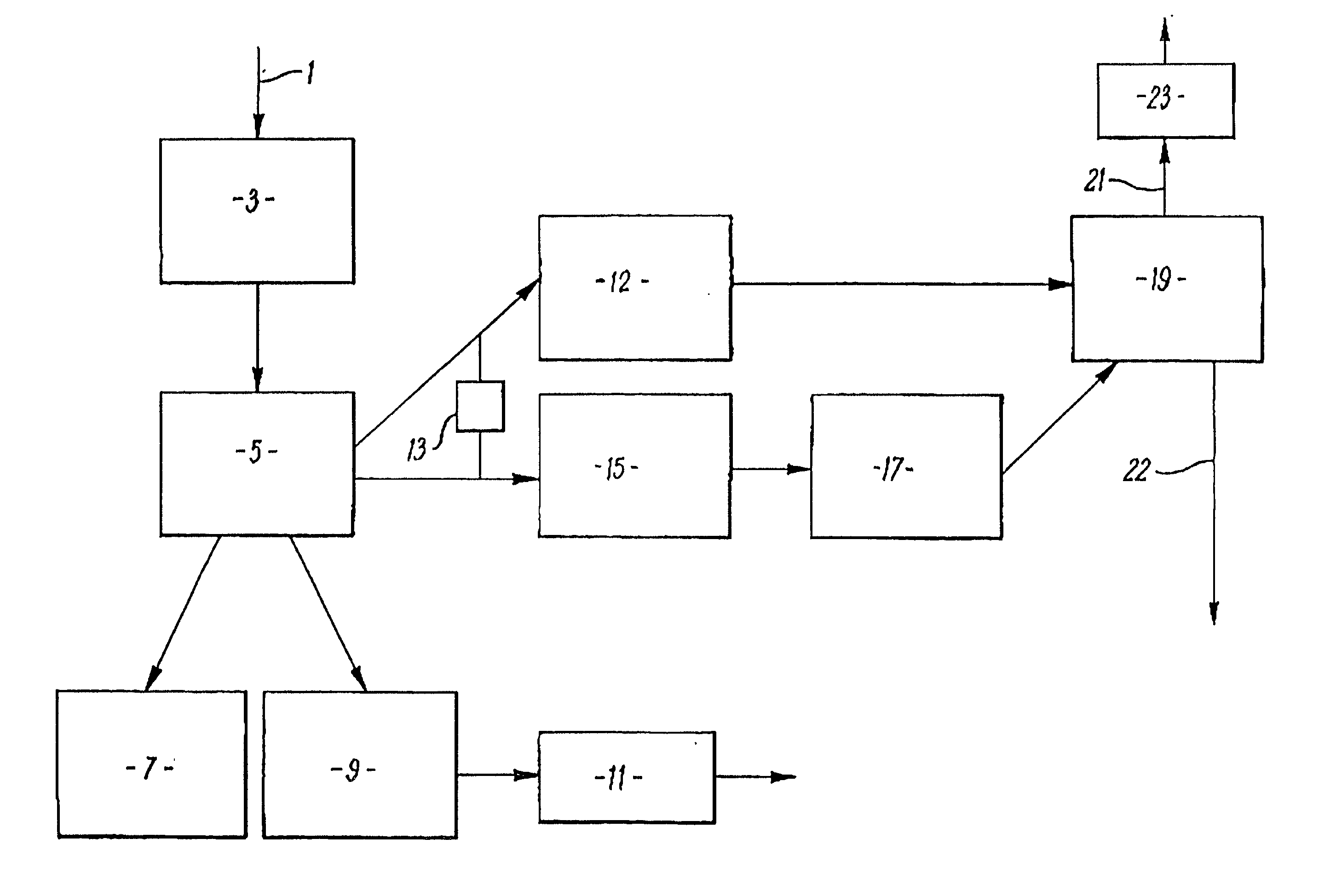
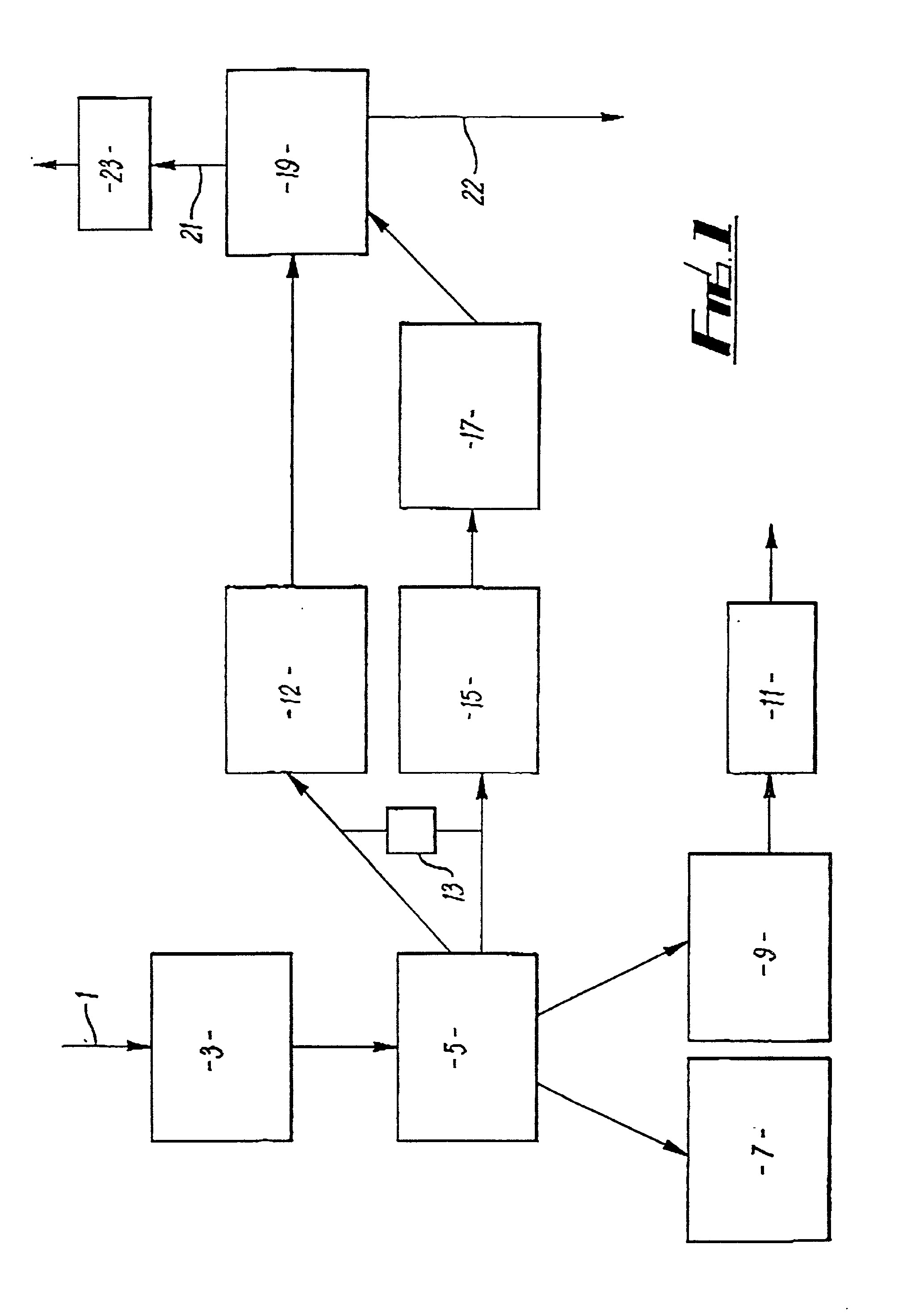
[0043] A deinking sludge having a calcium carbonate content of about 5% by weight and a kaolin content of about 40% by weight, based on the dry solids weight of the sludge, was treated in the manner described with reference to FIG. 1 by addition of dilute hydrochloric acid to dissolve the calcium carbonate present followed by incineration and calcination in a furnace at a temperature of about 1000.degree. C. for several hours overnight. The product obtained was redispersed in water and milled by sandgrinding and then subjected to the tests described later in this Example. The Product is there referred to as `Product 2`. For comparison purposes, a further product, Product 1, was made without acid dissolution by the more complicated and costly method described in EP798268 using carefully controlled incineration and calcination at a temperature of 750.degree. C.
[0044] Products 1 and 2 were tested as follows:
[0045] The ISO brightness was measured and the particle size distribution was m...
PUM
| Property | Measurement | Unit |
|---|---|---|
| temperature | aaaaa | aaaaa |
| temperature | aaaaa | aaaaa |
| temperature | aaaaa | aaaaa |
Abstract
Description
Claims
Application Information
 Login to View More