
Oral care implement
a technology for implements and teeth, applied in the field of oral care implements, can solve the problems of insufficient effectiveness of scrapers on the soft tissue inability to reach broad flat scraping blades, and inability to clean the surface of the tongue, etc., and achieve the effect of effective removal and improved cleaning
- Summary
- Abstract
- Description
- Claims
- Application Information
AI Technical Summary
Benefits of technology
Problems solved by technology
Method used
Image

Examples
example 1
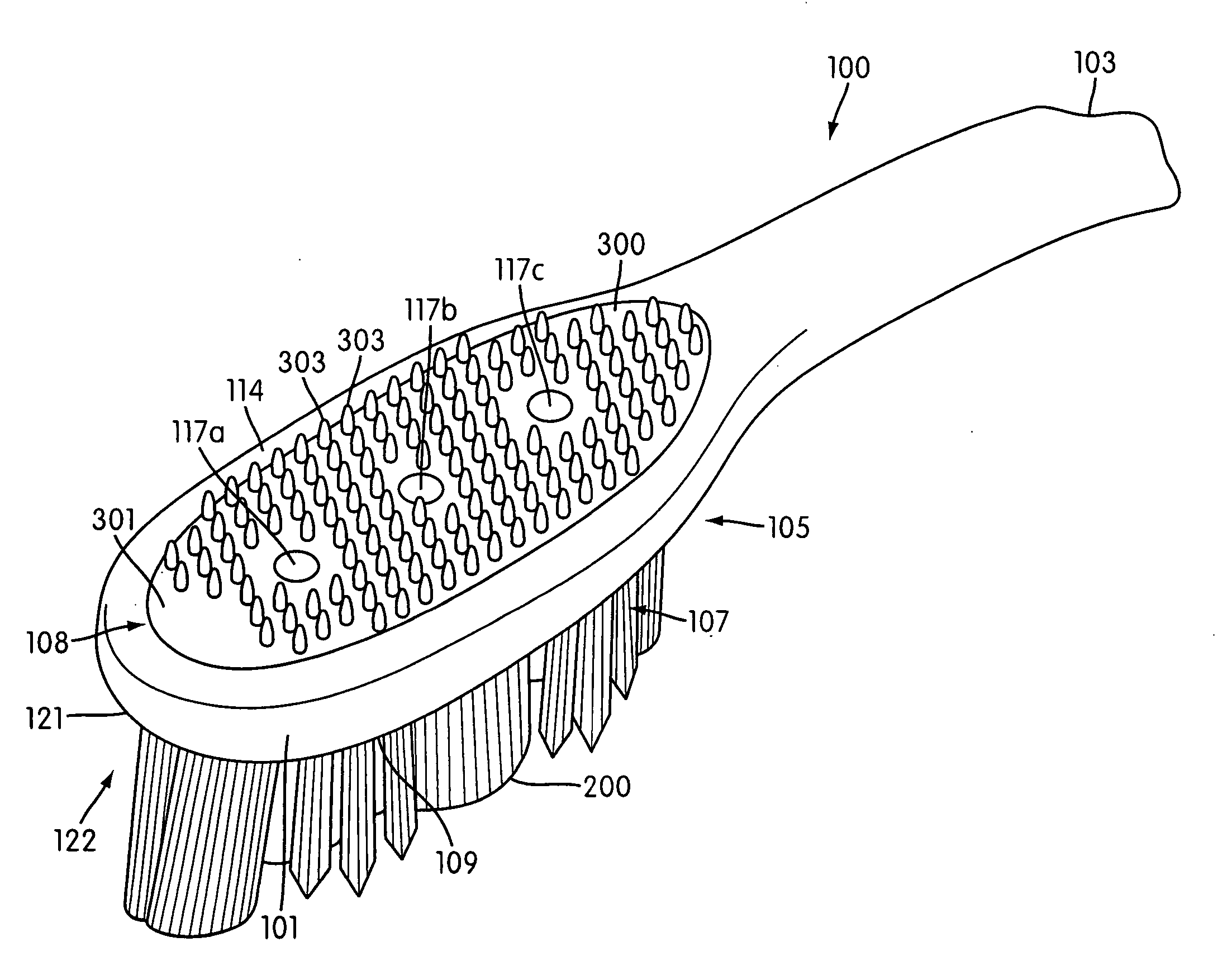
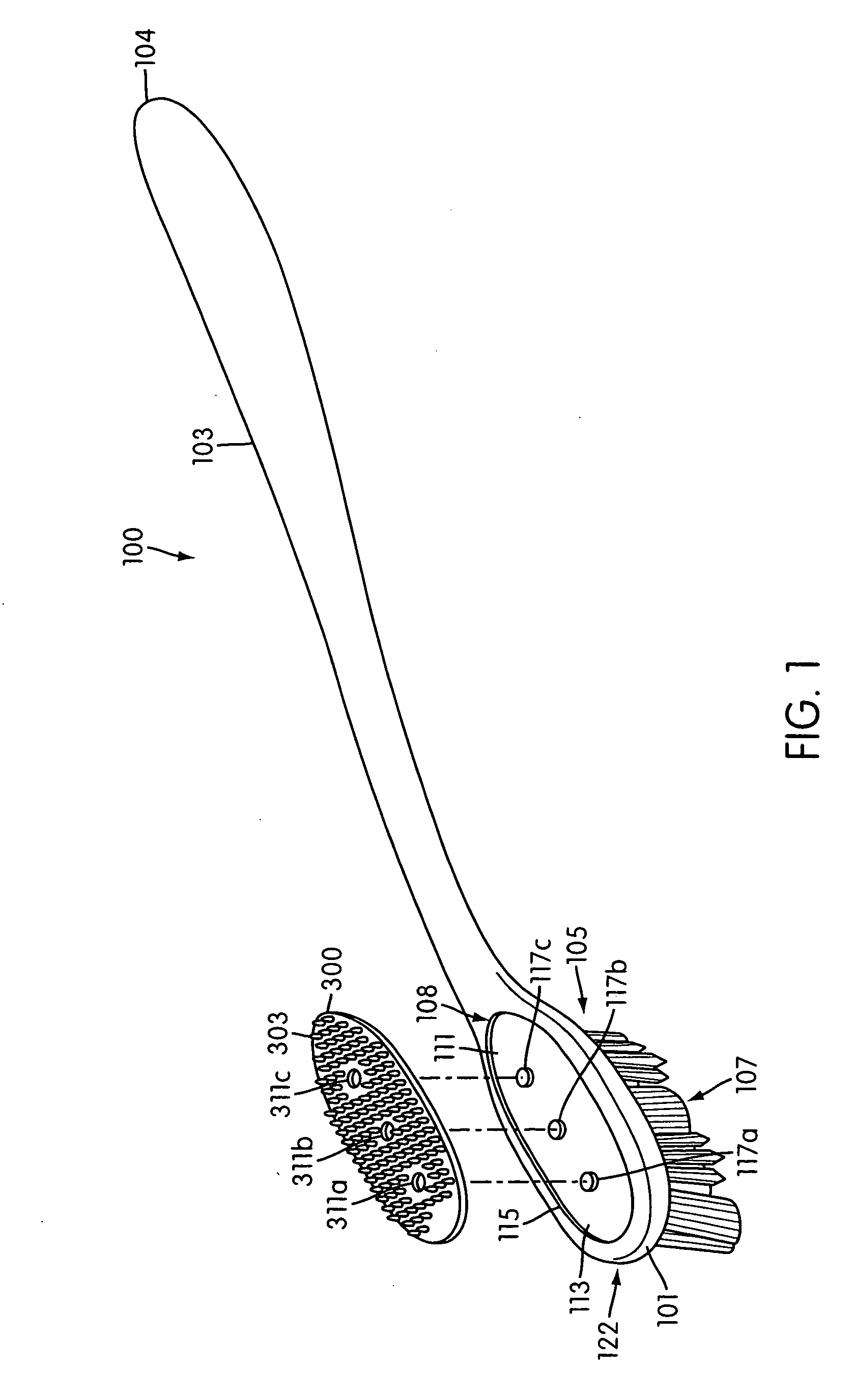
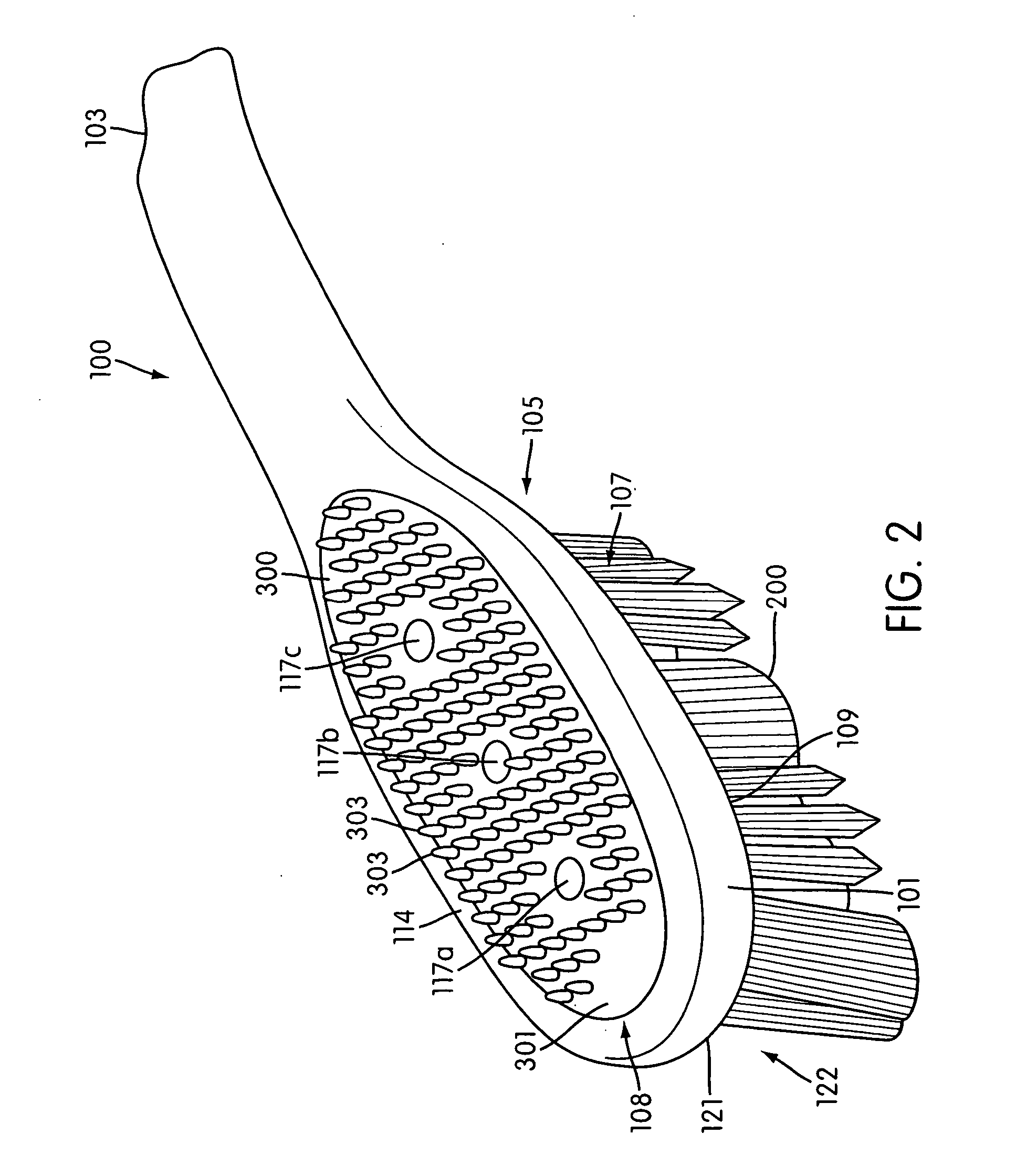
[0040] The performance nature of a toothbrush can be measured using known oral malodor assessment methods. A study was conducted to evaluate the performance of a toothbrush provided with an elastomeric tissue cleanser having conically shaped nubs, such as the preferred construction of toothbrush 100 discussed above. Human test subjects participated in the study. There was a washout or normalization period prior to testing of about 7 days in which the test subjects brushed twice a day with a fluoride dental cream (see Table 1). After the washout period, the test subjects were asked to refrain from any oral hygiene (brushing, rinsing, and flossing), eating and drinking prior to oral testing. A baseline volatile sulfur compound (VSC) sample was taken from each of the test subjects. In the study for overnight odor control, the test subjects brushed their teeth for one minute with a fluoride dental cream (see Table 1) using toothbrush 100 provided with the above noted tissue cleanser 300...
example 2
[0041] In another study of the above-noted toothbrush 100, there was a washout or normalization period prior to testing of about 7 days which the test subjects brushed twice a day with a fluoride dental cream (see Table 1). The test subjects were asked to refrain from any oral hygiene (brushing, rinsing, and flossing), eating and drinking before testing. After the washout period, the test subjects provided a baseline tongue bacteria sample by swabbing a side of the back of the tongue with a sterile cotton swab. The test subjects brushed their teeth with a fluoride dental cream (see Table 1) for one minute with the toothbrush having the above-noted tissue cleanser. Subsequently, the test subjects cleaned their tongue surface with a preferred construction of the tissue engaging elements 300 of the toothbrush 100 for ten seconds. Two hours after the cleaning of the tongue surface, a tongue bacteria sample was taken from a side of the back of the tongue with a cotton swab. In the illust...
example 3
[0042] In another study of the above-noted toothbrush, a MTT assay was used to examine the viability of the epithelial cells collected from the oral cavity prior to and after the use of the toothbrush with the noted tissue cleanser. The MTT Assay was based on the enzymatic reduction of the tetrazolium salt MTT [3-(4,5-dimethylthiazol-2-yl)-2,5-diphenyl-tetrazoliumbromide+++] in living, metabolically active cells. The reaction was carried out in situ in test tubes, and the reaction product, a purple-colored formazan soluble in dimethylsulfoxide, was measured colormetrically using a multiwell plate reader. Advantageously, the MTT Assay offers a high degree of precision, ease of use, and suitability for the purpose for large scale chemosensitivity testing.
[0043] Following a 7-day washout period, the test subjects reported to a test site without prior eating, drinking, or performing oral hygiene. The test subjects provided salivary rinse samples by rinsing their oral cavity with 9 ml o...
PUM
| Property | Measurement | Unit |
|---|---|---|
| Fraction | aaaaa | aaaaa |
| Time | aaaaa | aaaaa |
| Elastomeric | aaaaa | aaaaa |
Abstract
Description
Claims
Application Information
 Login to View More