

Mouthpiece for a wind instrument
a wind instrument and mouthpiece technology, applied in the field of mouthpieces, can solve the problems of not being able to play good sound played by the instrument with the mouthpiece (b>50/b>), and not being able to achieve the desired sound. the effect of improving the timbre and improving the sound
- Summary
- Abstract
- Description
- Claims
- Application Information
AI Technical Summary
Benefits of technology
Problems solved by technology
Method used
Image

Examples
Embodiment Construction
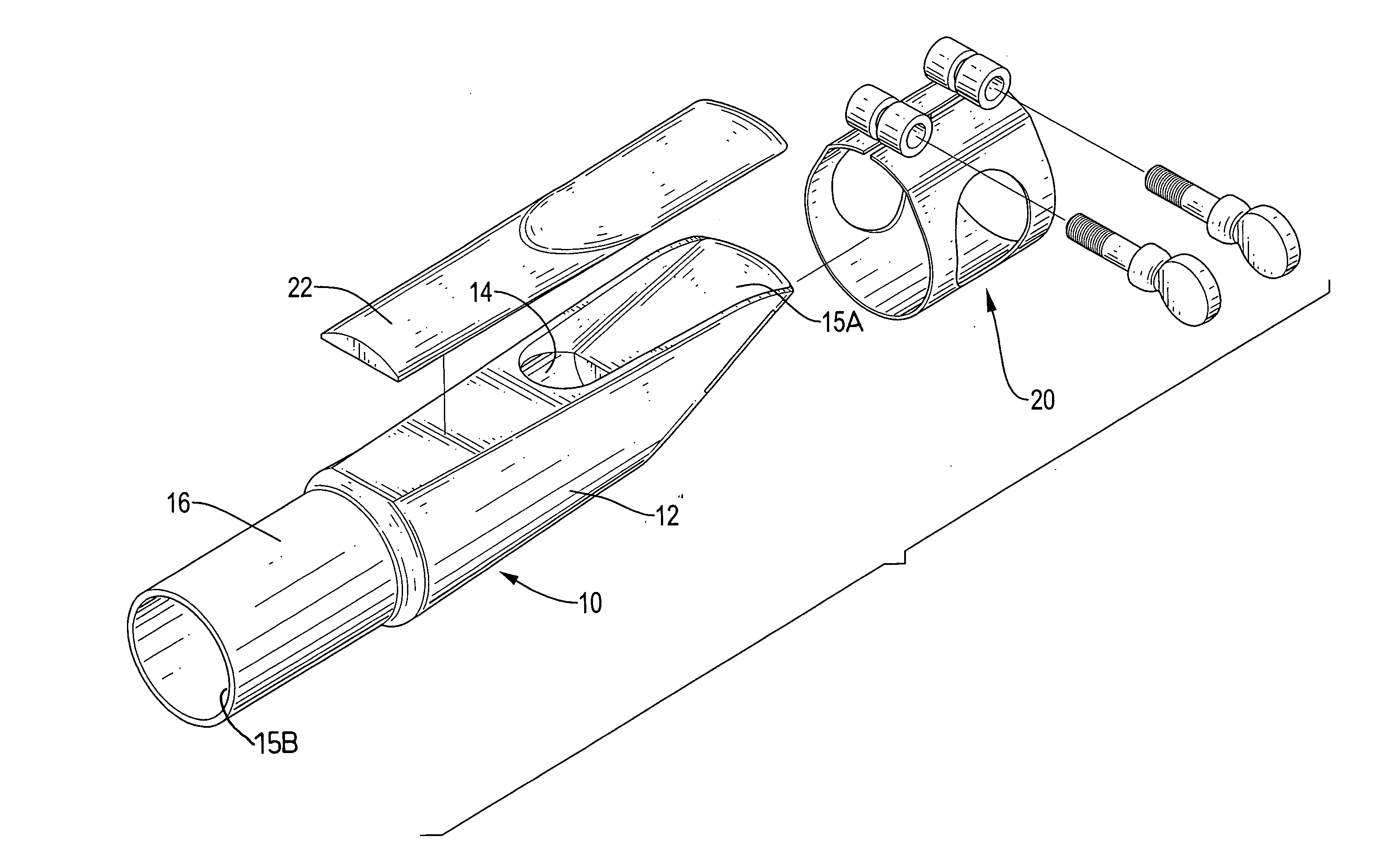
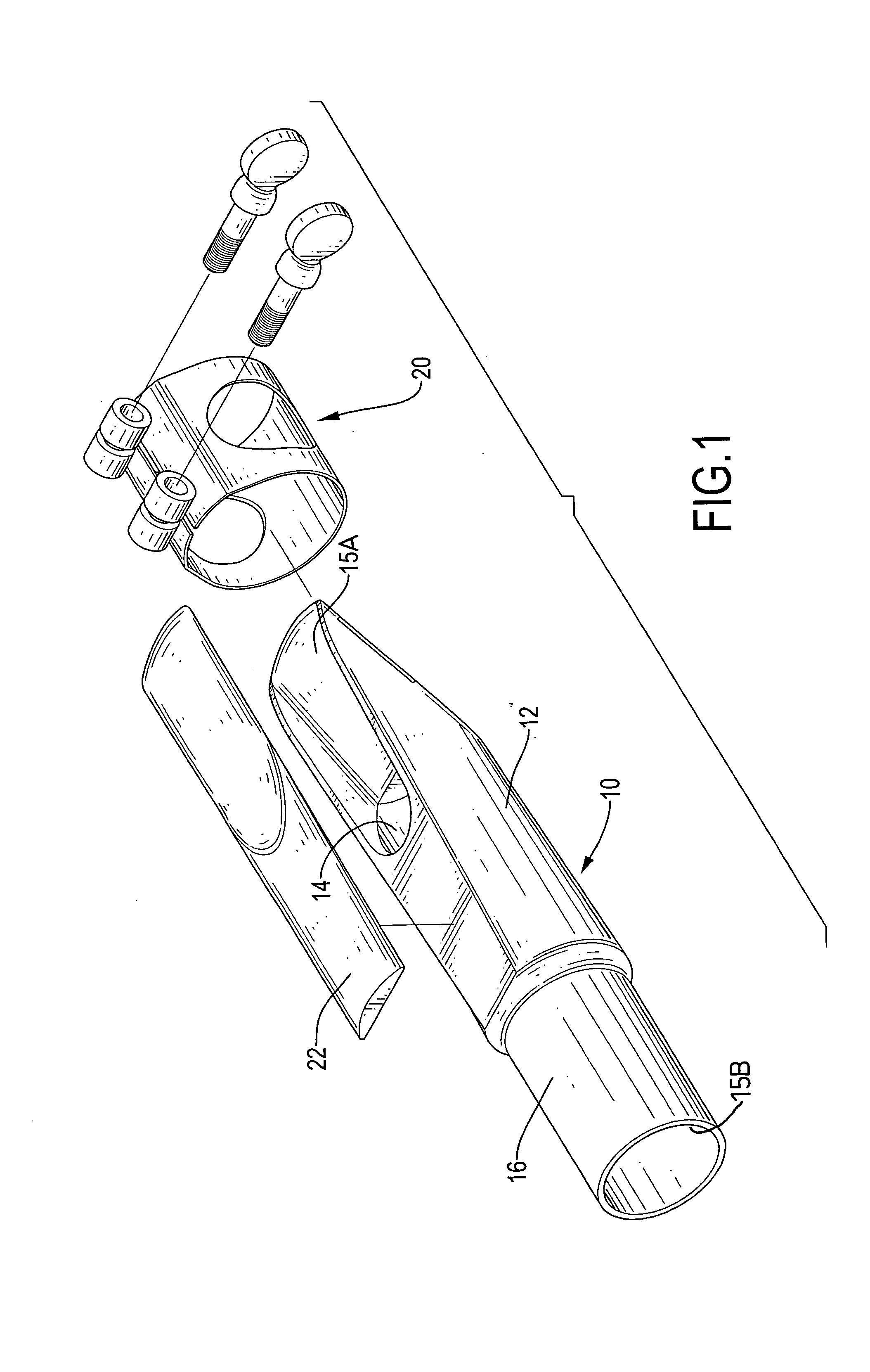
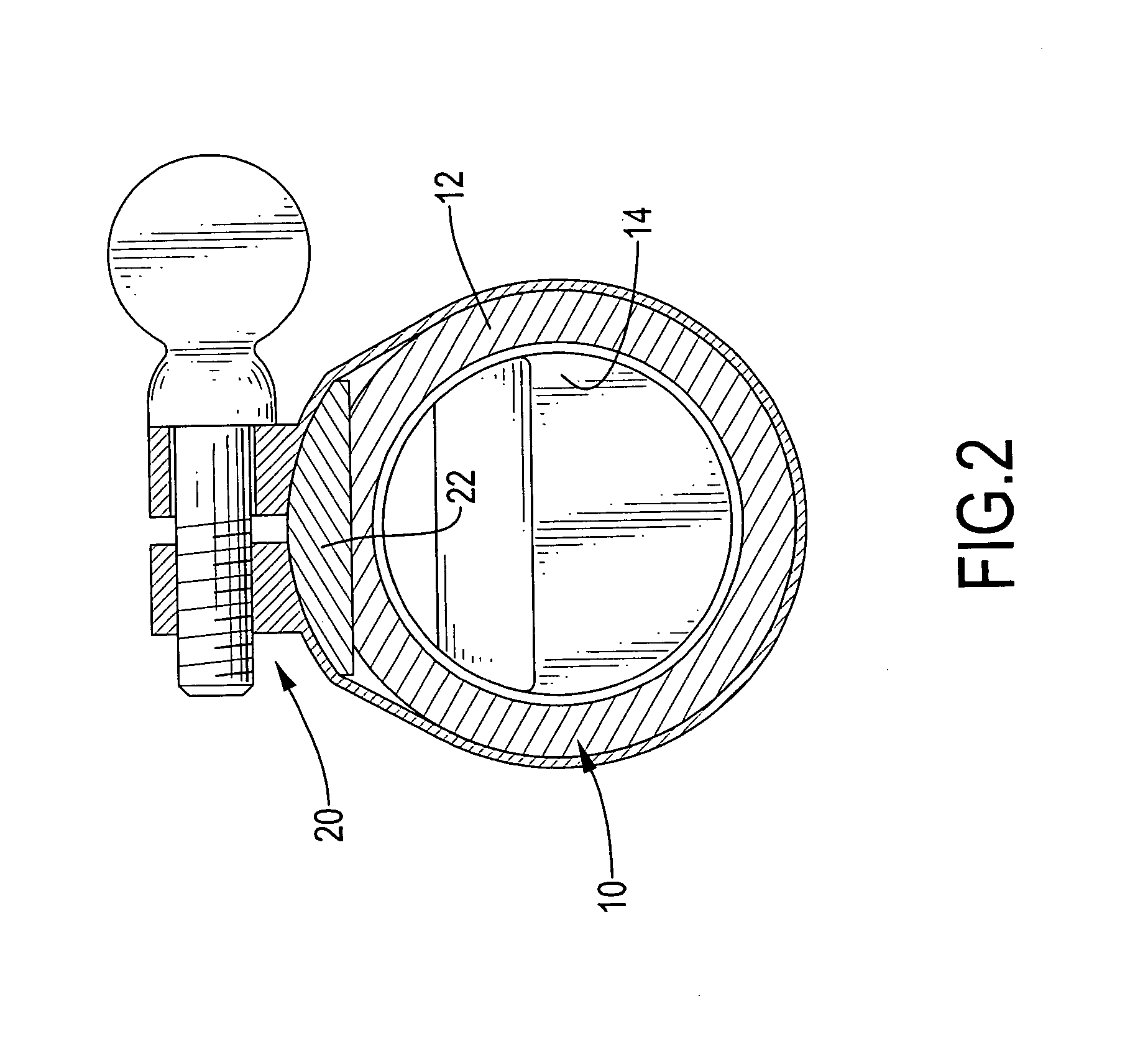
[0013] With reference to FIGS. 1 and 2, a mouthpiece (10) for a wind instrument comprises a body (12) made of porcelain clay and having a mouth end, a connection end (16) and a channel (14). The mouth end of the body (12) is adapted for contacting with a user's mouth. The connection end (16) is connected to the wind instrument to enable the mouthpiece (10) to be mounted on the instrument, The channel (14) is defined through the body (12) and has two openings (15A, 15B) at respective ends of the body (12). A resonance plate or reed (22) made of bamboo is attached to the body (12) with a plate holder (20) and corresponds to the opening (15) opposite to the connection end (16). Accordingly, a resonant effect is provided by the resonance plate (22) when a user blows air into the channel (14) through the opening (15).
[0014] The characteristics of porcelain clay are such that the mouthpiece (10) has an enough hardness to make the sound played by the instrument with the mouthpiece (10) ac...
PUM
 Login to View More
 Abstract
Description
Claims
Application Information
 Login to View More