
Devices used to treat disc herniation and attachment mechanisms therefore
a technology of disc herniation and devices, applied in the field of devices used to treat disc herniation, can solve problems such as further complications
- Summary
- Abstract
- Description
- Claims
- Application Information
AI Technical Summary
Benefits of technology
Problems solved by technology
Method used
Image

Examples
Embodiment Construction
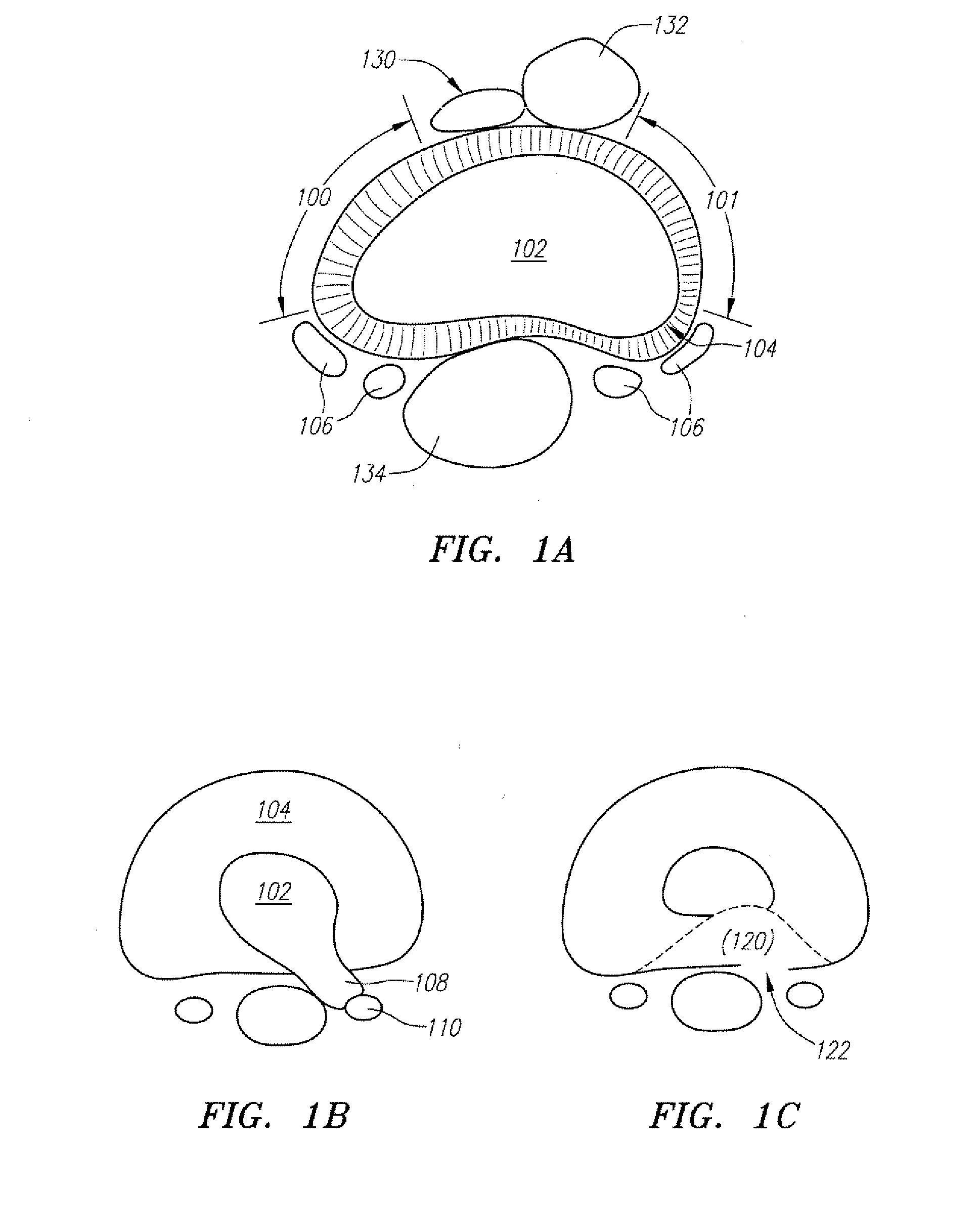
[0076]As discussed above, this invention resides in various alternative components and procedures used to treat disc herniation and recurrent disc herniation. Depending upon the precise mechanism and procedural protocol, the devices may be introduced anteriorally, posteriorally, percutaneously or laproscopically.
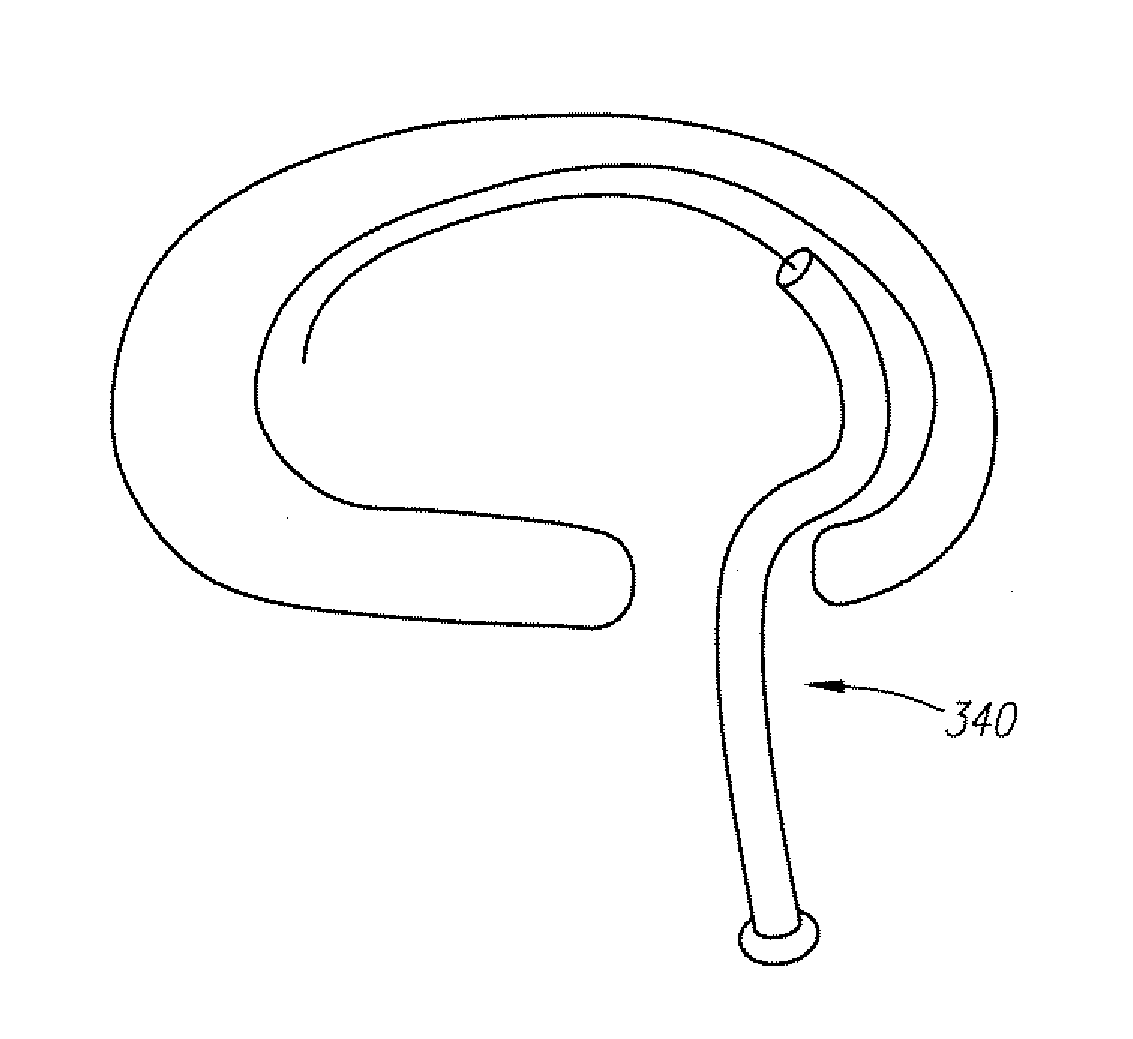
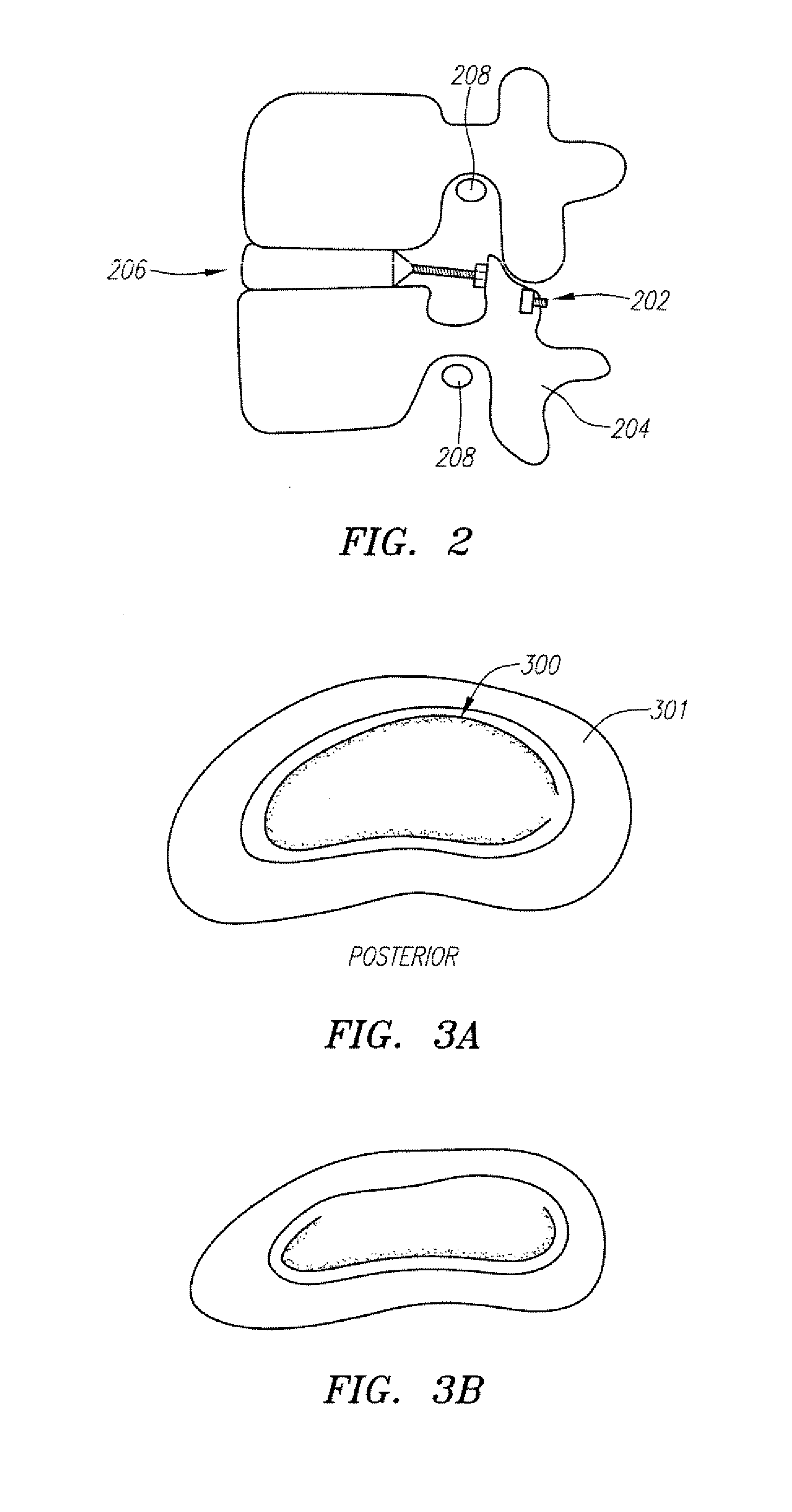
[0077]FIGS. 3 and 4 refer an to embodiment of the invention wherein a band is placed around the inside of the disc. This may be placed percutaneously or endoscopically utilizing steerable catheters, spinal endoscopes, and other endoscopic instruments currently in use by surgeons. Fluoroscopic guidance may advantageously be used. A single wire, band or other structure, which may or may not include a shape-memory material, is introduced into the disc space. Depending upon the circumstances, a wider band may be slid over a previously introduced smaller wire.
[0078]Minimally invasive procedures of this kind may be used on patients whose herniation has healed naturally. The proced...
PUM
| Property | Measurement | Unit |
|---|---|---|
| vertical dimension | aaaaa | aaaaa |
| length | aaaaa | aaaaa |
| width | aaaaa | aaaaa |
Abstract
Description
Claims
Application Information
 Login to View More