
Stabilization of biosolids using iron nanoparticles
a biosolids and iron nanoparticle technology, applied in the field of biosolids stabilization and processing, can solve the problems of severe limitation in the practice of land application, and achieve the effects of reducing or eliminating, reducing the surface area, and inhibiting the growth of one or more pathogens
- Summary
- Abstract
- Description
- Claims
- Application Information
AI Technical Summary
Benefits of technology
Problems solved by technology
Method used
Image

Examples
Embodiment Construction
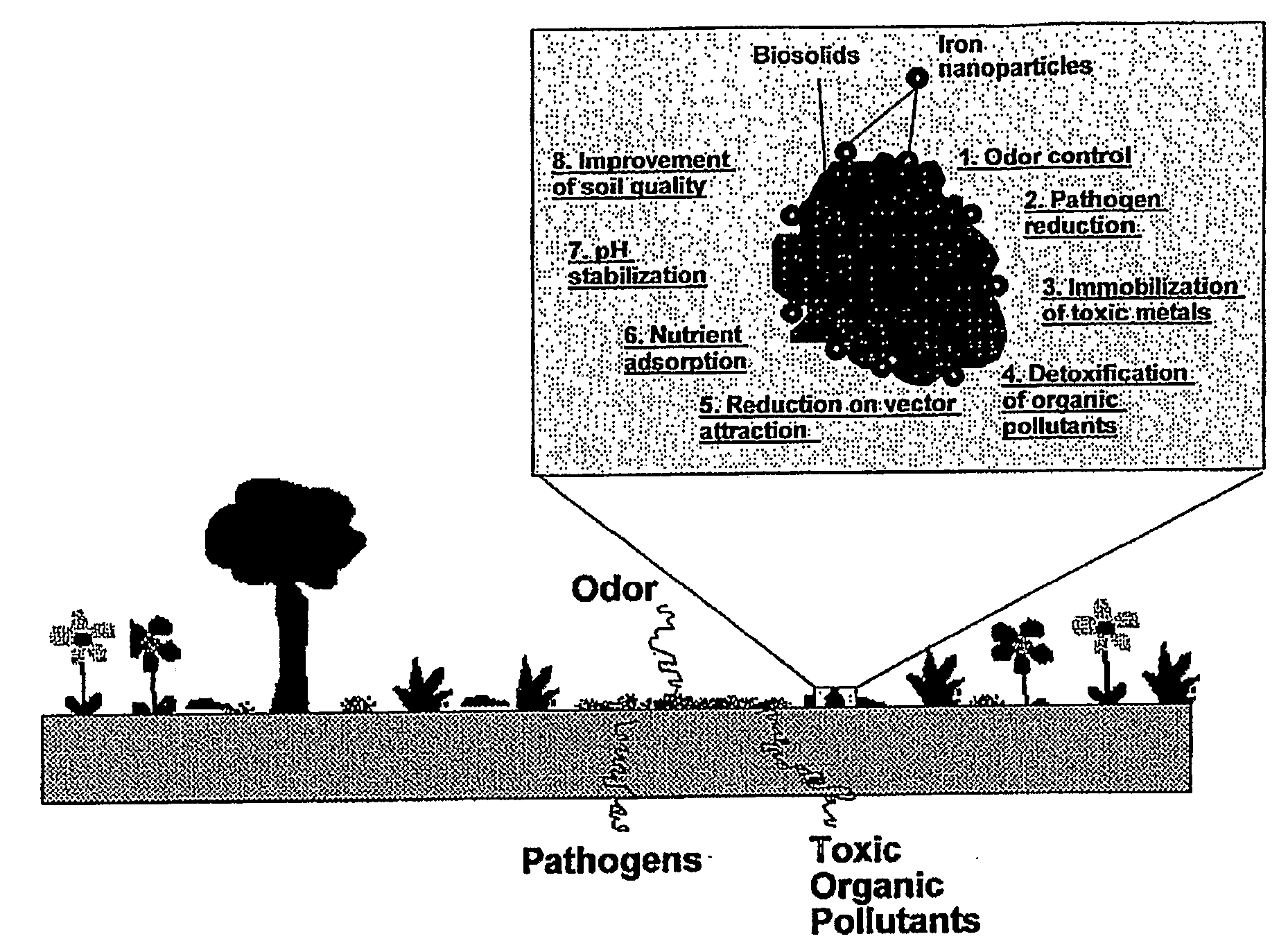
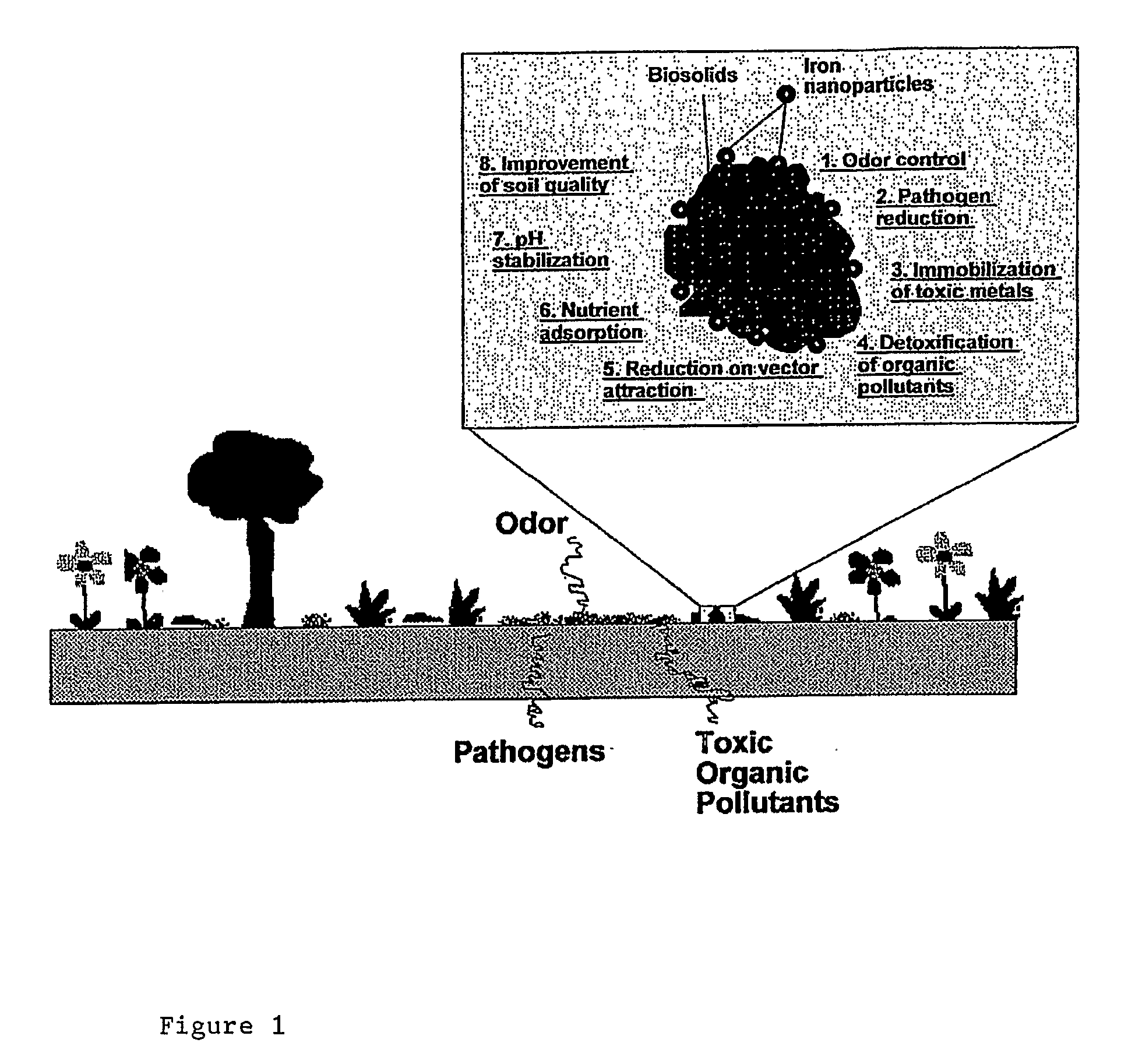
[0021]Biosolids refer to sludge produced in various wastewater treatment processes. Biosolids consist primarily of organic substances. For example, 59%-88% by weight of biosolids from activated sludge treatment of municipal wastewater are organic materials.
[0022]Biosolids are often disposed on agricultural land, forests, rangelands, or disturbed land in need of reclamation. This is known as land application. Disposal of biosolids through land application serves many beneficial purposes. It provides an economic method for the disposal of large volumes of biosolids generated everyday. Land applications reduce the erosion of soil, improve soil properties, such as texture, and water holding capacity. This makes conditions more favorable for root growth and increases the drought tolerance of vegetation. Biosolids also contain nutrients essential for plant growth, including nitrogen and phosphorous (Table 1), as well as other essential nutrients such as iron and zinc. The nutrients in the...
PUM
| Property | Measurement | Unit |
|---|---|---|
| specific surface areas | aaaaa | aaaaa |
| diameters | aaaaa | aaaaa |
| pH | aaaaa | aaaaa |
Abstract
Description
Claims
Application Information
 Login to View More