
Platform for Stereoscopy for Hand-Held Film/Video Camera Stabilizers
a stabilizer and film/video technology, applied in the field of stereoscopy platforms using hand-held film/video camera stabilizers, can solve the problems of difficult operation, too far from play to view the action stereoscopically, and heavy camera suppor
- Summary
- Abstract
- Description
- Claims
- Application Information
AI Technical Summary
Benefits of technology
Problems solved by technology
Method used
Image

Examples
Embodiment Construction
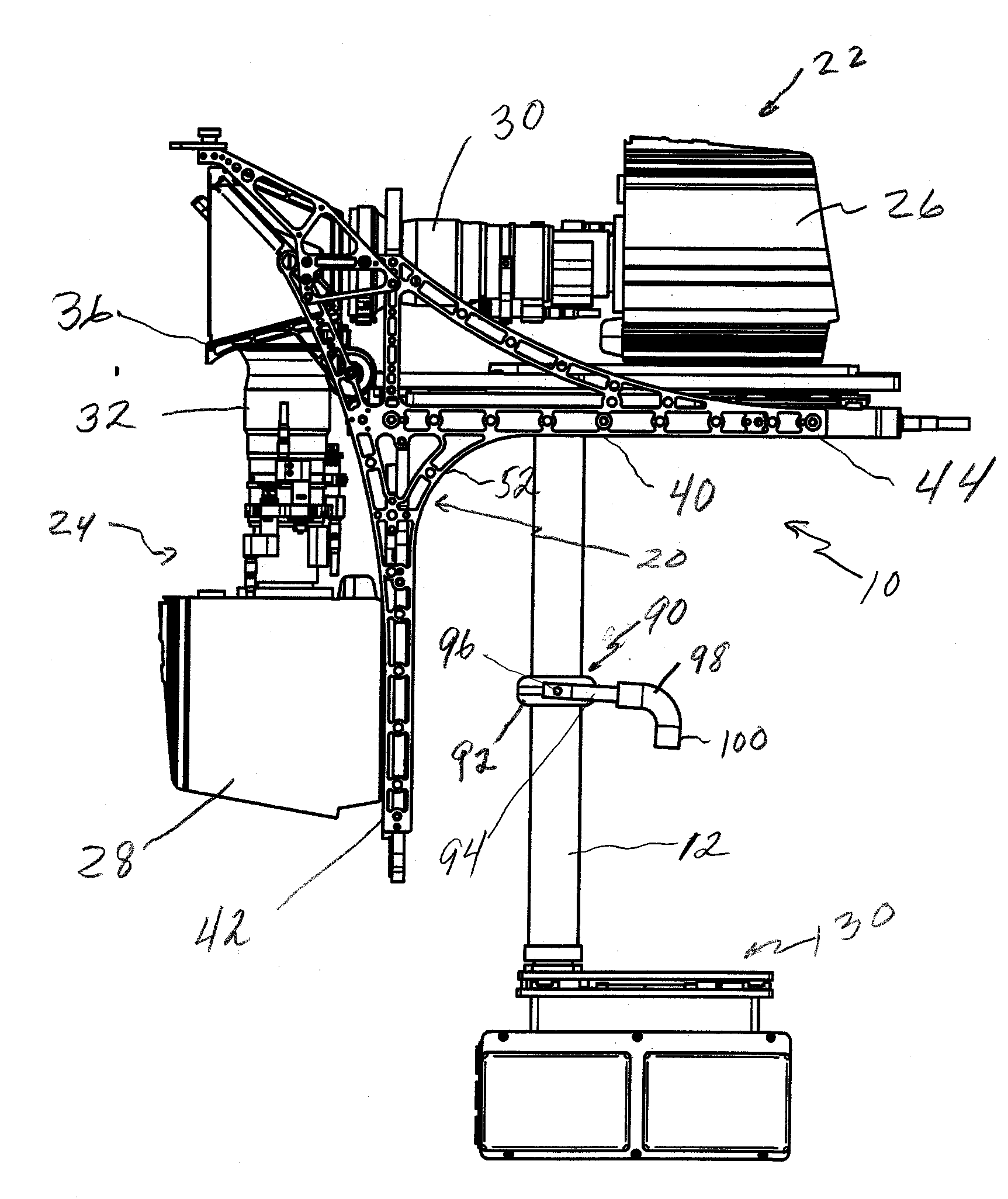
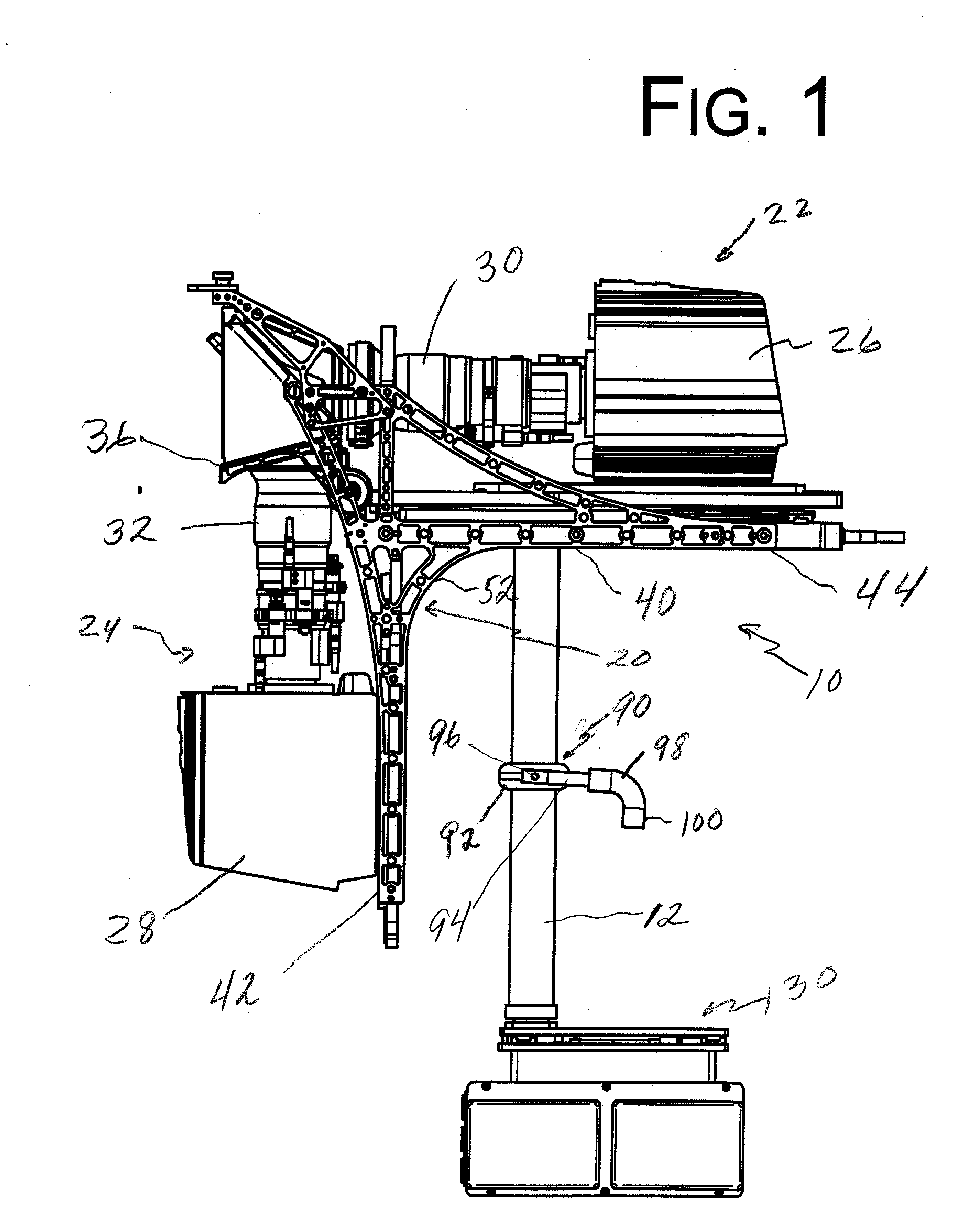
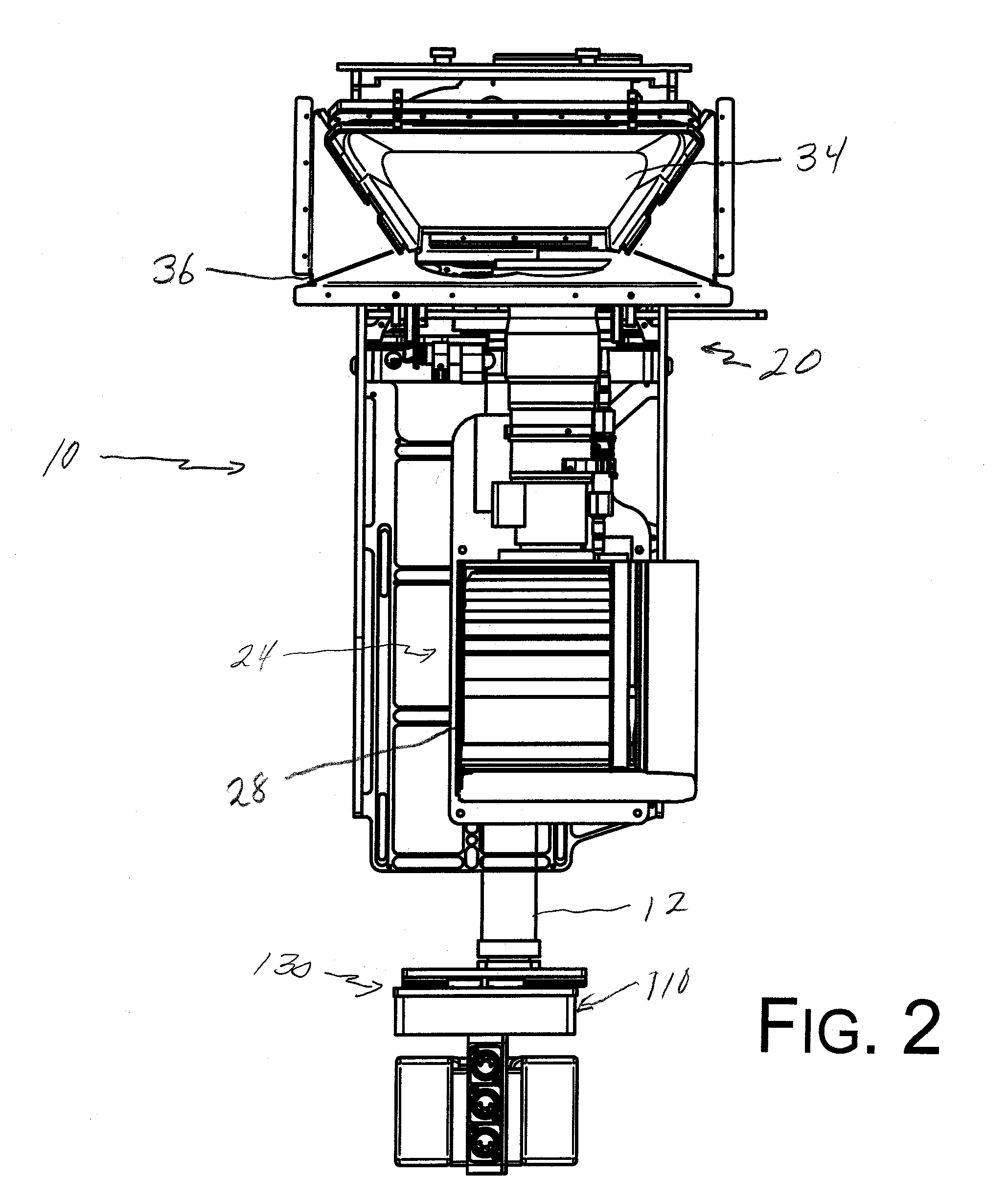
[0037]Convergence and interocular movements of the one or both cameras of stereoscopic camera systems affect the balance of portable camera supports such as Steadicams. The convergence and interocular movements of the camera shift the weight of the system and these can be counteracted by moving either the ballast below the camera or by moving the entire camera itself.
[0038]The system compensates for changes in weight distribution of a portable camera transport. In the exemplary embodiment, portable, hand-held transport system 10 includes an upright support in the form of an elongated pole 12 having a longitudinal axis. The pole is tubular and cylindrical in the exemplary embodiment for high strength and low weight. The pole could be solid and have a polygonal cross-section, however. Other upright supports could be used, but cylindrical poles are the most common shape for the upright support of Stedicams.
[0039]A camera support mounts to one end of the elongated pole. In the exemplary...
PUM
 Login to View More
 Abstract
Description
Claims
Application Information
 Login to View More