
Process for removing a coating from surfaces of components using only hydrochloric acid
- Summary
- Abstract
- Description
- Claims
- Application Information
AI Technical Summary
Benefits of technology
Problems solved by technology
Method used
Image

Examples
Embodiment Construction
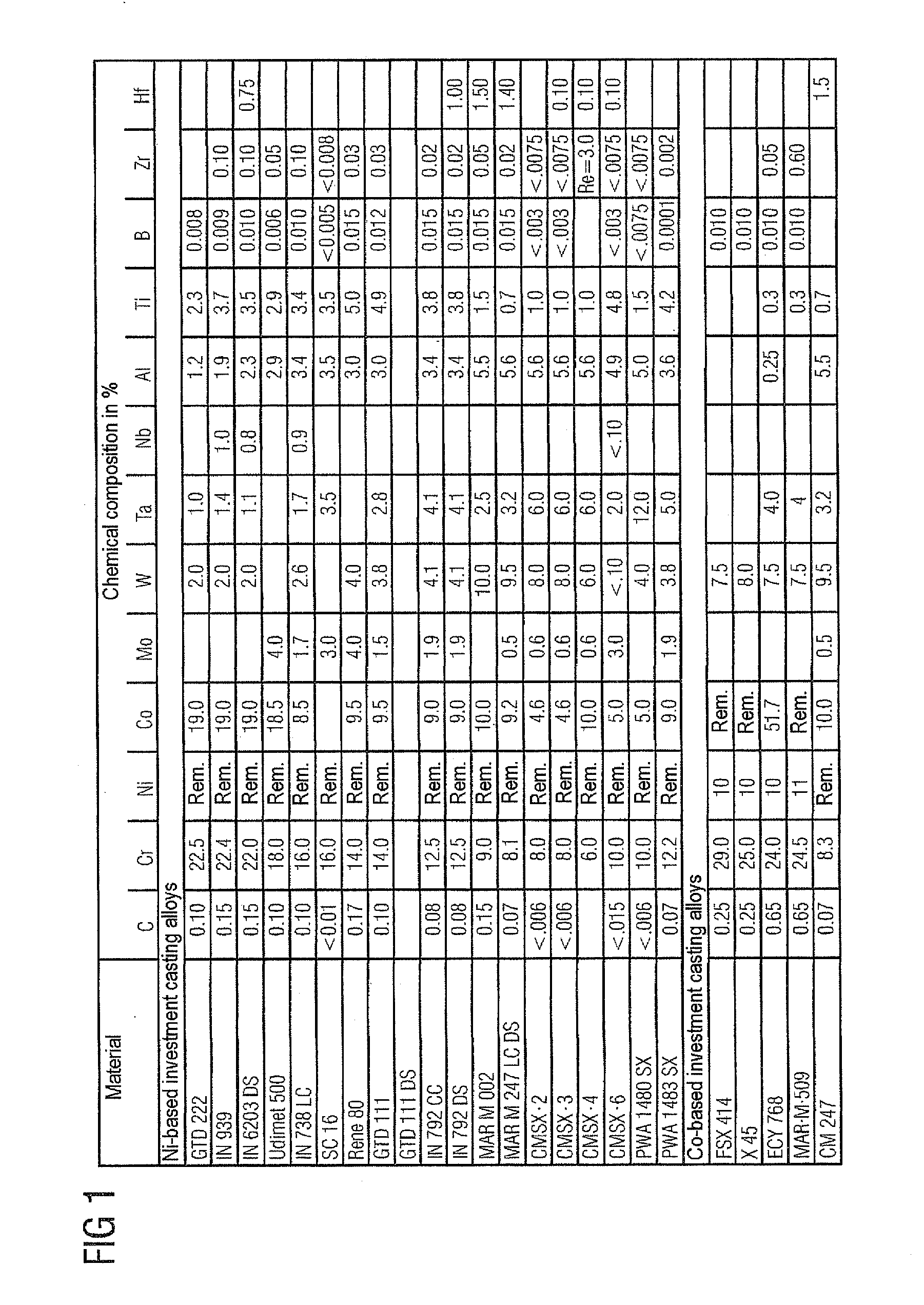
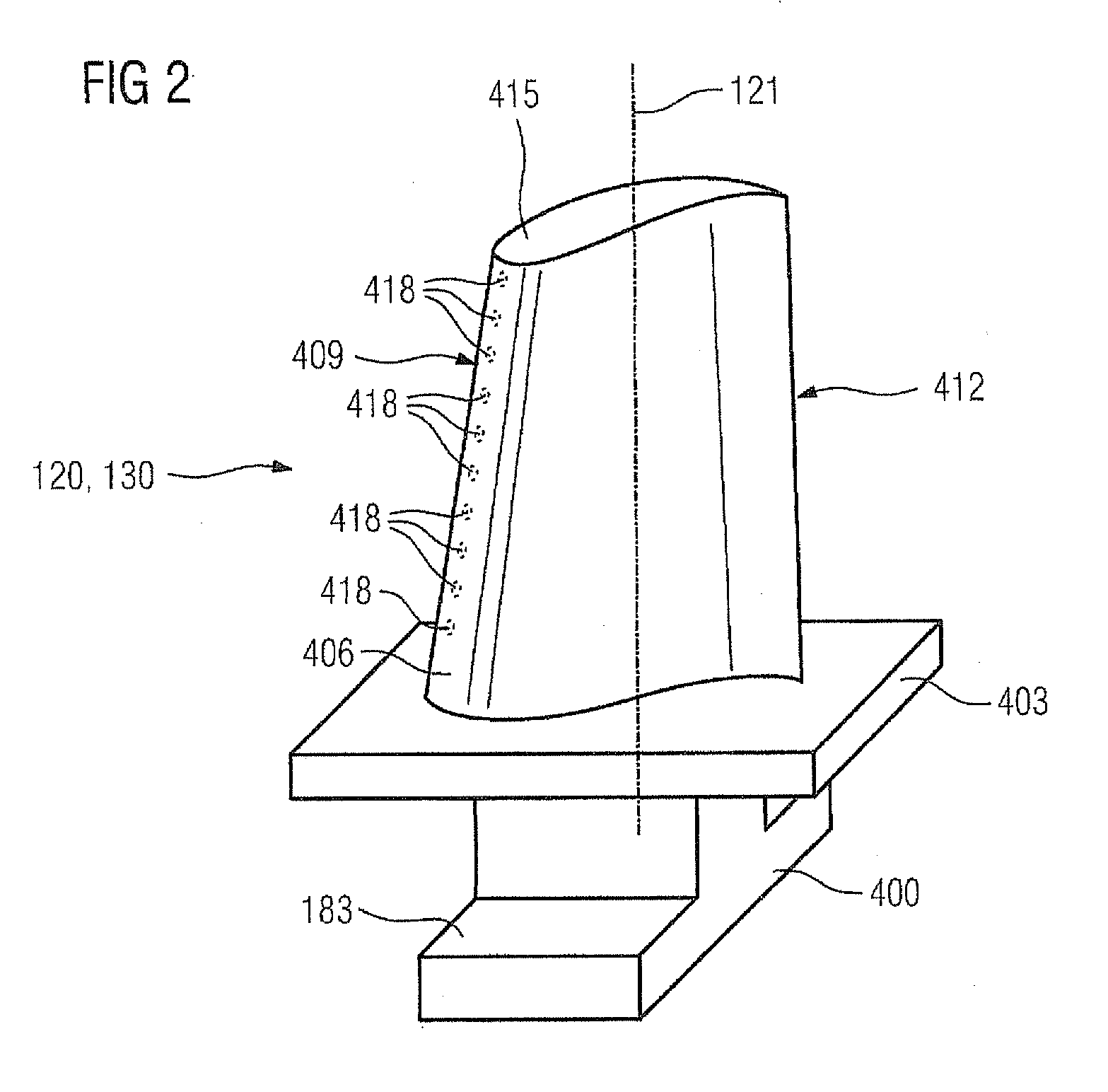
[0011]The interior of turbine blades or vanes 120, 130 (FIG. 2) consisting of nickel- or cobalt-based superalloys (FIG. 1) is often also alitized so that said blades or vanes are protected in their interior, since the interior of the turbine blade or vane 120, 130 is cooled by means of hot steam. The alitization represents for the most part or completely a diffusion layer.
[0012]During the refurbishment, it is expedient to remove the alitization, so that a new alitization can be carried out or so as to simply remove damaged layer regions.
[0013]According to the invention, the interior or in general terms the surface is cleaned using only hydrochloric acid and not using an acid mixture, or else not with the use of or pretreatment by means of fused salts (KOH, NaOH). Similarly, no FIC cleaning is carried out to remove the alitization.
[0014]The concentration of the hydrochloric acid (HCl) is preferably 15% to 30% and very preferably 20% to 25%. The proportion of HCl is preferably calcula...
PUM
| Property | Measurement | Unit |
|---|---|---|
| Temperature | aaaaa | aaaaa |
| Temperature | aaaaa | aaaaa |
| Time | aaaaa | aaaaa |
Abstract
Description
Claims
Application Information
 Login to View More