
Antibodies that specifically bind to tim3
a technology of tim3 and anti-cancer drugs, applied in the direction of fluorescence/phosphorescence, drug compositions, peptides, etc., can solve the problems of not effectively eliminating cancer, all members of the major categories of antineoplastic agents have considerable toxic effects on normal cells, and the inability of anticancer drugs to discriminate between normal and cancer cells, etc., to achieve the effect of reducing inflammation and reducing cancer cell growth
- Summary
- Abstract
- Description
- Claims
- Application Information
AI Technical Summary
Benefits of technology
Problems solved by technology
Method used
Image

Examples
example 1
A. Example 1
TIM3-Specific Antibodies
[0285]Female Balb / C mice were immunized with recombinant human TIM3-Fc fusion protein four times. Two days after final injection, spleen and lymph node cells were fused with SP2 / O cells using PEG and selected in HAT medium. Hybridomas were screened by ELISA for reactivity against recombinant TIM3 protein and positive cultures were confirmed by flow cytometry for recognition of TIM3 expressing cell lines. Selected hybridoma were subcloned by limiting dilution or single cell sorting. Subclones were confirmed by flow cytometry for binding to TIM3. Heavy chain and light chain variable region sequences were amplified using reverse transcriptase polymerase chain reaction (RT-PCR) with specific primers. cDNA products were then sequenced. Table 1 profiles the selected antibodies, e.g., for isotype and CDR sequences.
TABLE 1HybridomaIsotypeVHDHJHVKJK1.7E 10IgG1, kIGHV4-DSP.9JH4IGKV3-JK21*025*017.10F6IgG1, kIGHV5-DSP2.10JH4IGKV8-JK26-3*0127*018.16C10IgG1, kI...
example 2
B. Example 2
Binding Profile for TIM3-Specific Antibodies
[0287]The binding profile of the selected TIM3-specific antibodies was tested on various TIM3-expressing cell lines. Table 2 shows the percentage of cell binding of the indicated antibodies to Pfeiffer cells, Daudi cells, and CMK cells. TIM3 2E2 is an antibody commercially available from eBioscience®, San Diego, Calif. (see, e.g., the website and catalog available at ebioscience.com, catalog number 17-3109, Hastings et al. (2009) Eur. J. Immunol. 39:2492).
TABLE 2Profile of Tim3-specific antibody binding to myeloid and lymphoma cell linesFACS staining (Percent binding)Cell LineDisease1.7E107.10F6.18.16C109.1G1227.2H427.12E12Tim3 2E2PfeifferNon97%92%85%14%75%97%97%Hodgkin's(Geomean =(Geomean =(Geomean =Lymphoma.439)458)308)Diffuse large91%B cellLymphomaDaudiBurkitt's95%98%67%Neg.46%92%90%Lymphoma97%CMKAcute32%NDND 2%Neg.18%19%megakaryo-cyticleukemia.AML-M7
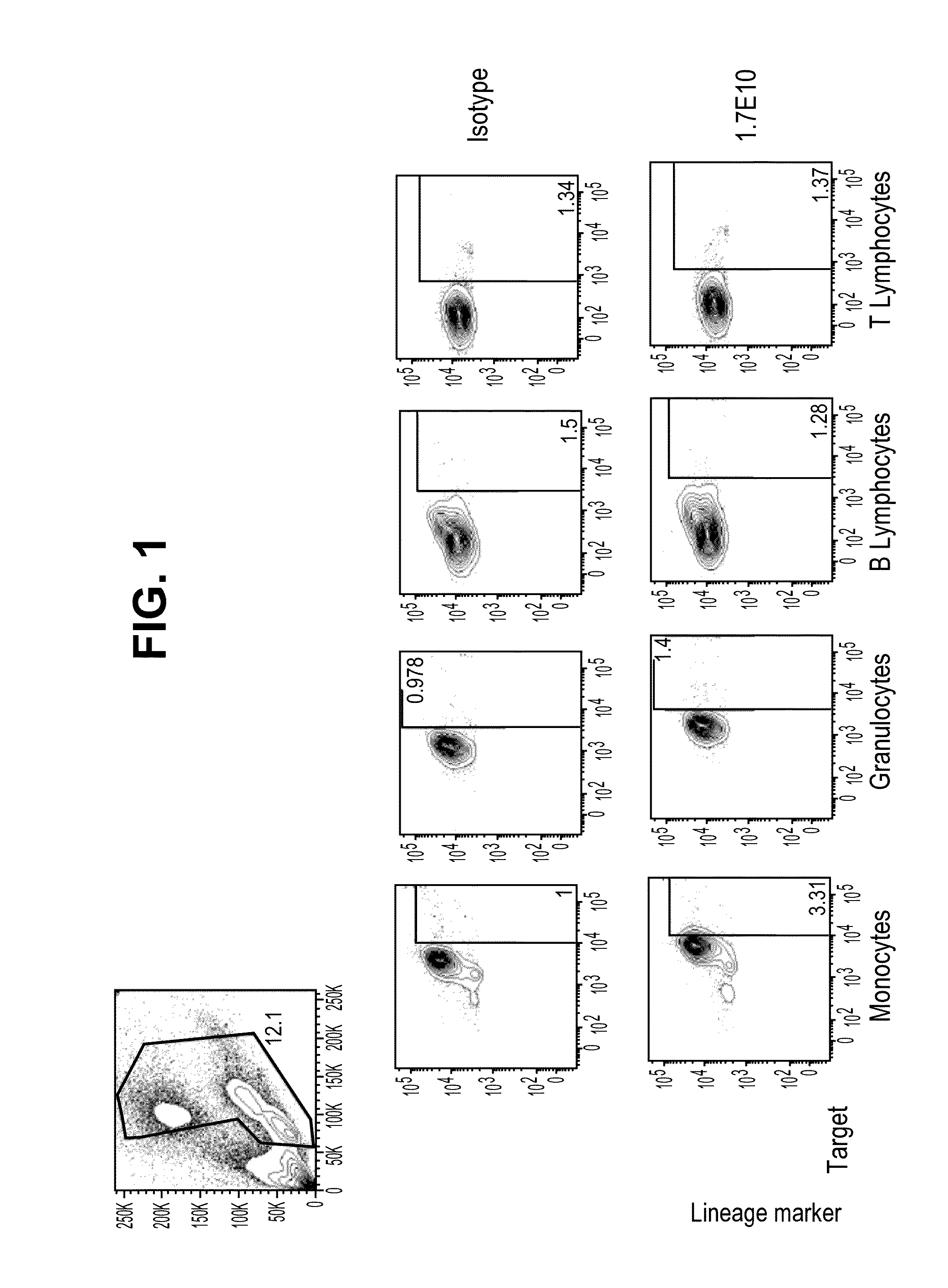
[0288]The TIM3-specific antibodies were also tested for binding to peripher...
example 3
C. Example 3
Binding of TIM3-Specific Antibodies to Cancer Patient Samples
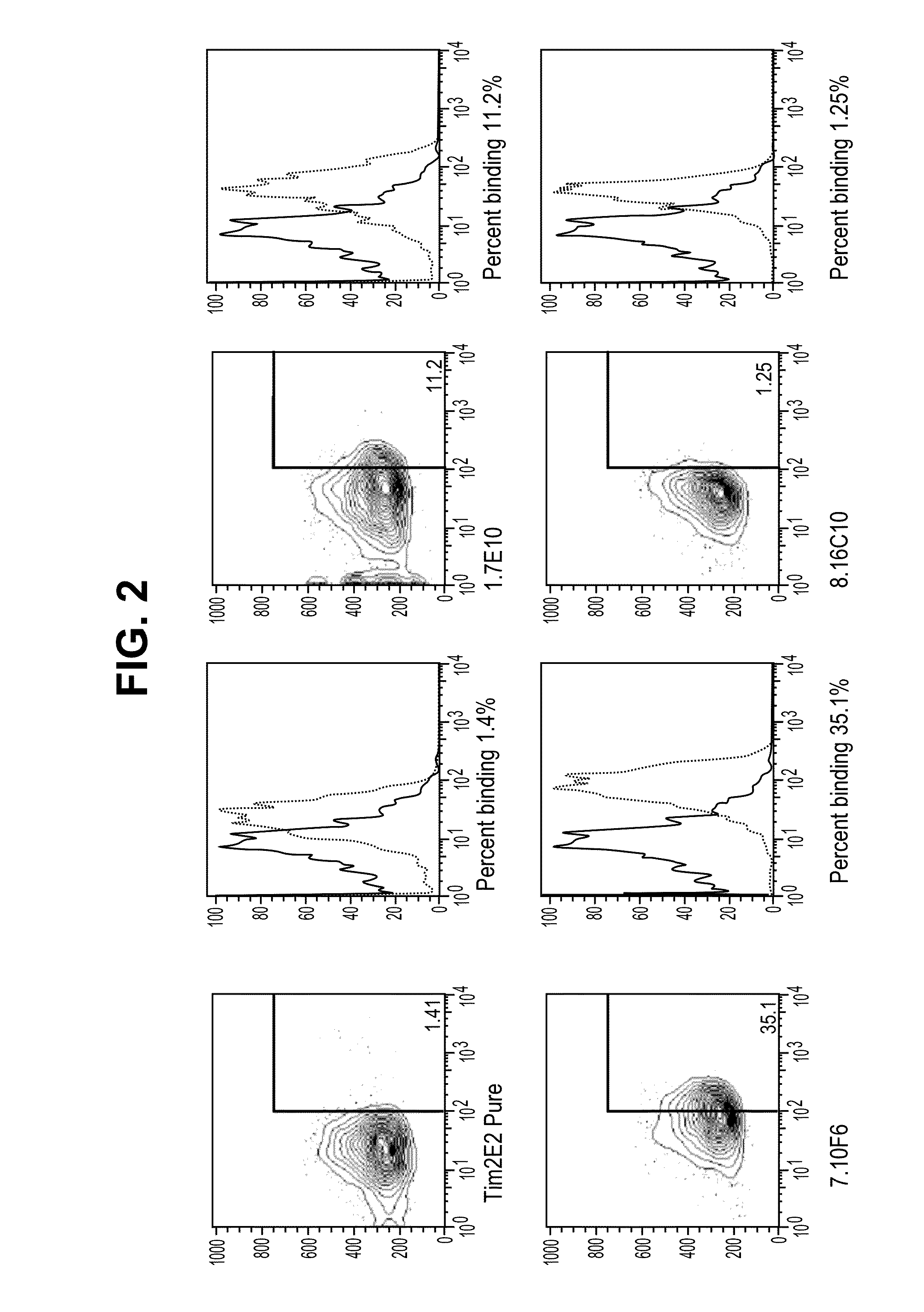
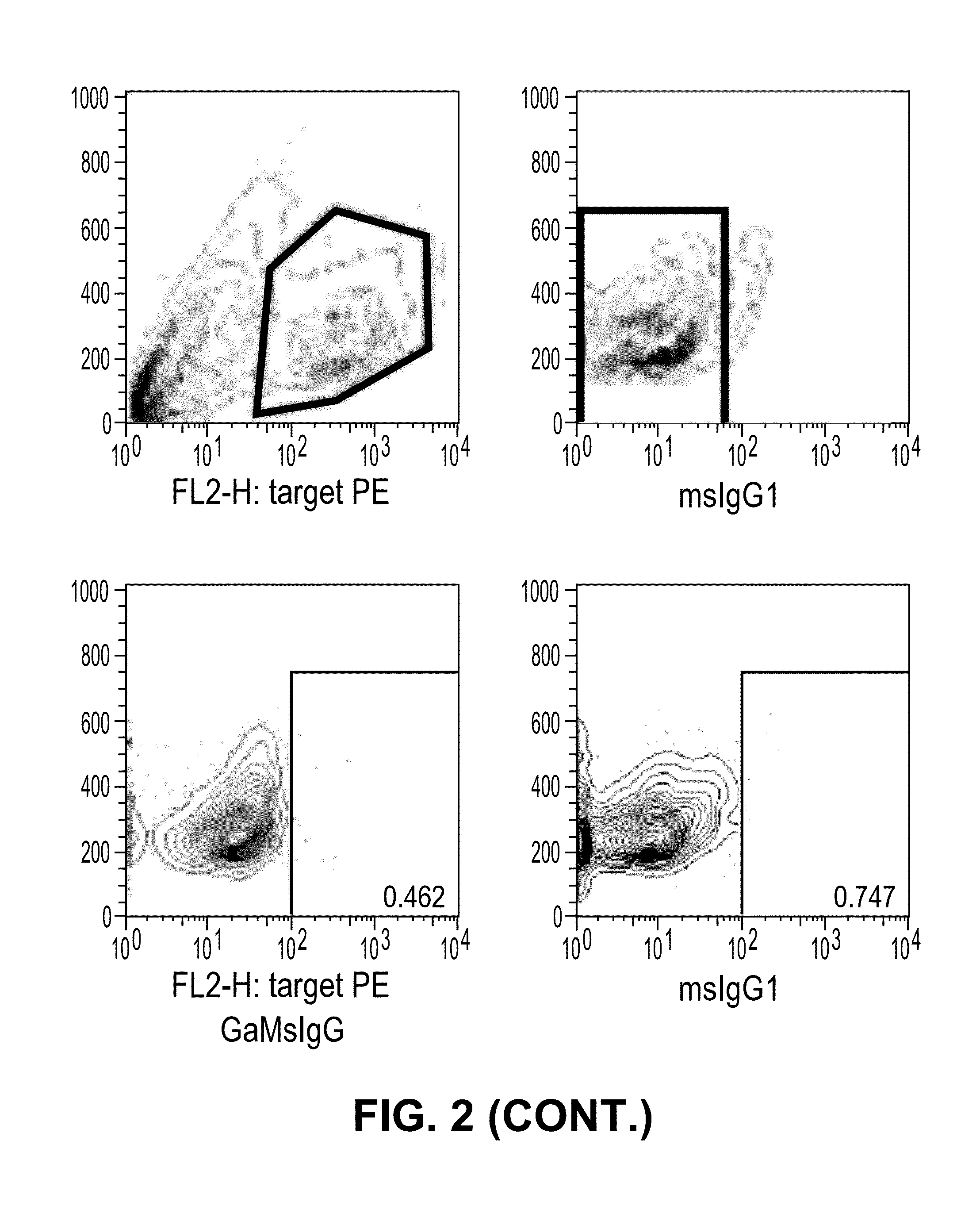
[0289]In contrast to the lack of binding to normal peripheral blood cells, the Tim3-specific antibodies bind at a high level to AML cells from patient samples. FIG. 2 compares the peripheral blood binding profiles of Isotype control (msIgG1) and 2E2 antibodies to those for the 1.7E10, 7.10F6, and 8.16C10 antibodies. The 1.7E10.7 and 7.10F6 bind to significantly more cells, with higher fluorescence, than the commercially available antibody. The 8.16C10 antibody binds about the same number of cells as 2E2 at a slightly higher fluorescence.
[0290]Table 3 shows the binding profiles for peripheral blood from five different AML patient samples. In this case, the peripheral blood was separated into stem cell (CD34+CD38−) and blast cells. Table 4 shows the binding profiles for these populations obtained from bone marrow.
TABLE 3Percent binding of TIM3-specific antibodies to PBMCs from AML patientsIDPopulationDiagnosis1.7...
PUM
| Property | Measurement | Unit |
|---|---|---|
| temperature | aaaaa | aaaaa |
| concentration | aaaaa | aaaaa |
| concentration | aaaaa | aaaaa |
Abstract
Description
Claims
Application Information
 Login to View More