
Apparatus and methods for prevention of syncope
a technology of syncope and apparatus, applied in the field of prevention of syncope, can solve the problems of reduced venous return to the heart, reduced venous supply to the heart, and severe injuries
- Summary
- Abstract
- Description
- Claims
- Application Information
AI Technical Summary
Benefits of technology
Problems solved by technology
Method used
Image

Examples
Embodiment Construction
[0070]The invention will be more clearly understood from the following description of some embodiments thereof, given by way of example only with reference to the accompanying drawings in which:—
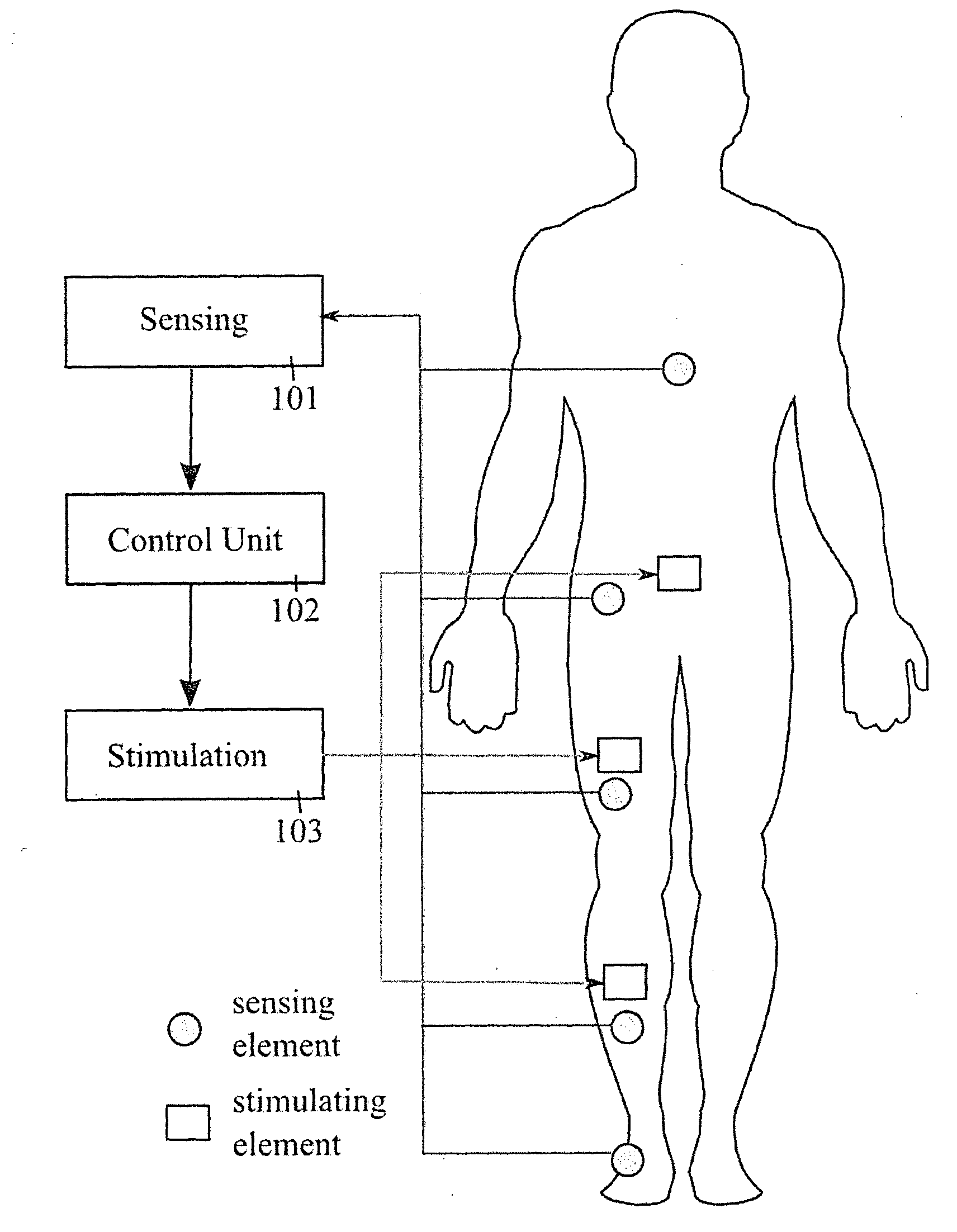
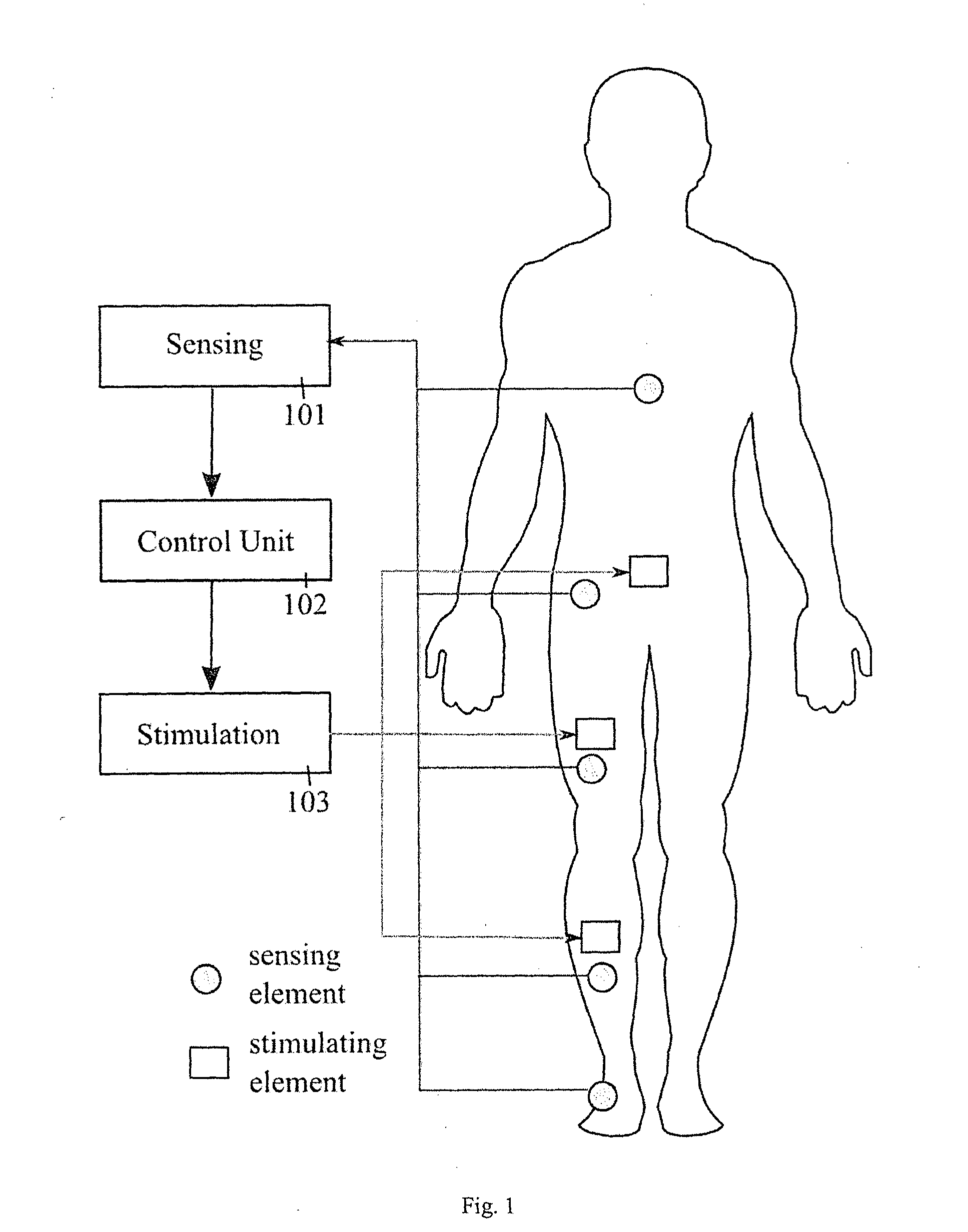
[0071]FIG. 1 shows an overview of the main elements of a system of the invention for syncope prevention;
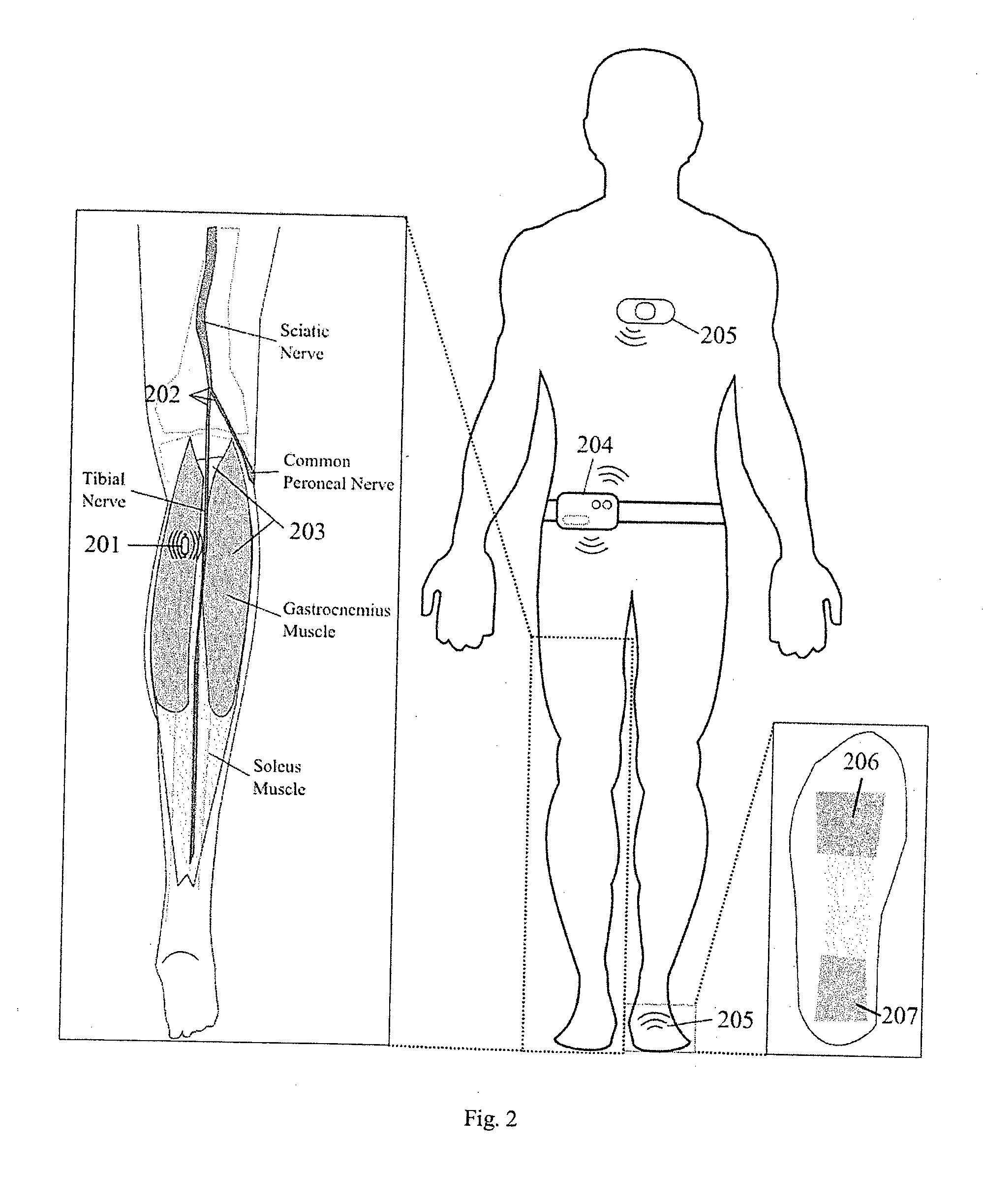
[0072]FIG. 2 shows a system of the invention incorporating injectable micro-stimulators:
[0073]FIG. 3 shows a system of the invention incorporating an implanted stimulator which delivers stimulus to a target nerve via a neural cuff electrode;
[0074]FIG. 4A shows a garment (cuff) to be worn on the leg, incorporating combinations of electrodes for soleus, quadriceps, and hamstring muscle stimulation;
[0075]FIG. 4B shows a similar garment to the cuff of FIG. 3A, in which the garment is a stocking, rather than a cuff, incorporating graduated compression;
[0076]FIG. 4C shows a garment to be worn on the calf, for soleus stimulation only;
[0077]FIG. 4D shows a garment to be worn on the abdomen, incorp...
PUM
 Login to View More
 Abstract
Description
Claims
Application Information
 Login to View More