

Force sensor-based motion or orientation determination in a device
a technology of force sensor and motion or orientation determination, which is applied in the direction of electric digital data processing, instruments, computing, etc., can solve the problems and achieve the effect of saving cost and/or space in the devi
Patent Information
- Authority / Receiving Office
- US · United States
- Patent Type
- Applications(United States)
- Current Assignee / Owner
- Publication Date
- 2017-06-01
Smart Images
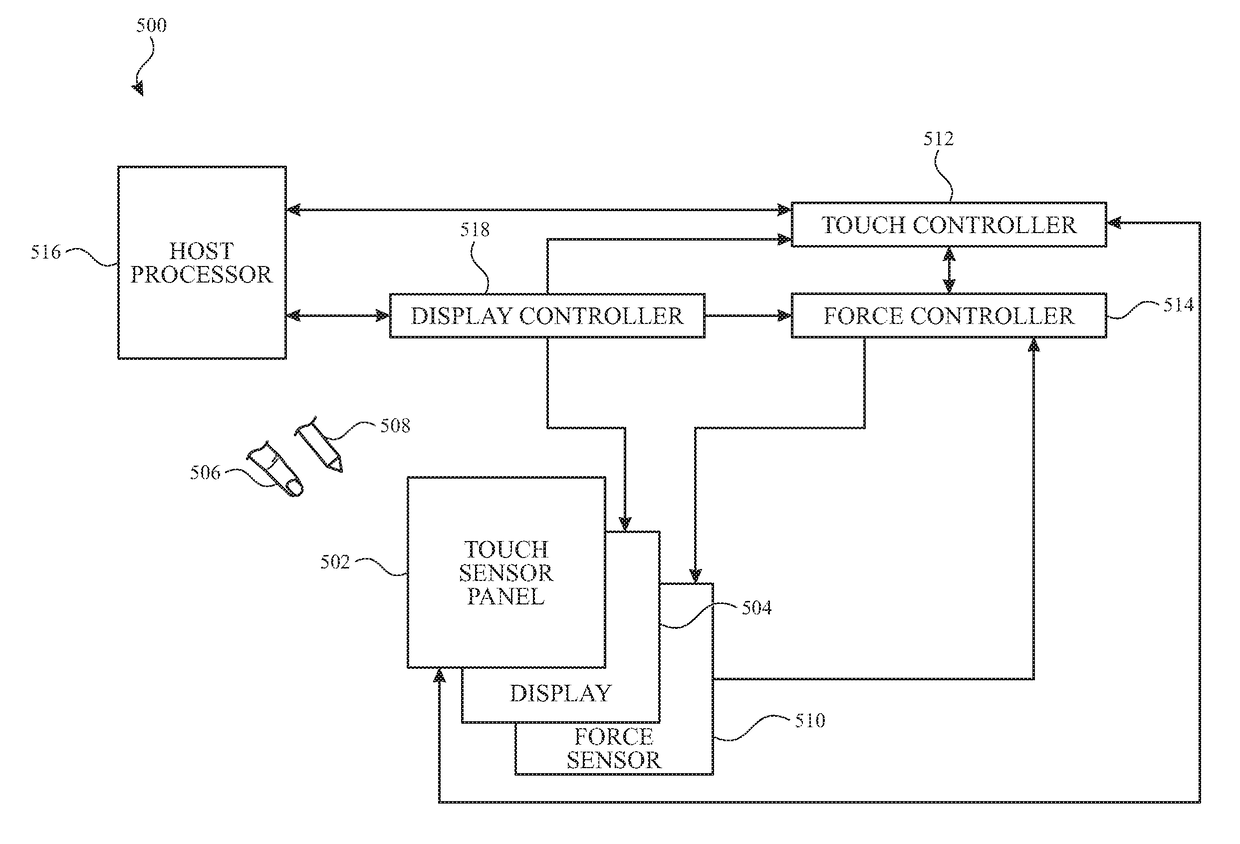
Figure 1 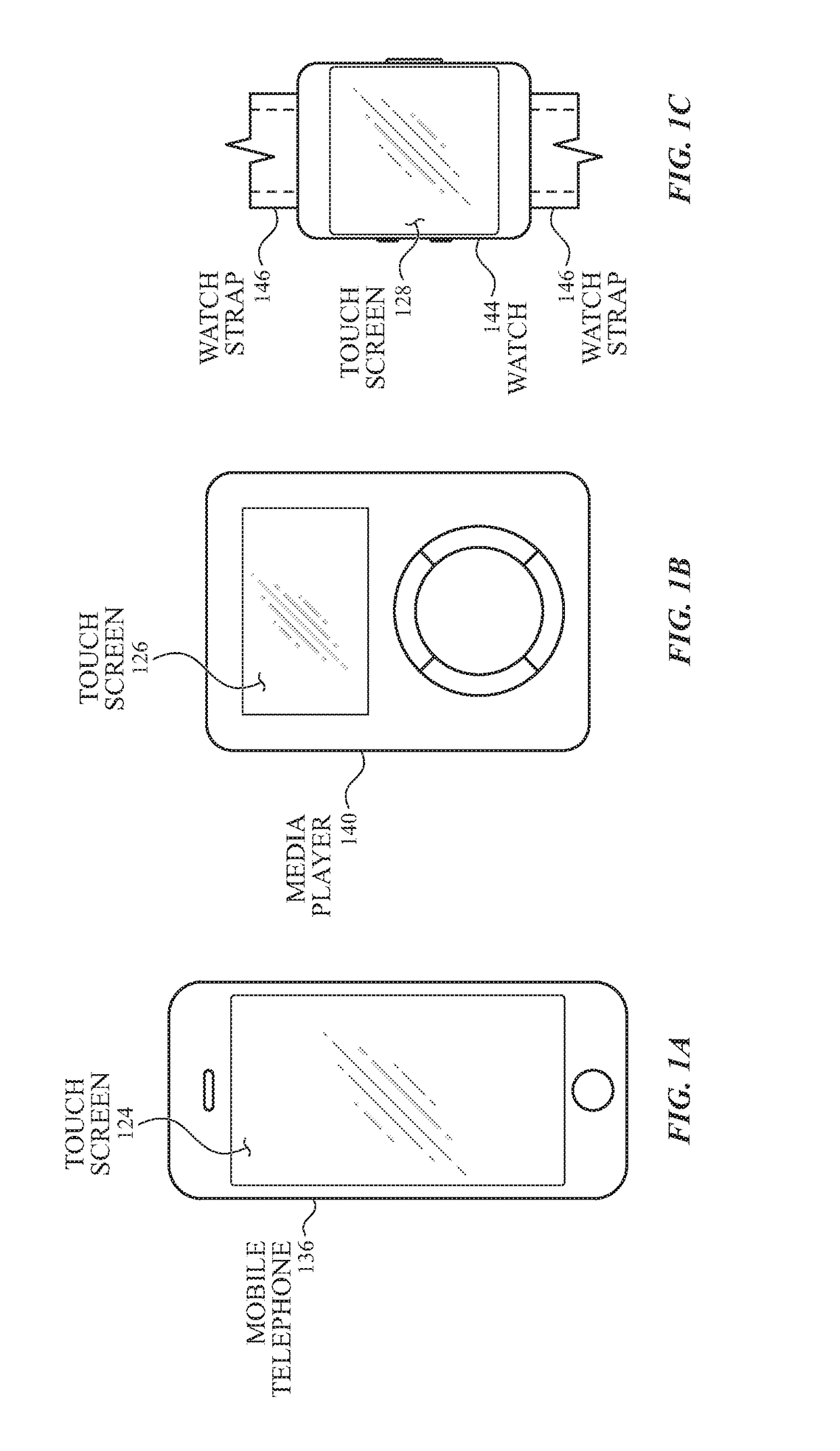
Figure 2 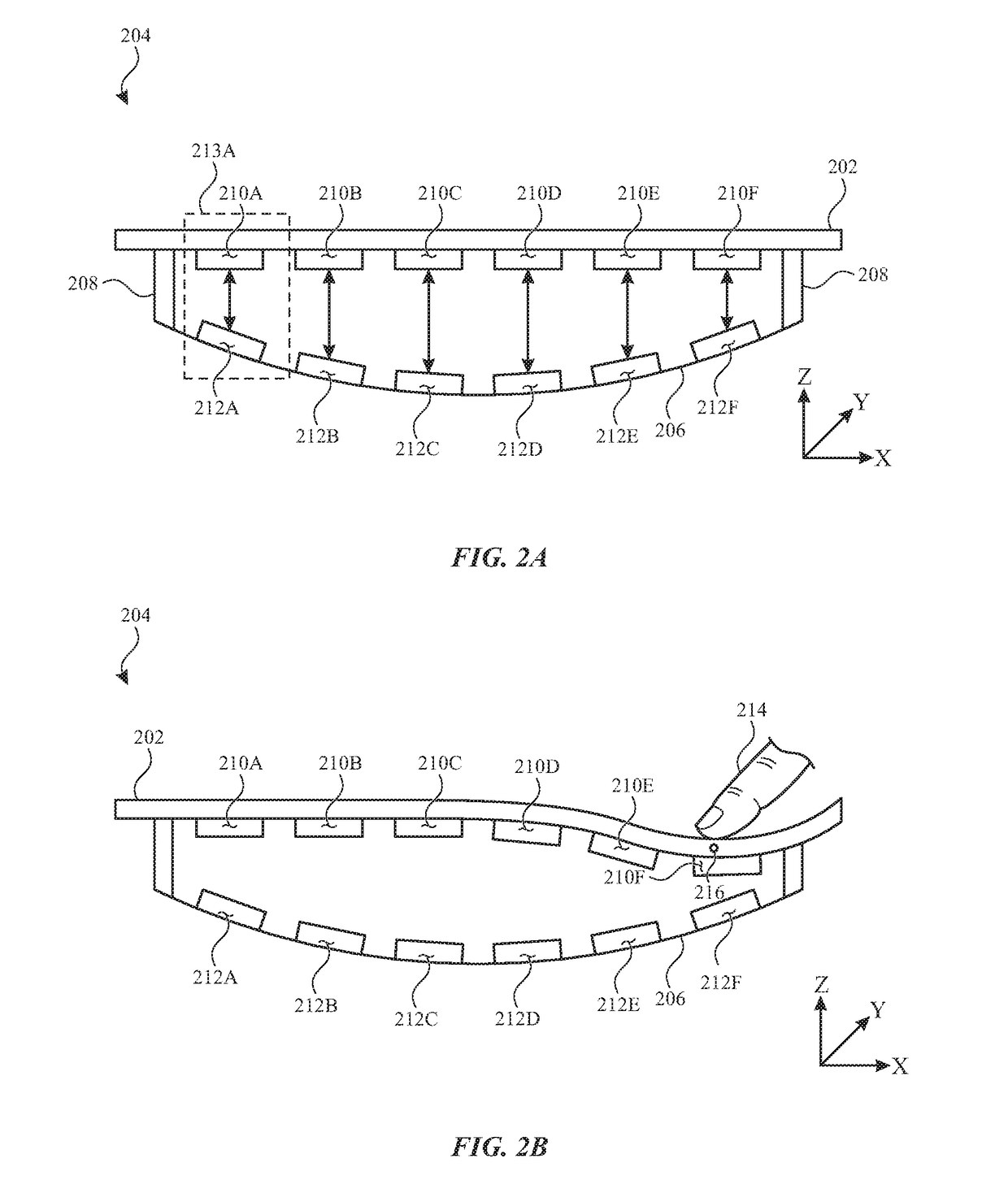
Figure 3
Abstract
Description
CROSS-REFERENCE TO RELATED APPLICATIONS
[0001] This application claims benefit of U.S. Provisional Patent Application No. 62 / 261,832, filed Dec. 1, 2015 and U.S. Provisional Patent Application No. 62 / 261,835, filed Dec. 1, 2015, which are hereby incorporated by reference in their entirety.FIELD OF THE DISCLOSURE
[0002] This relates generally to determining the motion and / or orientation of an electronic device, and more particularly, to doing so using one or more force sensors integrated in the electronic device.BACKGROUND OF THE DISCLOSURE
[0003] Many types of input devices are presently available for performing operations in a computing system, such as buttons or keys, mice, trackballs, joysticks, touch electrode panels, touch screens and the like. Touch screens, in particular, are becoming increasingly popular because of their ease and versatility of operation as well as their declining price. Touch screens can include a touch electrode panel, which can be a clear panel with a touch-sen...
Examples
Embodiment Construction
[0032]In the following description of examples, reference is made to the accompanying drawings which form a part hereof, and in which it is shown by way of illustration specific examples that can be practiced. It is to be understood that other examples can be used and structural changes can be made without departing from the scope of the disclosed examples.
[0033]Some electronic devices can include touch screens that may include force sensing capabilities—that is, they may be able to detect an amount of force with which an object is touching the touch screens. These forces can constitute force inputs to the electronic devices for performing various functions, for example. In some examples, the force sensing capabilities in the touch screens may provide motion- or orientation-dependent outputs. It can be beneficial to use those outputs to determine the motion and / or orientation of the touch screens, or the electronic devices in which they are integrated. In this way, discrete accelero...