
Nano-graphitic sponges and methods for fabricating the same
a graphene sponge and sponge technology, applied in the field of nanographitic sponges, can solve the problems of graphene sheets not reaching the percolation limit, poor dispersion of graphene, limited application of graphene-based polymer composites, etc., to achieve the effect of increasing the strength and stiffness of the enhanced polymer matrix composite, and enhancing the bond strength with the polymer matrix
- Summary
- Abstract
- Description
- Claims
- Application Information
AI Technical Summary
Benefits of technology
Problems solved by technology
Method used
Image

Examples
Embodiment Construction
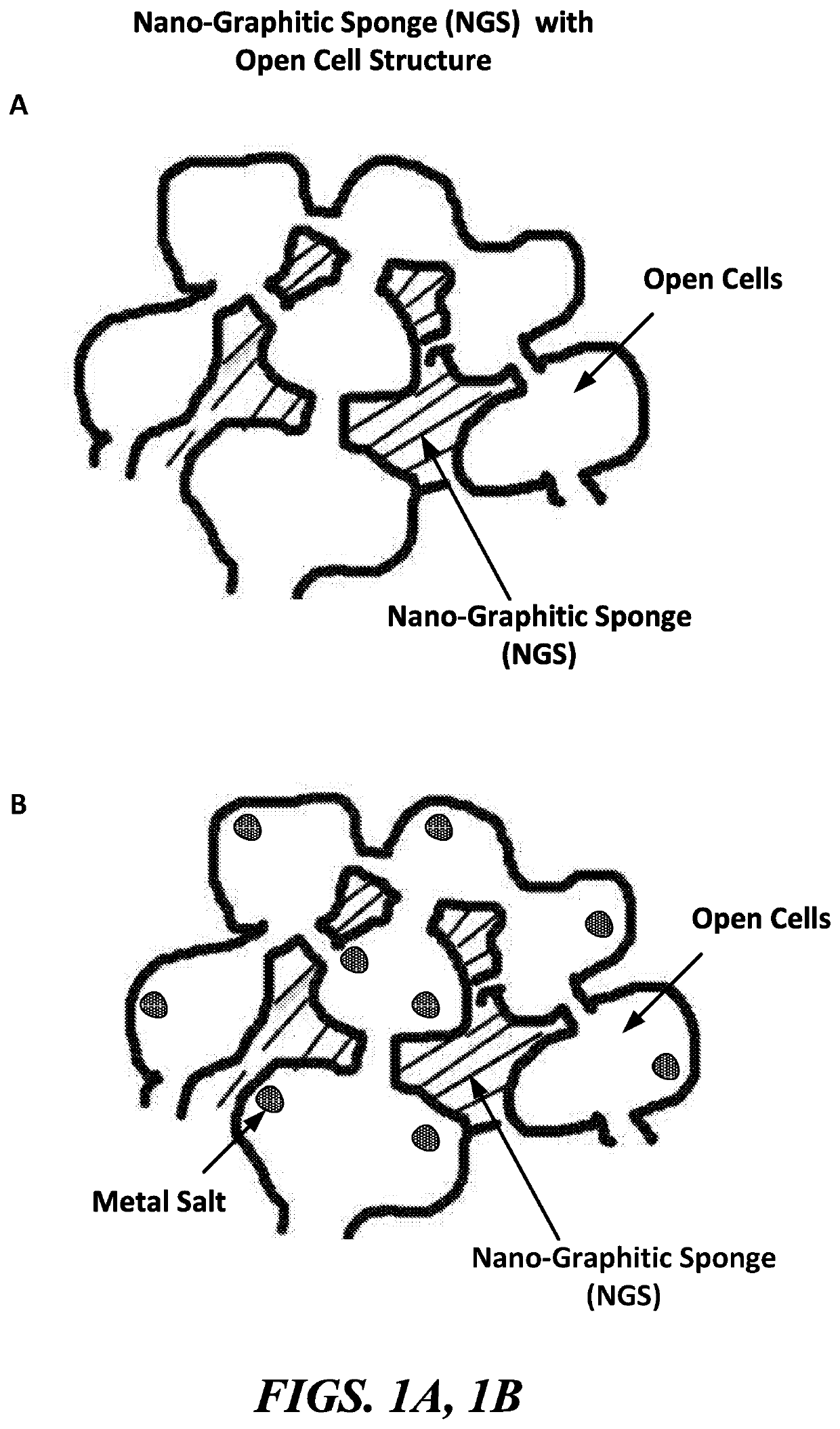
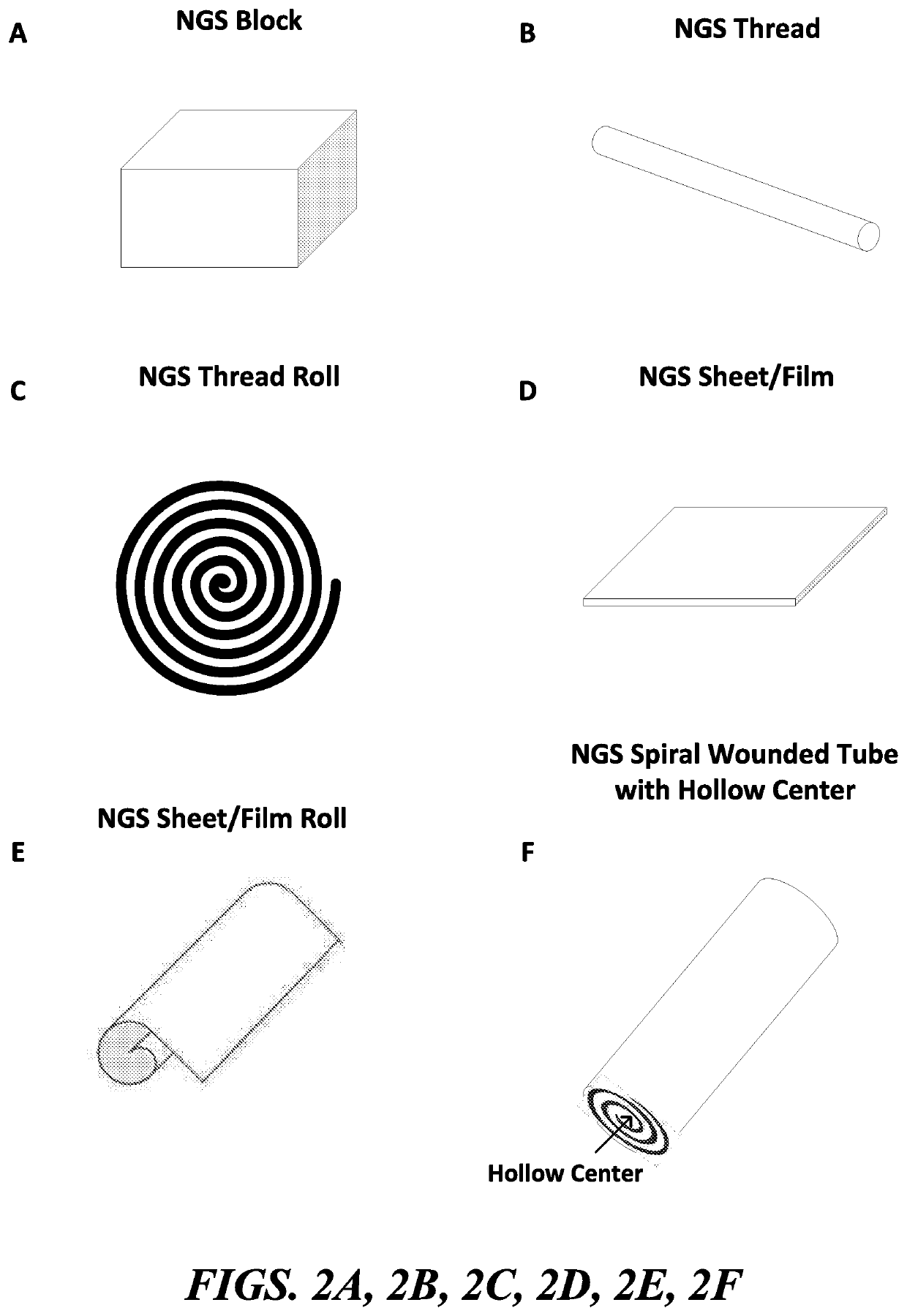
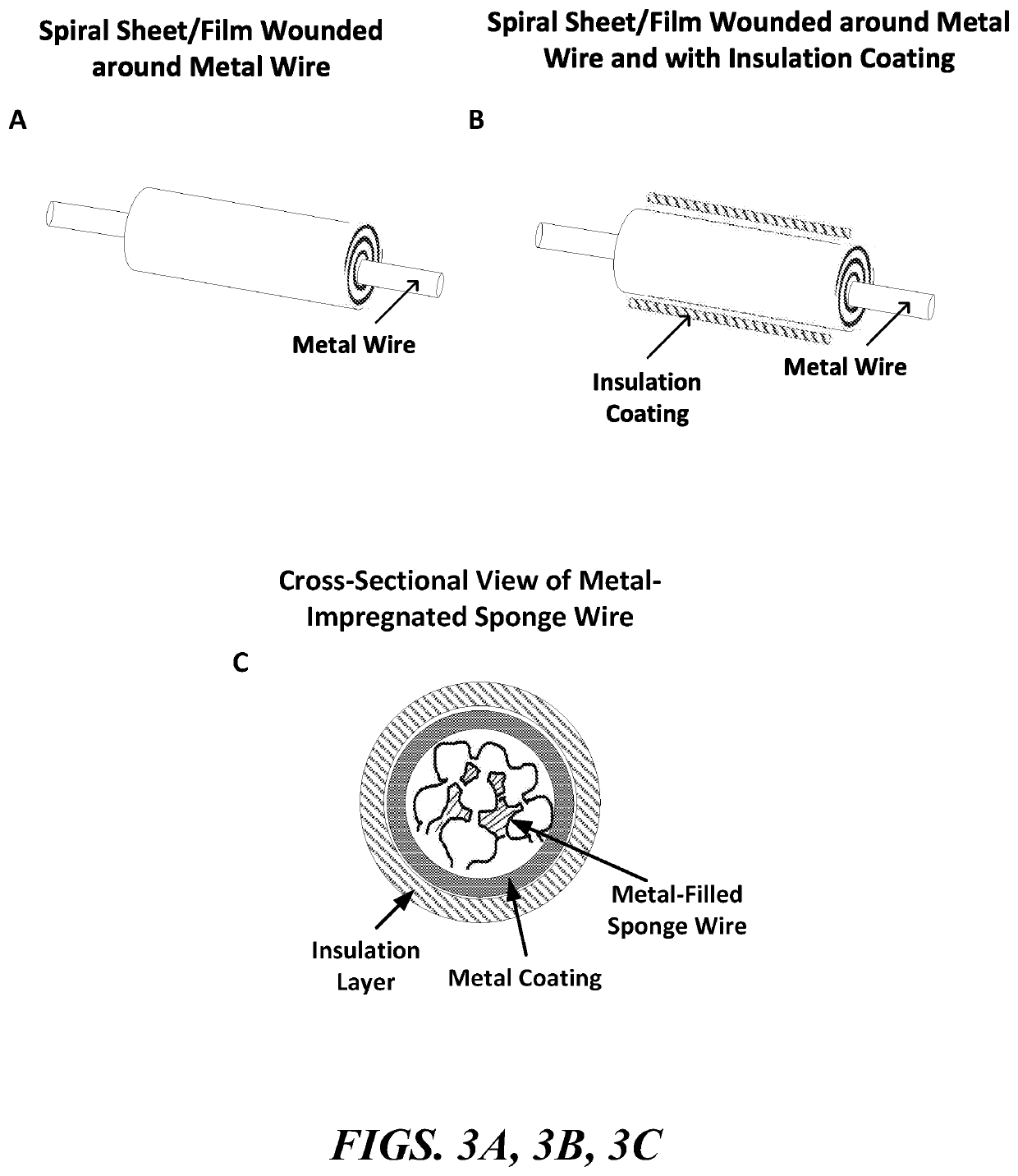
[0033]Nano-graphitic sponge (NGS), a three-dimensional graphene structure, possess many excellent properties, including large surface areas and pore volumes, low densities, good electrical conductivities and mechanical properties. Given their excellent properties, NGS has great potential in a wide variety of applications, such as absorbents, catalysts, catalyst supports, sensors, electrodes (e.g., transparent conductive electrodes, battery electrodes, capacitor electrodes), energy storage and conversion, fuel cells, batteries, supercapacitors, solar cells, and biological applications. One aspect of the present disclosure is directed to a novel NGS and the applications thereof, and another aspect of the present disclosure is directed to methods for fabricating the NGS from a graphene-reinforced polymer matrix composite (G-PMC).
1. Nano-Graphitic Sponge (NGS)
[0034]The present disclosure provides a novel nano-graphitic sponge (NGS) comprising graphite microparticles and graphene nanopar...
PUM
| Property | Measurement | Unit |
|---|---|---|
| Pore size | aaaaa | aaaaa |
| Pore size | aaaaa | aaaaa |
| Thickness | aaaaa | aaaaa |
Abstract
Description
Claims
Application Information
 Login to View More