
Methods for the non-toxic treatment for opioid drug withdrawal combining noribogaine and cannabinoids
a non-toxic treatment and opioid drug technology, applied in the direction of drug compositions, medical preparations, nervous disorders, etc., can solve the problems of no clear bidirectionality, massacre of human lives, and many miseries within, so as to enhance withdrawal therapy, decrease the tolerance of patients, and reduce the effect of opioid toleran
- Summary
- Abstract
- Description
- Claims
- Application Information
AI Technical Summary
Benefits of technology
Problems solved by technology
Method used
Image

Examples
examples
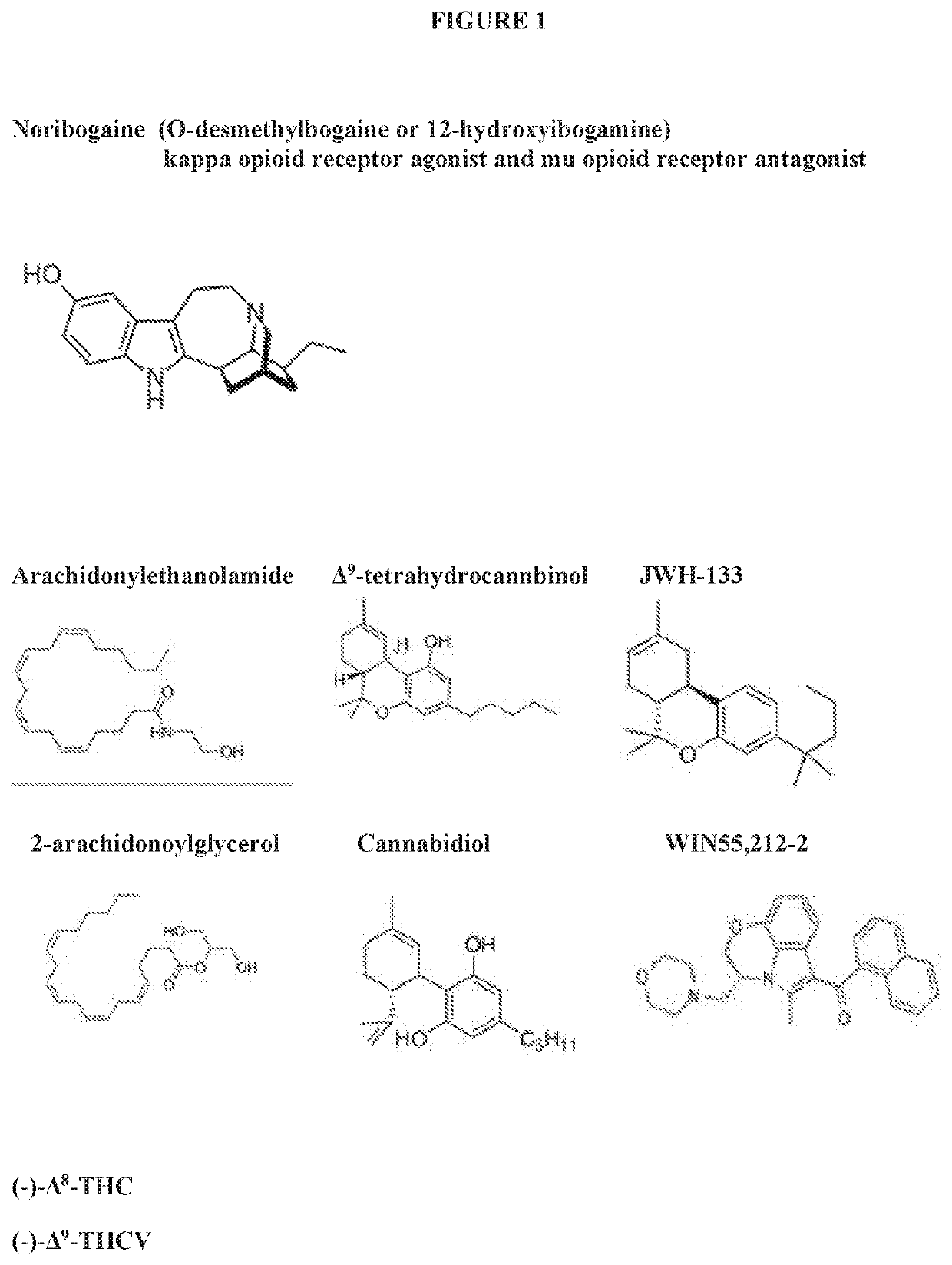
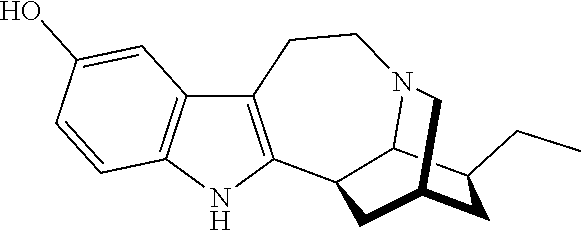
[0128]The inventors test the concept that low dose noribogaine in combination with a cannabinoid, especially a cannabinoid such as cannabidiol or tetrahydrocannabinoil (THC) may be used to synergistically favorably impact opioid withdrawal and reduce opioid tolerance in a subject or patient, especially a human subject or patient. First, the inventors measure the RNAs in microglia cells that are actively being translated to make protein (as indicators of the biological pathways that are activated in these cells during withdrawal). In addition, the inventors investigate mice given escalating doses of morphine followed by precipitated withdrawal and then use RiboTag, a new technology for retrieving the RNA from specific cell types, to interrogate the sequential changes occurring during microglial activation from opioid withdrawal. Second, the inventors assess whether the withdrawal syndrome can be prevented or attenuated by inhibiting microglial activation using engineered receptors to...
PUM
| Property | Measurement | Unit |
|---|---|---|
| body weight | aaaaa | aaaaa |
| weight | aaaaa | aaaaa |
| weight | aaaaa | aaaaa |
Abstract
Description
Claims
Application Information
 Login to View More