

Sealing nasal cannula
a technology of nasal cannula and seal, which is applied in the field of nasal ventilation interface, can solve the problems of excessive daytime sleepiness, nasal tube system that does not provide a positive seal between the nasal insert tube and the nostril, and sleep apnea is a potentially life-threatening breathing disorder,
- Summary
- Abstract
- Description
- Claims
- Application Information
AI Technical Summary
Benefits of technology
Problems solved by technology
Method used
Image

Examples
Embodiment Construction
[0034]The present invention provides a nasal ventilation interface having at least two sealing interfaces. The present invention will now be described with reference to the drawings, wherein like reference numerals are used to refer to like elements throughout. It is to be appreciated that the various drawings are not necessarily drawn to scale from one figure to another nor inside a given figure, and in particular that the size of the components are arbitrarily drawn for facilitating the reading of the drawings. In the following description, for purposes of explanation, numerous specific details are set forth in order to provide a thorough understanding of the present invention. It may be evident, however, that the present invention may be practiced without these specific details.
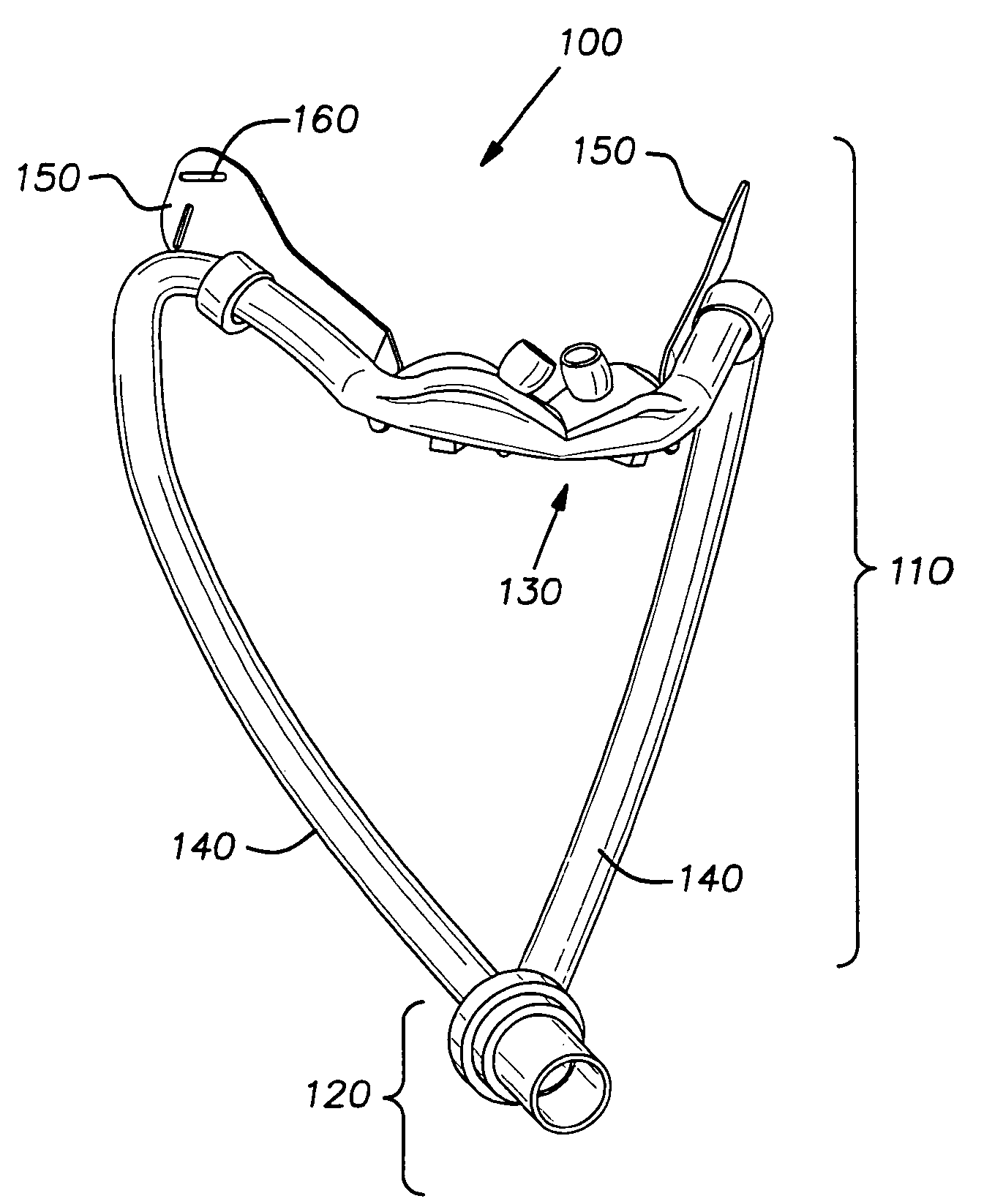
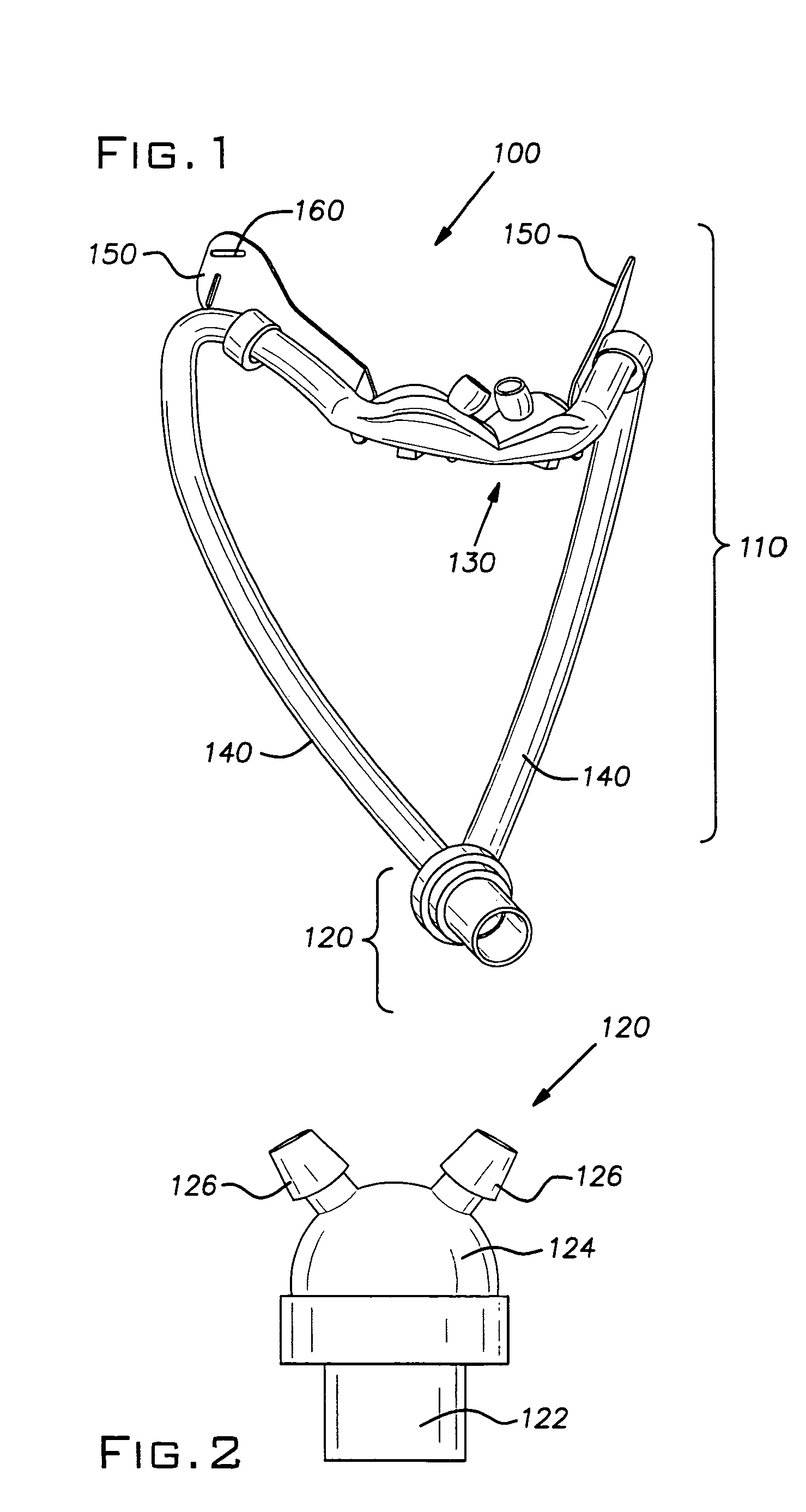
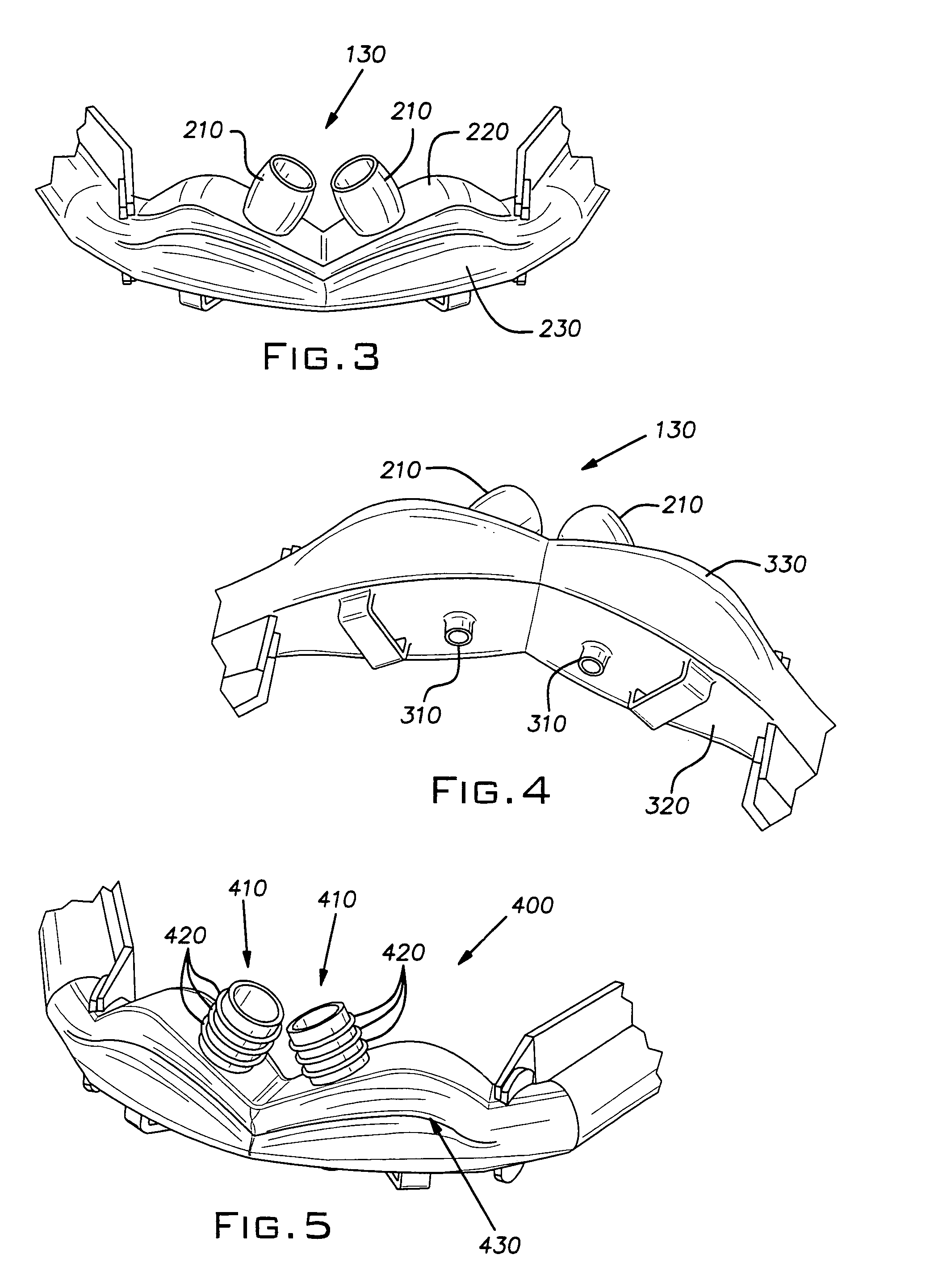
[0035]Turning initially to FIG. 1, an example of a nasal ventilation interface 100 in accordance with a first aspect of the present invention is illustrated. The nasal interface 100 comprises a base portio...
PUM
 Login to View More
 Abstract
Description
Claims
Application Information
 Login to View More