
Centrifugal oil separator
a centrifugal oil separator and centrifugal technology, applied in centrifuges, auxillary pretreatment, separation processes, etc., can solve the problem of substantial pressure drop across the oil separator, and achieve the effect of minimizing the pressure drop
- Summary
- Abstract
- Description
- Claims
- Application Information
AI Technical Summary
Benefits of technology
Problems solved by technology
Method used
Image

Examples
Embodiment Construction
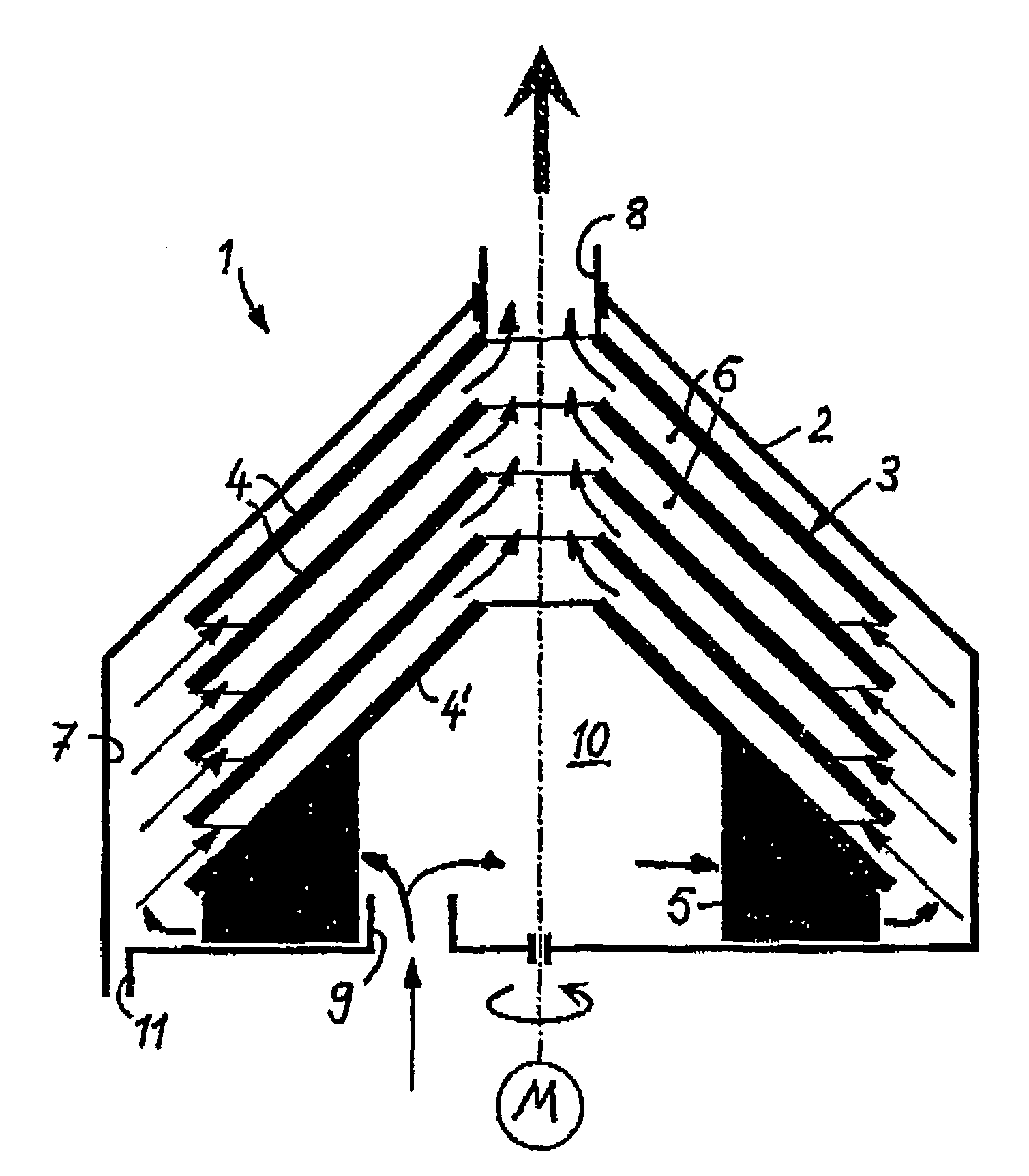
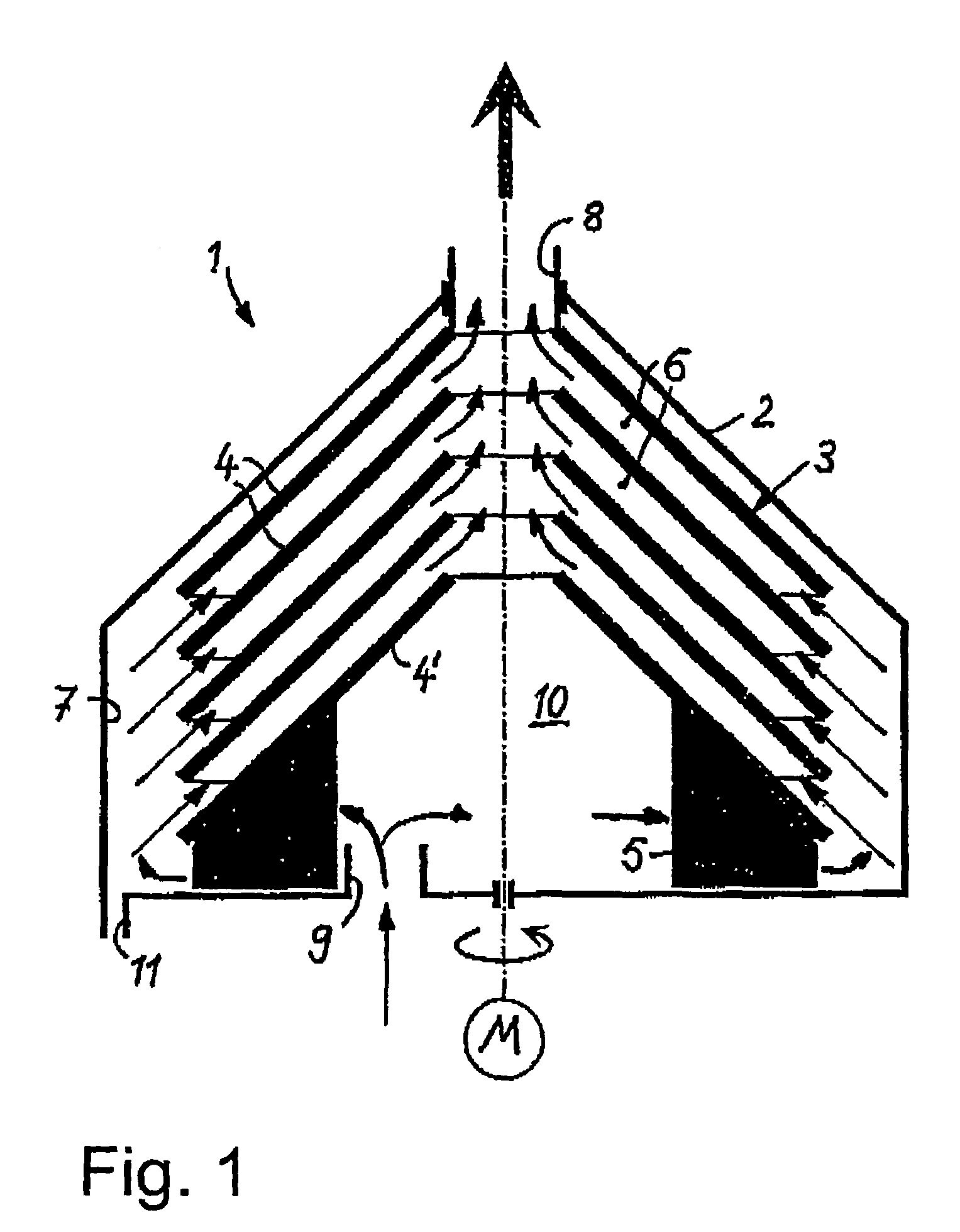
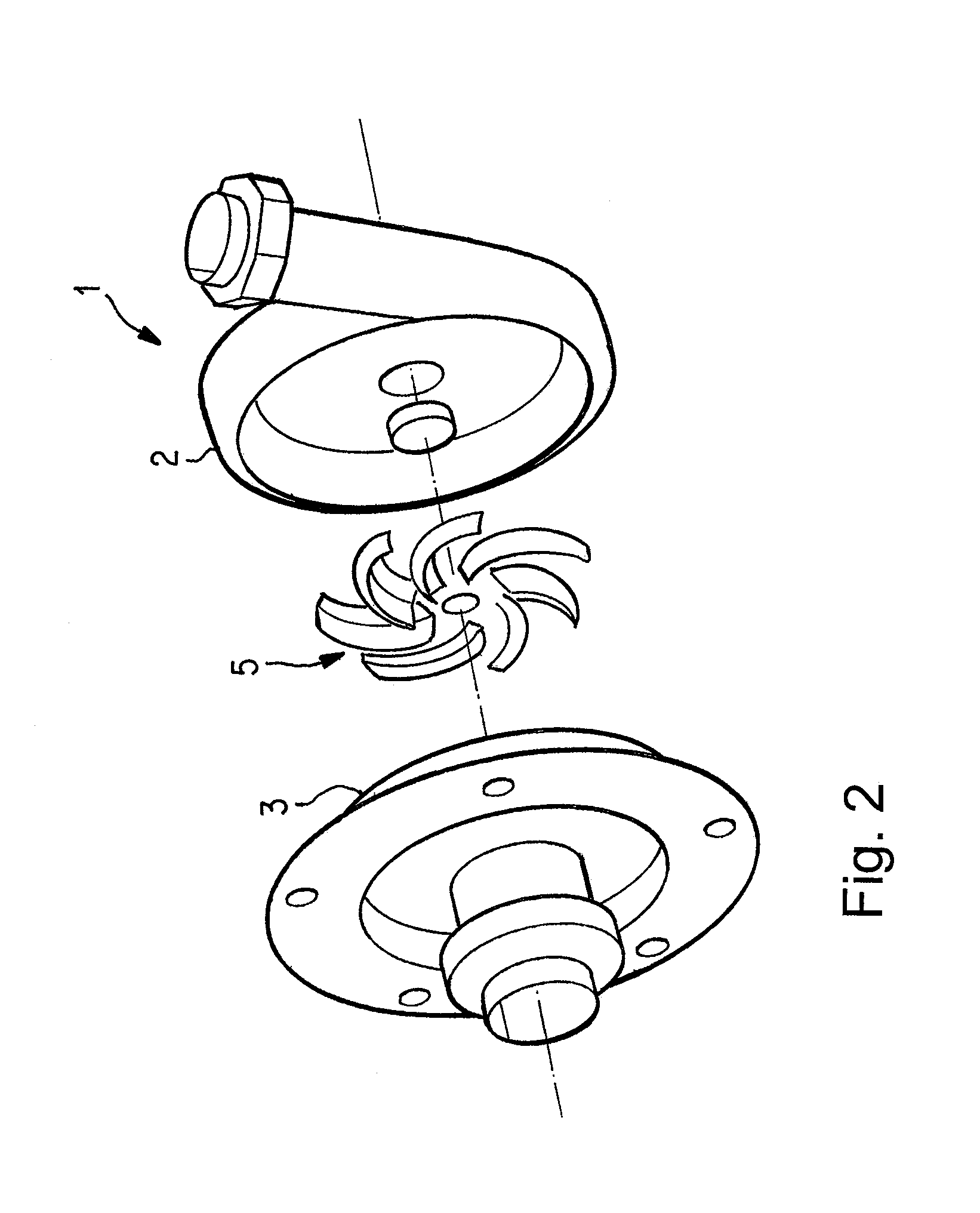
[0014]The centrifugal oil separator 1 shown in FIG. 1 comprises a plate separator 3 which is rotatably mounted in the housing 2 and can be driven by a motor M. The plate separator 3 comprises a plurality of substantially conical plates 4 stacked one above the other and arranged with a distance between them, thus forming flow paths 6 between the plates. The plate separator 3 is surrounded radially by an intake space 7 which is formed between a cylindrical inside wall of the housing 2 and the radial outside of the plate separator. The plate separator 3 has oncoming flow from the outside radially through the oncoming flow space 7, such that the gas to be vented flows radially inwardly along the flow path 6 between the neighboring plates 4 as indicated in the direction of the arrows and is discharged axially as cleaned gas and exhausted from the housing 2 through an axially extending central discharge channel. Because of the conical shape of the plates 4, the flow paths 6 between adjace...
PUM
| Property | Measurement | Unit |
|---|---|---|
| distance | aaaaa | aaaaa |
| centrifugal forces | aaaaa | aaaaa |
| pressure | aaaaa | aaaaa |
Abstract
Description
Claims
Application Information
 Login to View More