
Clip for a display
a technology for a display and a clip is applied in the field of clip devices, which can solve the problems of cumbersome manner of holding the foam board in place, difficult to work with foam boards, and difficulty in easy attachment to the display tower, and achieves the effects of convenient manufacturing, strong and flexible, and unitary construction
- Summary
- Abstract
- Description
- Claims
- Application Information
AI Technical Summary
Benefits of technology
Problems solved by technology
Method used
Image

Examples
Embodiment Construction
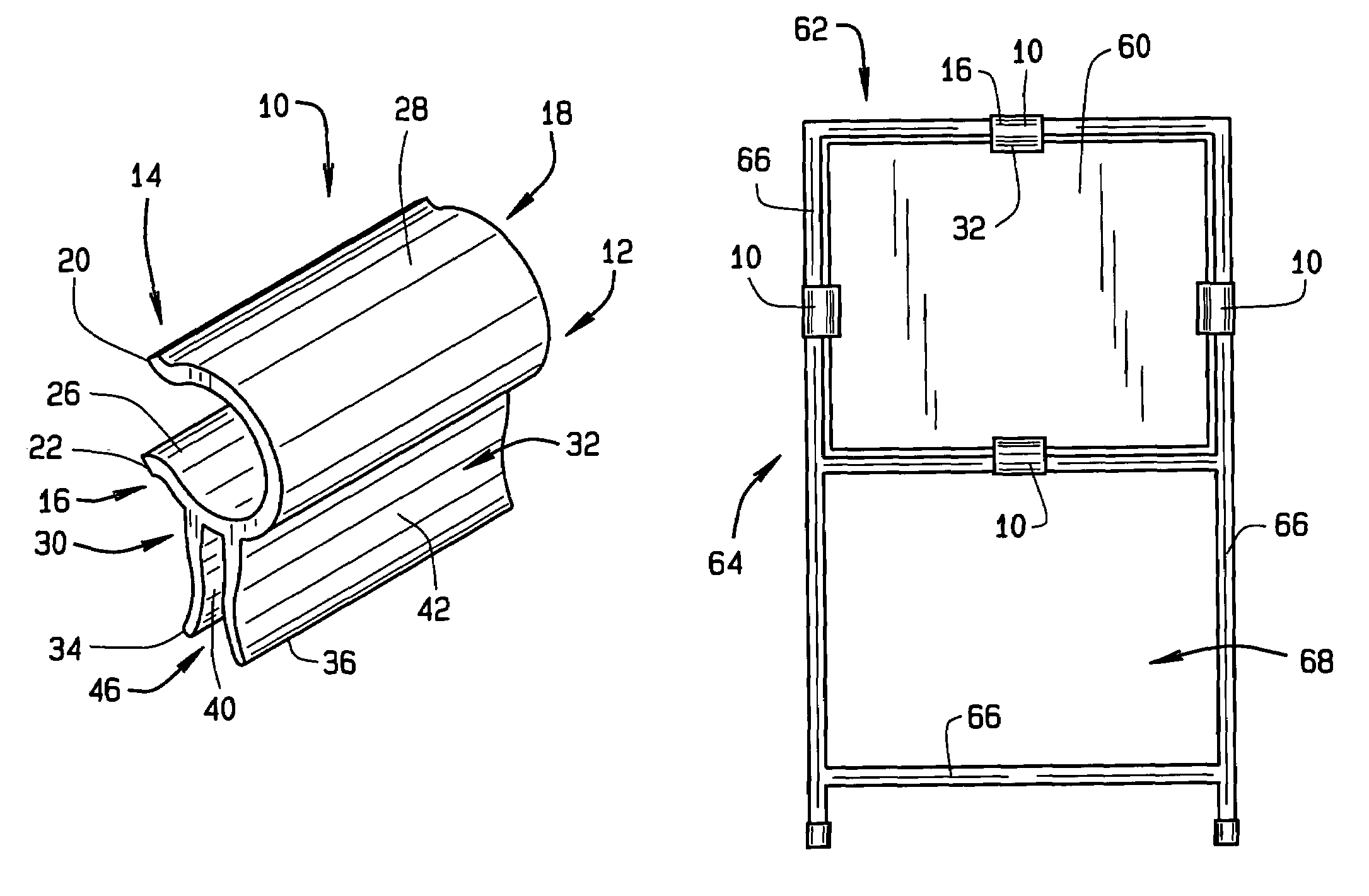
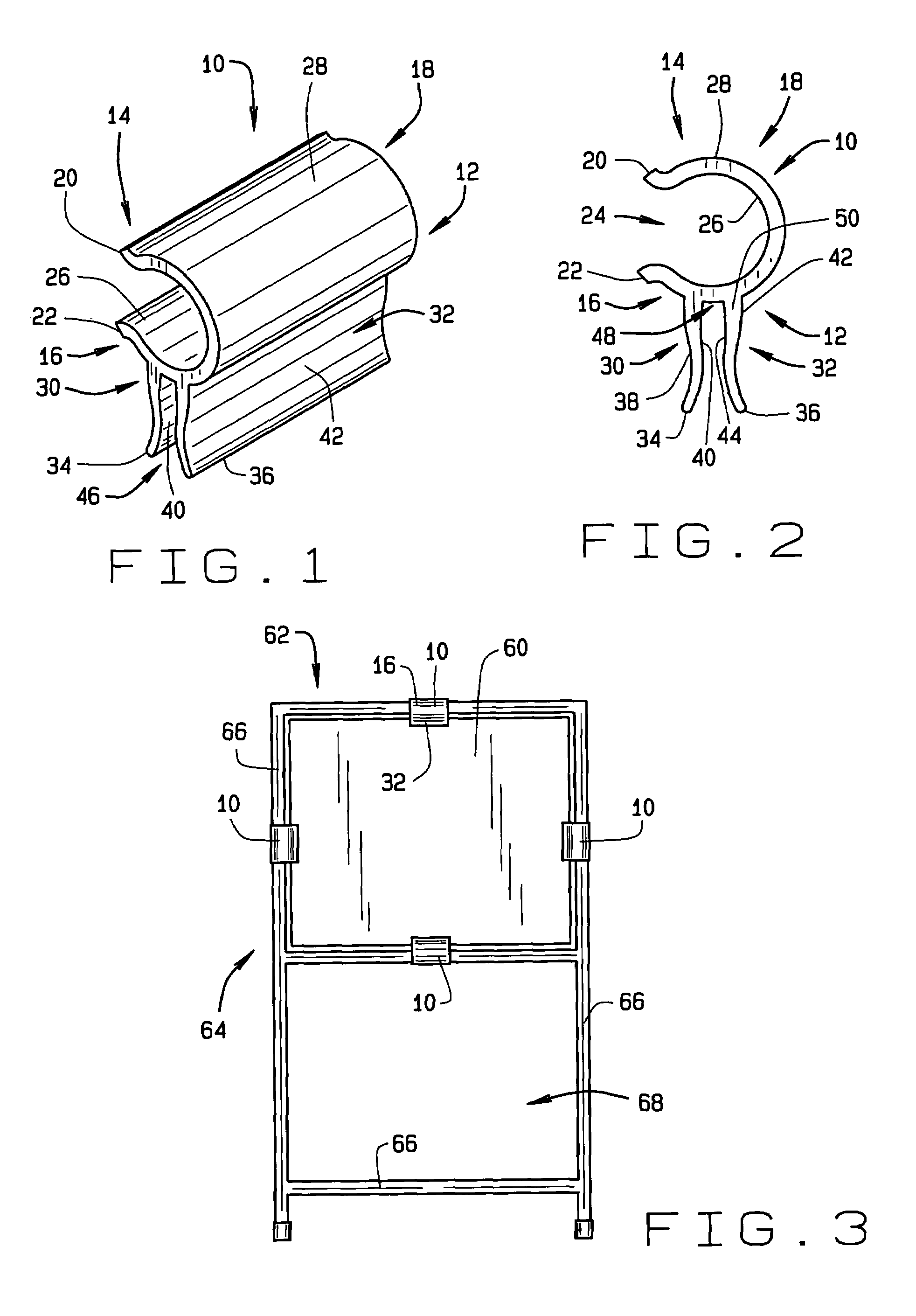
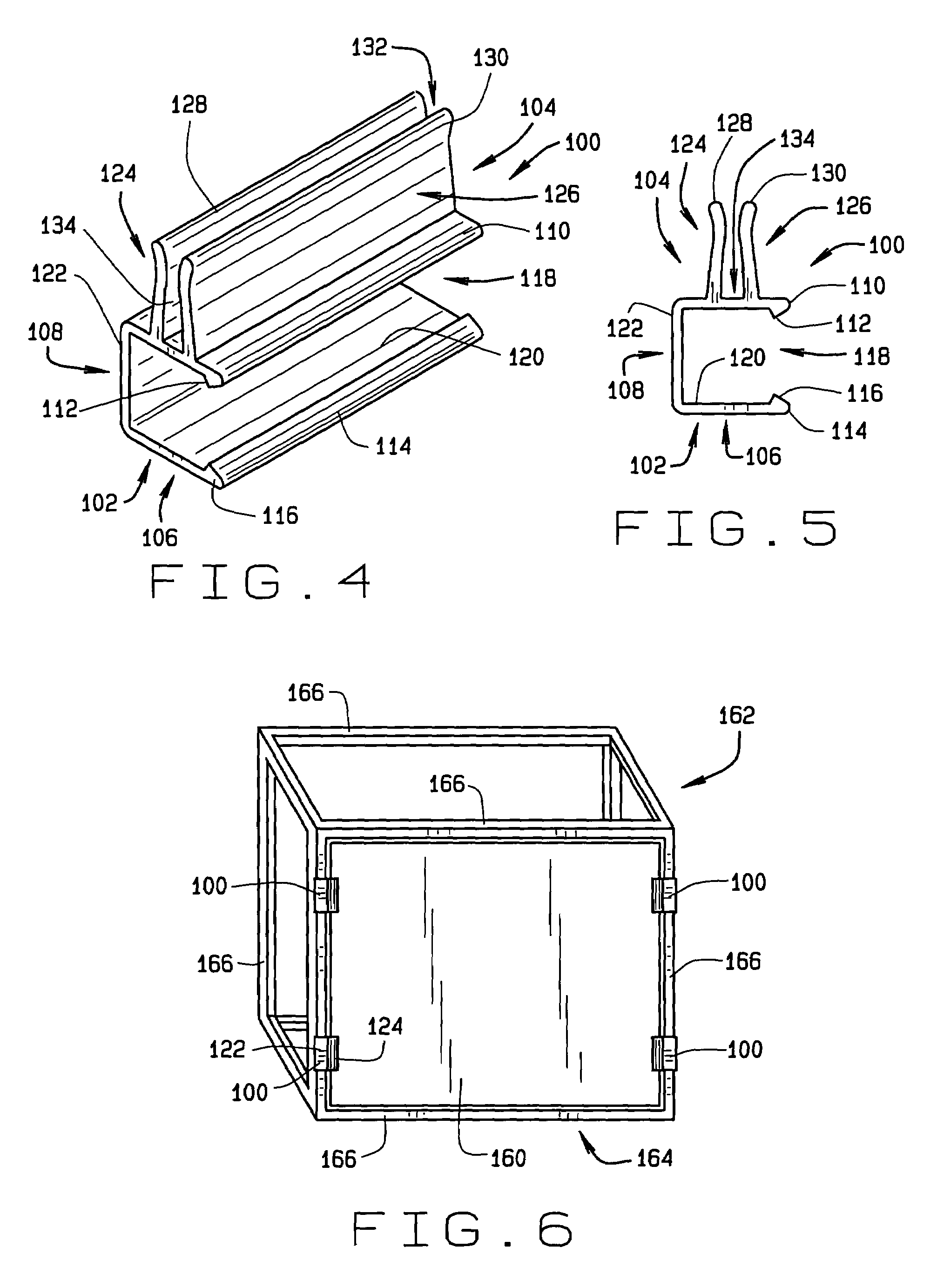
[0021]Referring now to the drawings, wherein like numbers refer to like items, number 10 identifies a preferred embodiment of a clip constructed according to the present invention. With reference now to FIGS. 1 and 2, the clip 10 comprises a unitary body 12 having a first pair of opposing arms 14 and 16 and an intermediate section 18. The intermediate section 18 is arcuate or rounded in shape. The arms 14 and 16 and the intermediate section 18 form a generally C-shaped cross-section. The arms 14 and 16 have opposing end portions 20 and 22, respectively. The end portions 20 and 22 are spaced apart from each other to form a mouth or an opening 24 to allow a rod or pipe (not shown) to pass there through as will be discussed more fully herein. The end portions 20 and 22 are flared outwardly from the respective opposing arms 14 and 16. The clip 10 has an interior surface 26 and an exterior surface 28. The interior surface 26 is adapted to engage or surround a rod or pipe for holding the ...
PUM
 Login to View More
 Abstract
Description
Claims
Application Information
 Login to View More