Method and apparatus for tuning phase of clock signal

a clock signal and phase technology, applied in the field of semiconductor devices, can solve the problems of increasing the speed, limiting the frequency of the main clock signal, and limiting the data interface speed with respect to the core speed of the dram, so as to achieve the effect of more rapid tuning

US7902887B2Active Publication Date: 2011-03-08SAMSUNG ELECTRONICS CO LTD
18 Cites 23 Cited by

Patent Information

Authority / Receiving Office
US · United States
Patent Type
Patents(United States)
Current Assignee / Owner
Publication Date
2011-03-08

Smart Images

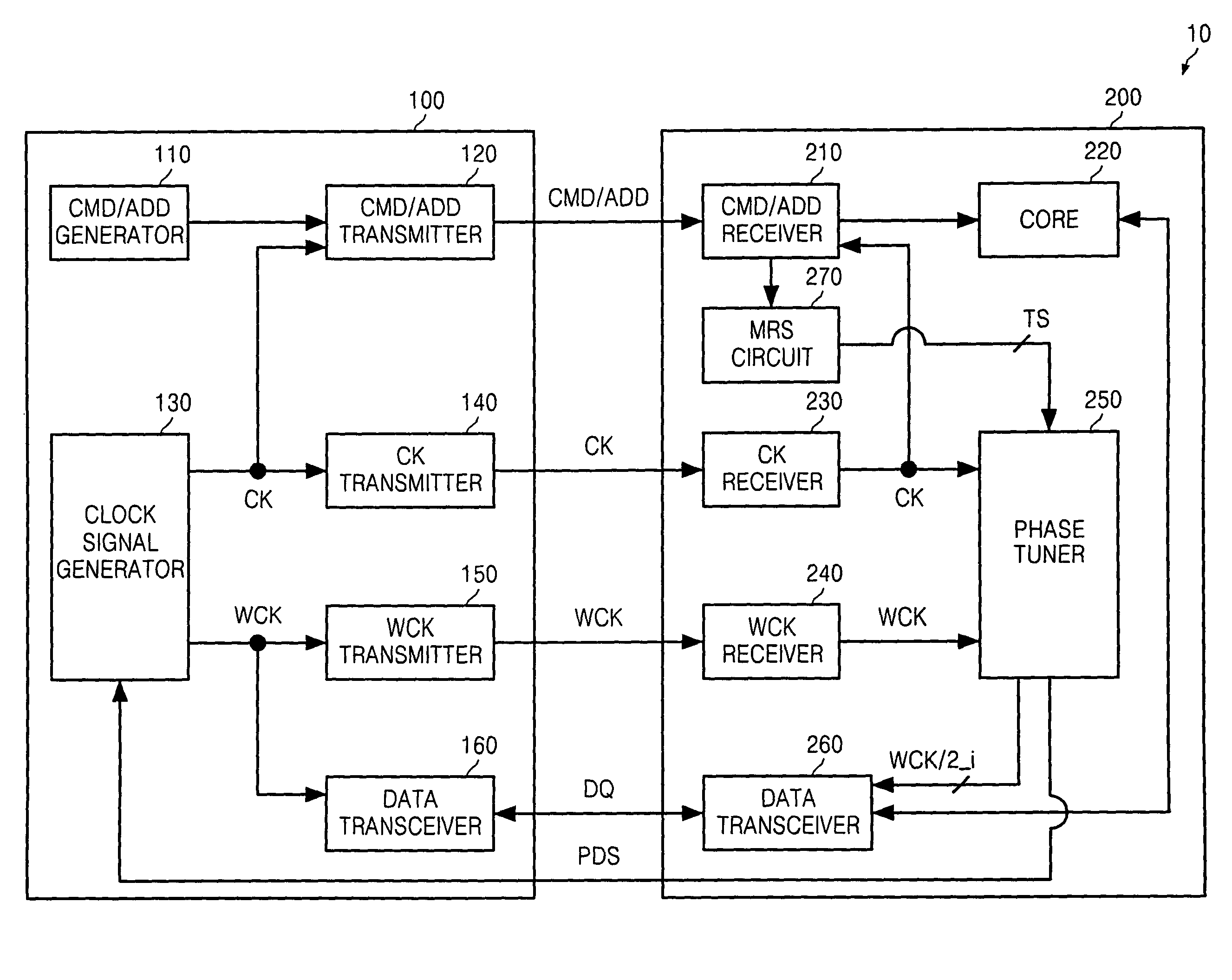
  • Figure 1
    Figure 1
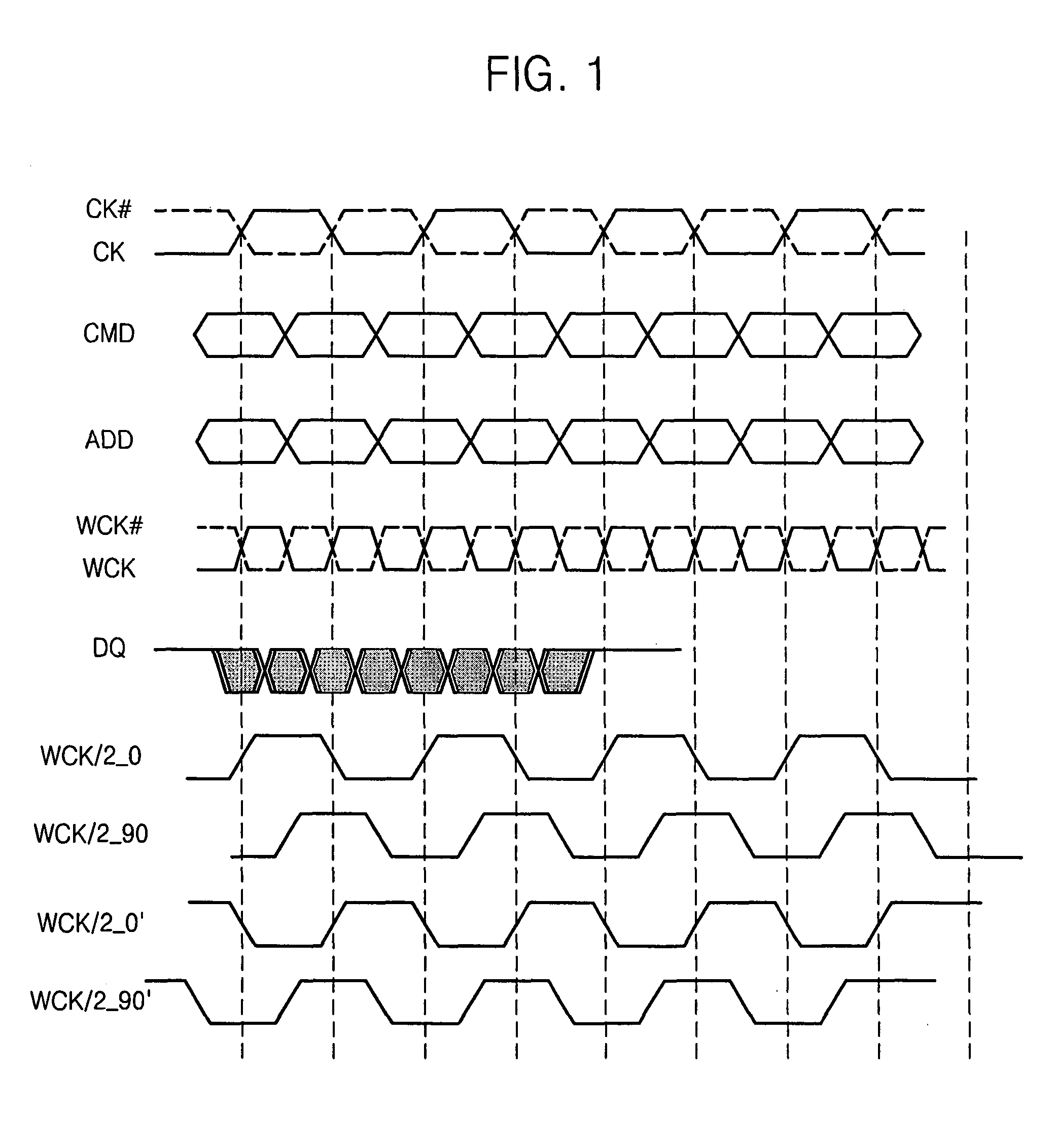
  • Figure 2
    Figure 2
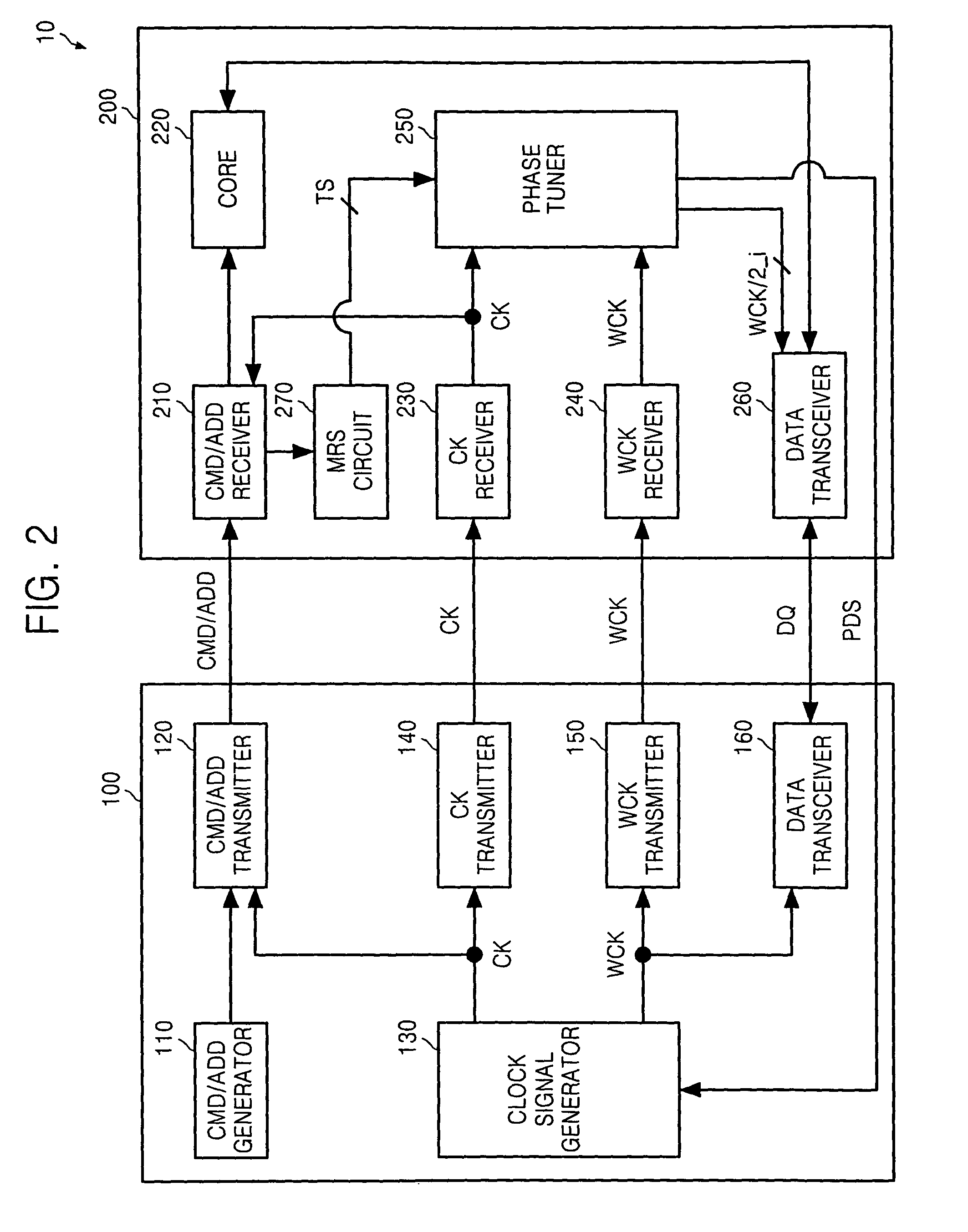
  • Figure 3
    Figure 3
Patent Text Reader

Abstract

A method and apparatus for tuning a phase of a data clock signal having a different frequency than a main clock signal. The method of tuning includes coarse tuning by receiving the data clock signal, dividing the data clock signal to generate a frequency-divided clock signal having a same frequency as the main clock signal, repeatedly shifting the frequency-divided clock signal to generate multiphase frequency-divided clock signals at a predetermined phase interval, comparing a phase of each of the multiphase frequency-divided clock signals with a phase of the main clock signal, and determining a phase shift amount based on a comparison result, and fine tuning by comparing a phase of a multiphase frequency-divided clock signal corresponding to the phase shift amount with the phase of the main clock signal and adjusting the phase of the data clock signal by a predetermined phase step based on the comparison result.
Need to check novelty before this filing date? Find Prior Art

Description

BACKGROUND

[0001] 1. Field

[0002] Embodiments relate to a semiconductor apparatus, and more particularly, to a method and circuit for tuning the phase of a data clock signal used to input and output data in a semiconductor apparatus.

[0003] 2. Description of the Related Art

[0004] Dynamic random access memory (DRAM), for example, DDR1 / 2 / 3 and GDDR3 / 4, usually performs a core operation using a main clock signal and interfaces with a memory controller using a data strobe signal. In other words, data is transmitted in synchronization with the data strobe signal. The main operation of the core operation is accessing a memory cell array, i.e., a core of the DRAM, that is, writing data to or reading data from the memory cell array. At this time, the main clock signal and the data strobe signal have the same frequency. Therefore, when data is transmitted at a rising edge and a falling edge of the data strobe signal, the data is transmitted at a double data rate (DDR) with respect to the main clock...

Examples

Embodiment Construction

[0044]Korean Patent Application No. 10-2008-0032459, filed on Apr. 8, 2008, in the Korean Intellectual Property Office, and entitled: “Method and Apparatus for Tuning Phase of Clock Signal,” is incorporated by reference herein in its entirety.

[0045]Exemplary embodiments will now be described more fully hereinafter with reference to the accompanying drawings; however, they may be embodied in different forms and should not be construed as limited to the embodiments set forth herein. Rather, these embodiments are provided so that this disclosure will be thorough and complete, and will fully convey the scope of the invention to those skilled in the art. In the drawings, the size and relative sizes of layers and regions may be exaggerated for clarity. Like numbers refer to like elements throughout the specification.

[0046]It will be understood that when an element is referred to as being “connected” or “coupled” to another element, it can be directly connected or coupled to the other elem...