
Method for predicting the formation of silicon nanocrystals in embedded oxide matrices
a technology of oxide matrices and silicon nanocrystals, which is applied in the field of predicting properties and the method for predicting the formation of silicon nanocrystals in oxide matrices, can solve the problems of low luminescence efficiency, low efficiency of silicon nanocrystals, and many fundamental aspects of the synthesis of oxide embedded si nanocrystals are still poorly understood
- Summary
- Abstract
- Description
- Claims
- Application Information
AI Technical Summary
Benefits of technology
Problems solved by technology
Method used
Image

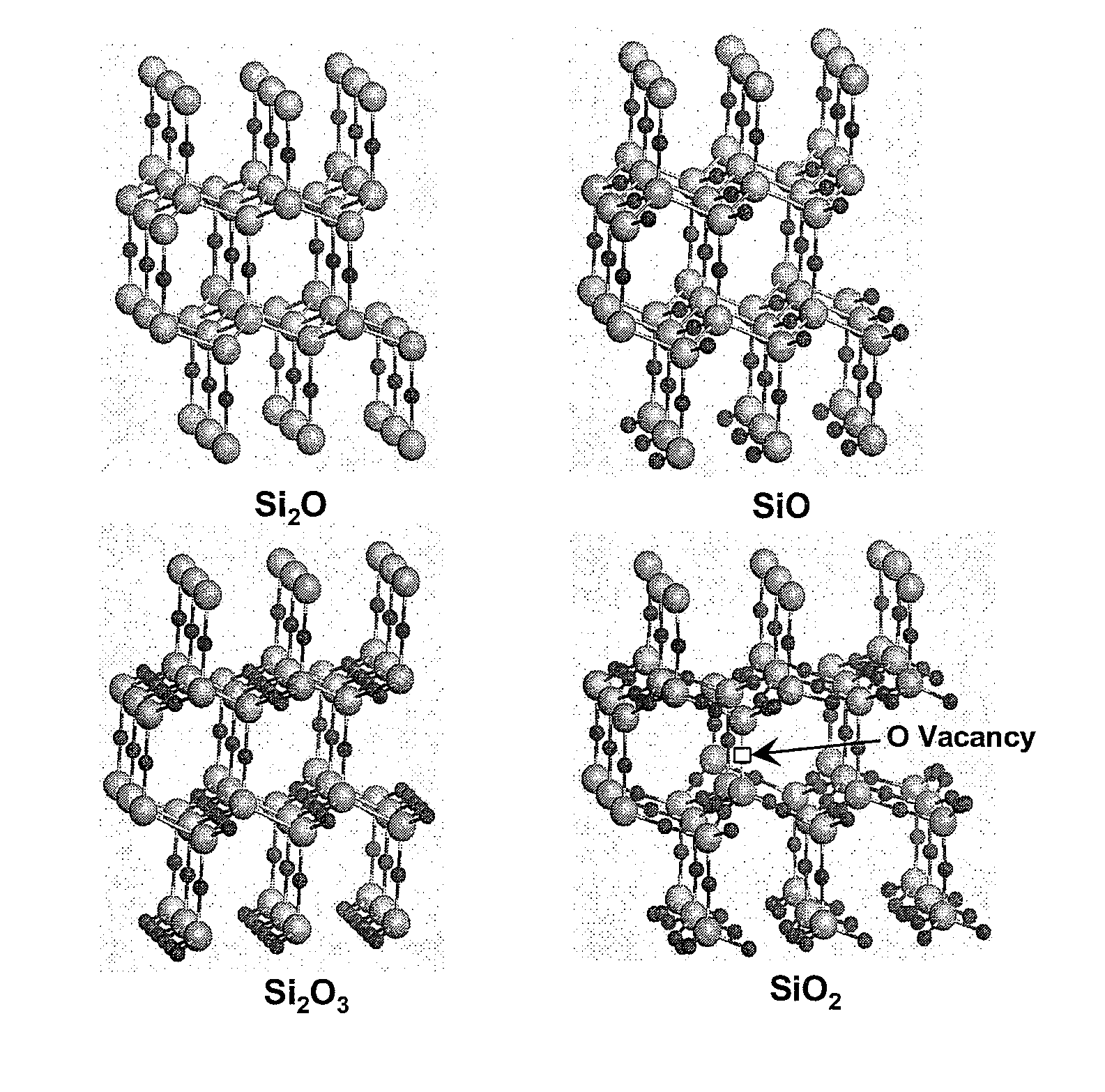
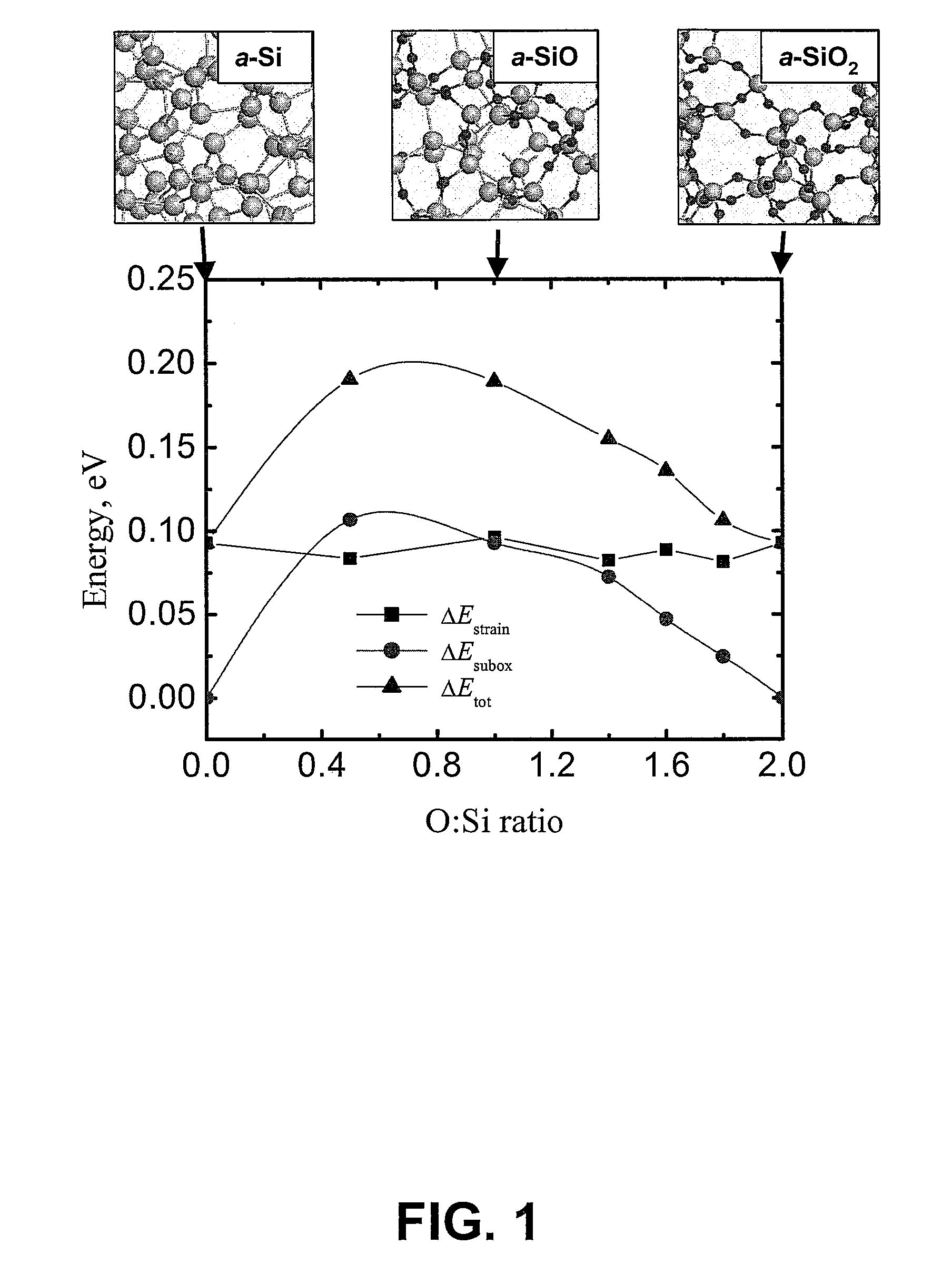
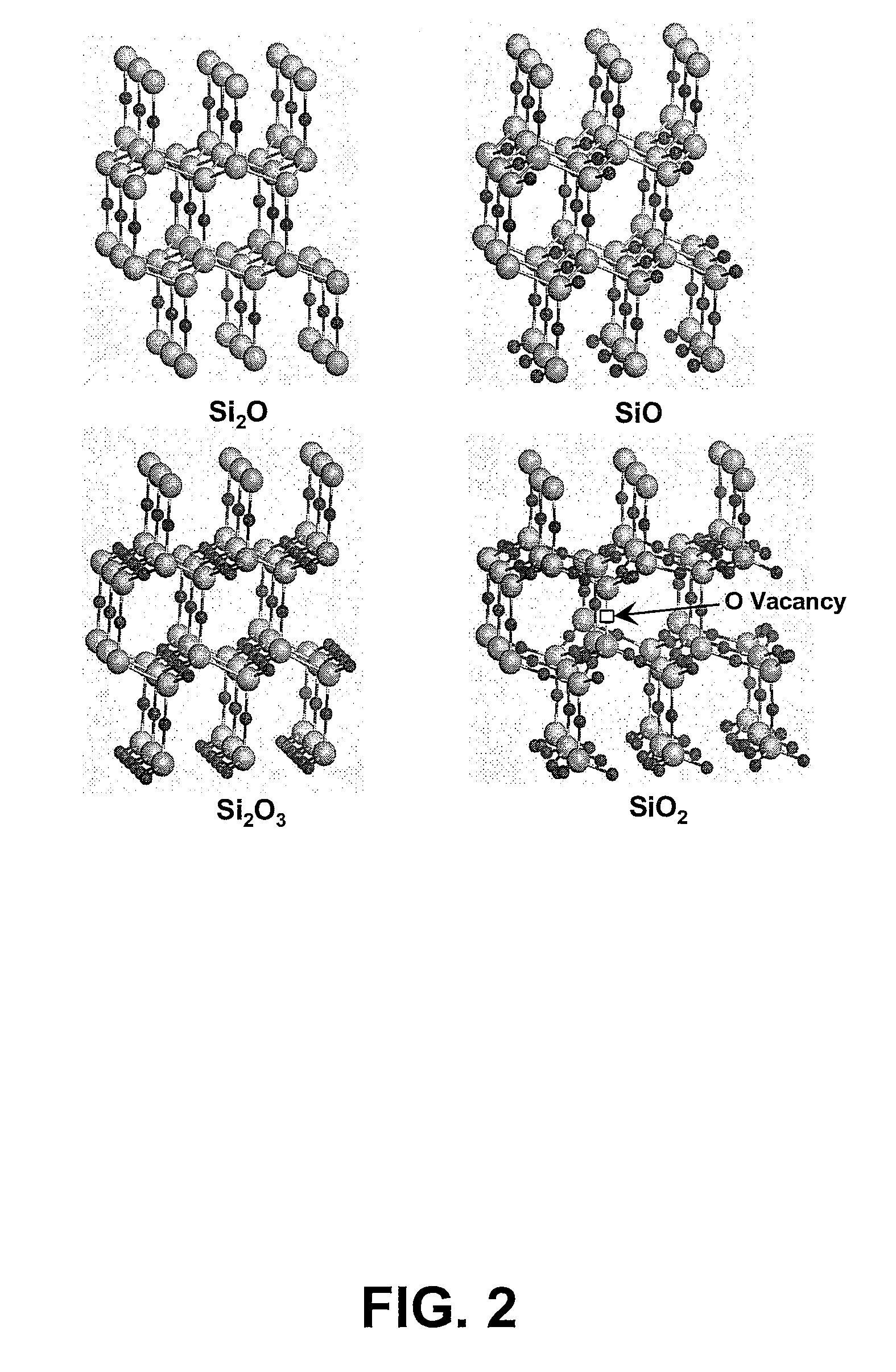
Examples
Embodiment Construction
[0019]The present invention provides a method for predicting from first principles as a function of synthesis and operation conditions: the shape, size distribution, spatial arrangement of oxide embedded silicon nanocrystals; the chemical composition of oxide matrices; and the structure of nanocrystal-matrix interfaces. The computational techniques can include: first principles quantum mechanics (QM); first principles-based force fields (FF); classical FF-based molecular mechanics (MM) and Metropolis Monte Carlo (MMC); and kinetic Monte Carlo (kMC) based on parameters extracted from QM, MM, MMC calculations, and elsewhere. QM calculations can be used to predict the relative energies of suboxide matrices as a function of the silicon:oxygen (Si:O) ratio and the formation and structure of single oxygen (O) and silicon (Si) atoms in the suboxide systems. The QM calculations can also provide information on the rates of diffusion of Si and O atoms in Si-rich oxide matrices. The parameters...
PUM
 Login to View More
 Abstract
Description
Claims
Application Information
 Login to View More