Check patentability & draft patents in minutes with Patsnap Eureka AI!

Methods of reducing grain and texture in a printed image

a printing image and grain reduction technology, applied in the field of electronic printing, can solve the problems of granularity still a problem, all printing processes have intrinsic noise, etc., and achieve the effect of improving the print quality of the printer

Active Publication Date: 2012-04-24
EASTMAN KODAK CO
View PDF16 Cites 1 Cited by
  • Summary
  • Abstract
  • Description
  • Claims
  • Application Information

AI Technical Summary

Benefits of technology

This approach effectively reduces grain and texture in printed images, improving overall print quality by enhancing color resolution and stability, even in applications with low color coverage, such as photo-rich scenarios.

Problems solved by technology

However, all printing processes have their intrinsic noise, and it will manifest into various macroscopic and microscopic artifacts, such as granularity and mottle.
However, granularity is still a problem especially when there is a lower percentage coverage of color separation with current 8 micrometer toner.

Method used

the structure of the environmentally friendly knitted fabric provided by the present invention; figure 2 Flow chart of the yarn wrapping machine for environmentally friendly knitted fabrics and storage devices; image 3 Is the parameter map of the yarn covering machine
View more

Image

Smart Image Click on the blue labels to locate them in the text.
Viewing Examples
Smart Image
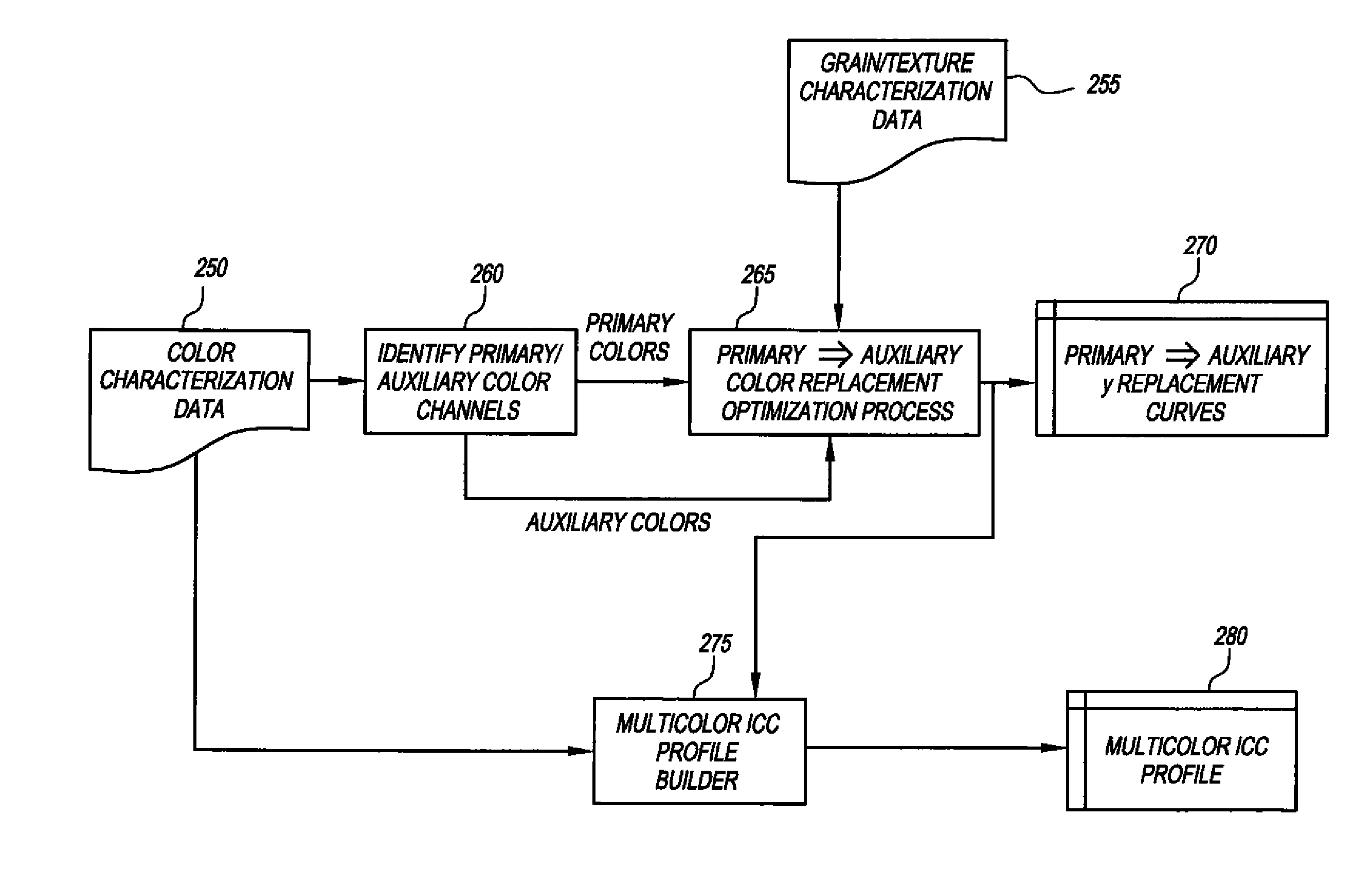
  • Methods of reducing grain and texture in a printed image
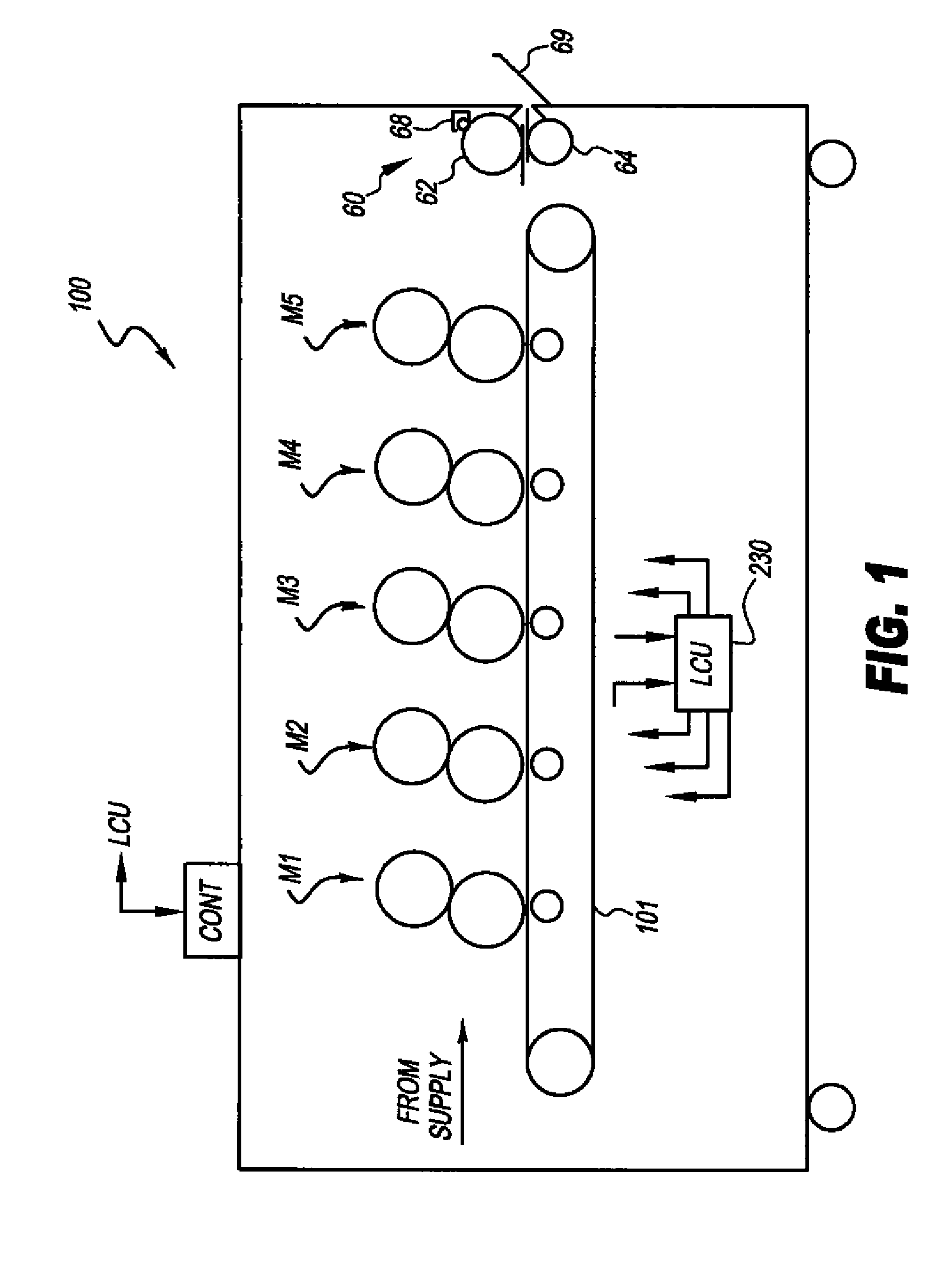
  • Methods of reducing grain and texture in a printed image
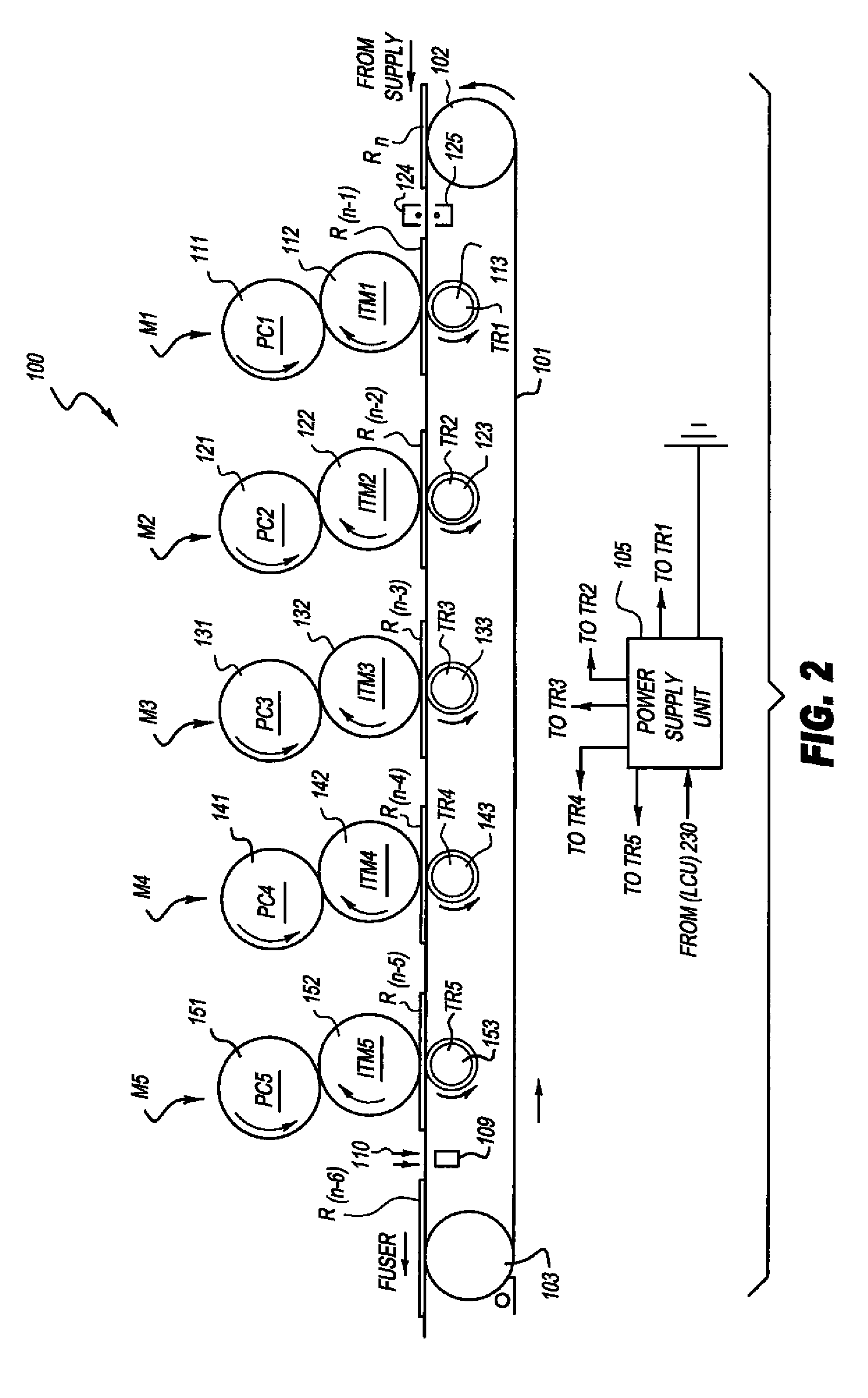
  • Methods of reducing grain and texture in a printed image

Examples

Experimental program
Comparison scheme
Effect test

Embodiment Construction

[0023]For simplicity and illustrative purposes, the principles of the present invention are described by referring to various exemplary embodiments thereof. Although the preferred embodiments of the invention are particularly disclosed herein, one of ordinary skill in the art will readily recognize that the same principles are equally applicable to, and can be implemented in other systems, and that any such variation would be within such modifications that do not part from the scope of the present invention. Before explaining the disclosed embodiments of the present invention in detail, it is to be understood that the invention is not limited in its application to the details of any particular arrangement shown, since the invention is capable of other embodiments. The terminology used herein is for the purpose of description and not of limitation. Further, although certain methods are described with reference to certain steps that are presented herein in certain order, in many insta...

the structure of the environmentally friendly knitted fabric provided by the present invention; figure 2 Flow chart of the yarn wrapping machine for environmentally friendly knitted fabrics and storage devices; image 3 Is the parameter map of the yarn covering machine
Login to View More

PUM

No PUM Login to View More

Abstract

Methods of improving image quality by reducing grain and texture in a printed image are provided. According to one embodiment, a method of reducing grain and texture in an image includes the steps of providing a light color toner and a dark color toner, providing an aperiodic micrononuniformity map, using the aperiodic micrononuniformity map to determine an acceptable domain that includes a plurality of combinations of the light color toner and the dark color toner, and forming an image by selecting one combination of the light color toner and the dark color toner from the plurality of combinations of the light color toner and the dark color toner.

Description

FIELD OF THE INVENTION[0001]This invention relates generally to electrographic printing, and in particular to methods of reducing grain and texture in a printed image.BACKGROUND OF THE INVENTION[0002]Current printing system typically use 4 colorants to compose color images, i.e. cyan, magenta, yellow and black. Among them, cyan, magenta and yellow can be denoted as primary colors because they can theoretically cover the entire printer color gamut. Black is further introduced to improve the stability of neutral rendition. The size of the achievable color gamut is determined by the chromaticity / saturation of the primary colors. As a result, a set of primary colors with higher saturation is able to produce more colorful images, which in turn are more preferred by viewers. However, all printing processes have their intrinsic noise, and it will manifest into various macroscopic and microscopic artifacts, such as granularity and mottle.[0003]Researchers have found that, under the same pri...

Claims

the structure of the environmentally friendly knitted fabric provided by the present invention; figure 2 Flow chart of the yarn wrapping machine for environmentally friendly knitted fabrics and storage devices; image 3 Is the parameter map of the yarn covering machine
Login to View More

Application Information

Patent Timeline
no application Login to View More
Patent Type & Authority Patents(United States)
IPC IPC(8): H04N1/60
CPCG03G15/5025G03G2215/0141G03G2215/0429G03G2215/0468G03G2215/047
Inventor NG, YEE S.NG, LEGAL REPRESENTATIVE, MAMIE KAMTAI, HWAI-TZUUALEXANDROVICH, PETER S.KUO, CHUNG-HUI
Owner EASTMAN KODAK CO
Features
  • R&D
  • Intellectual Property
  • Life Sciences
  • Materials
  • Tech Scout
Why Patsnap Eureka
  • Unparalleled Data Quality
  • Higher Quality Content
  • 60% Fewer Hallucinations
Social media
Patsnap Eureka Blog
Learn More