Check patentability & draft patents in minutes with Patsnap Eureka AI!

Anti-fuse type one-time programmable memory cell and anti-fuse type one-time programmable memory cell arrays

Active Publication Date: 2015-11-24
SK HYNIX INC
View PDF7 Cites 35 Cited by
  • Summary
  • Abstract
  • Description
  • Claims
  • Application Information

AI Technical Summary

Benefits of technology

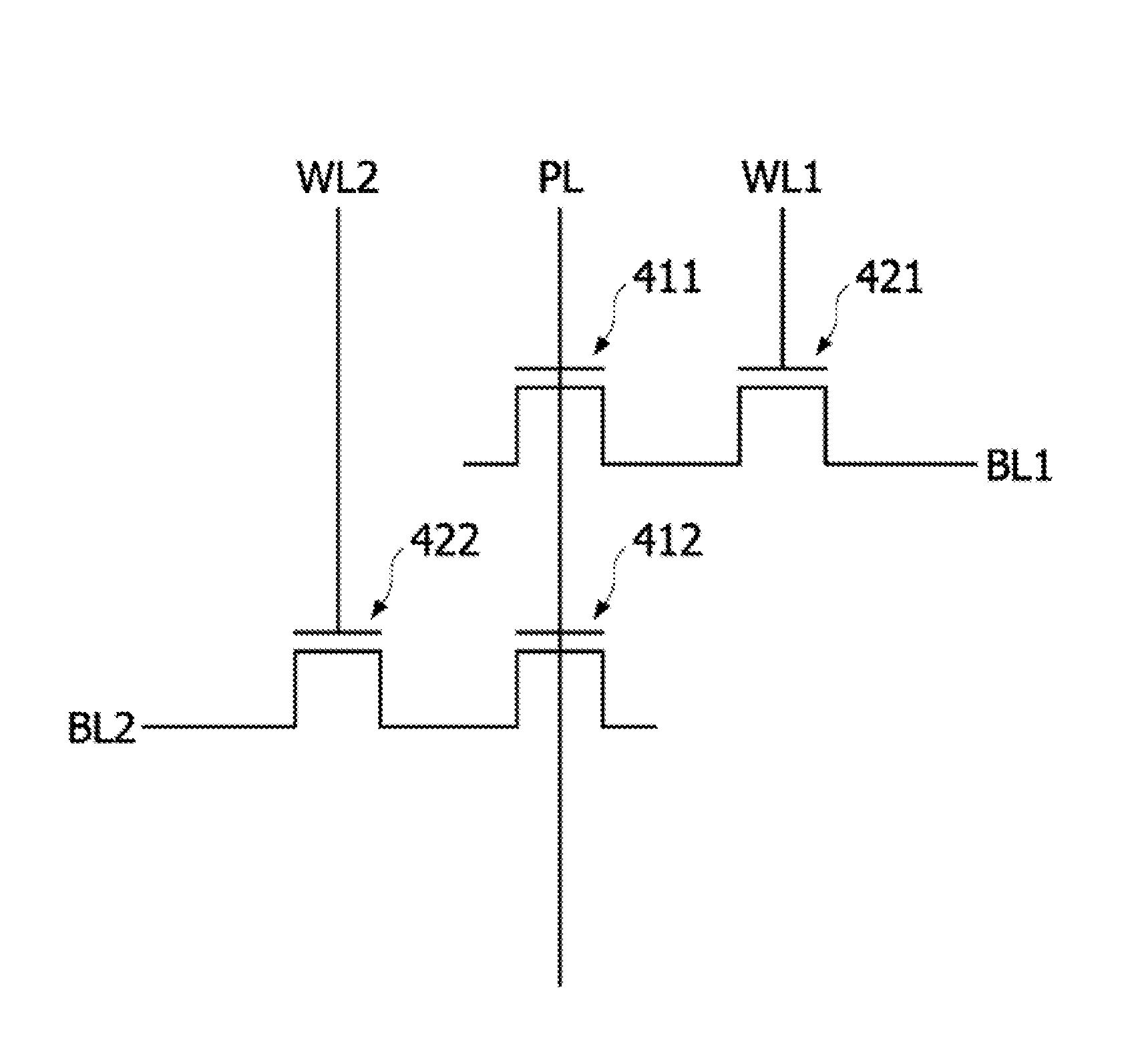
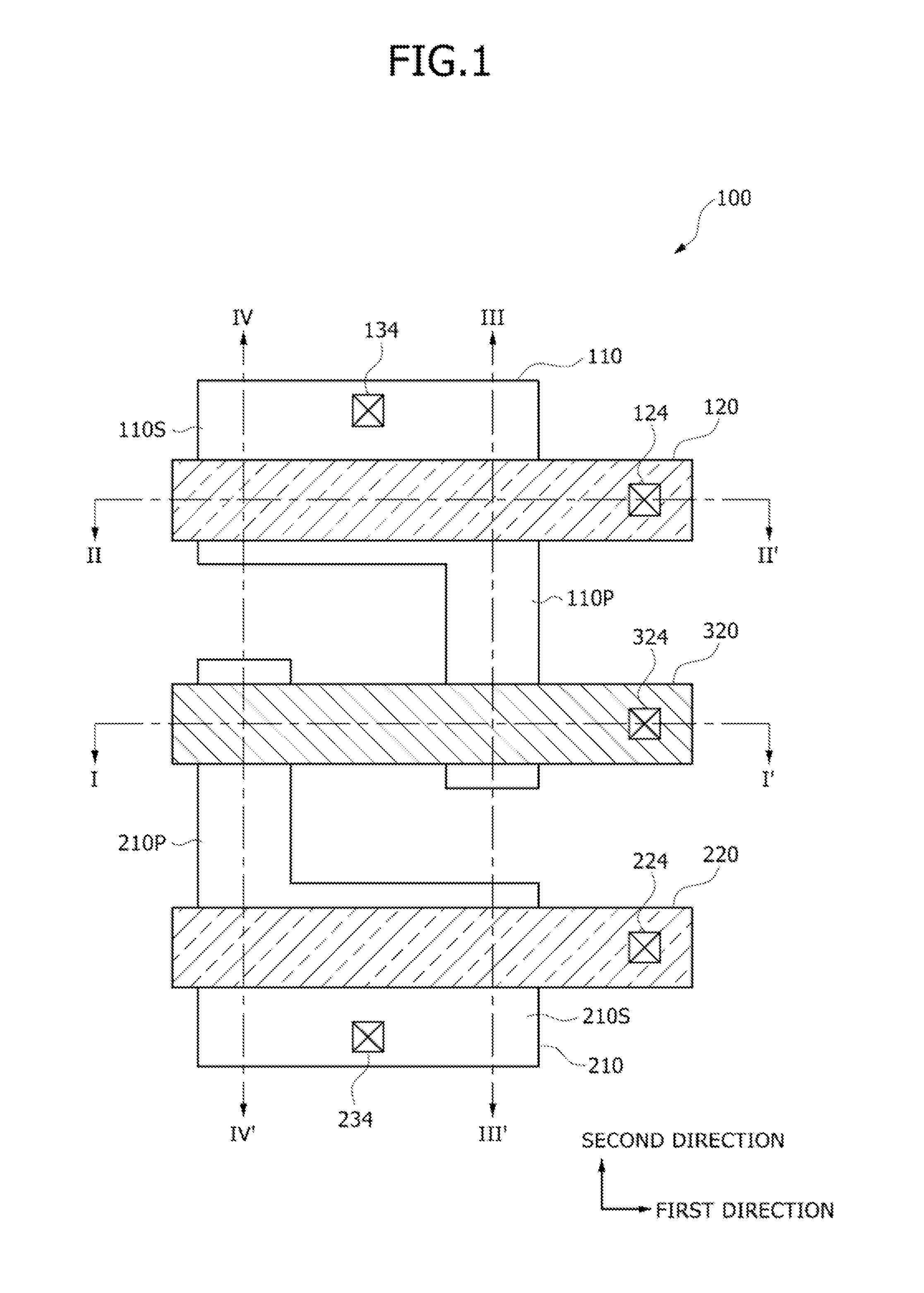
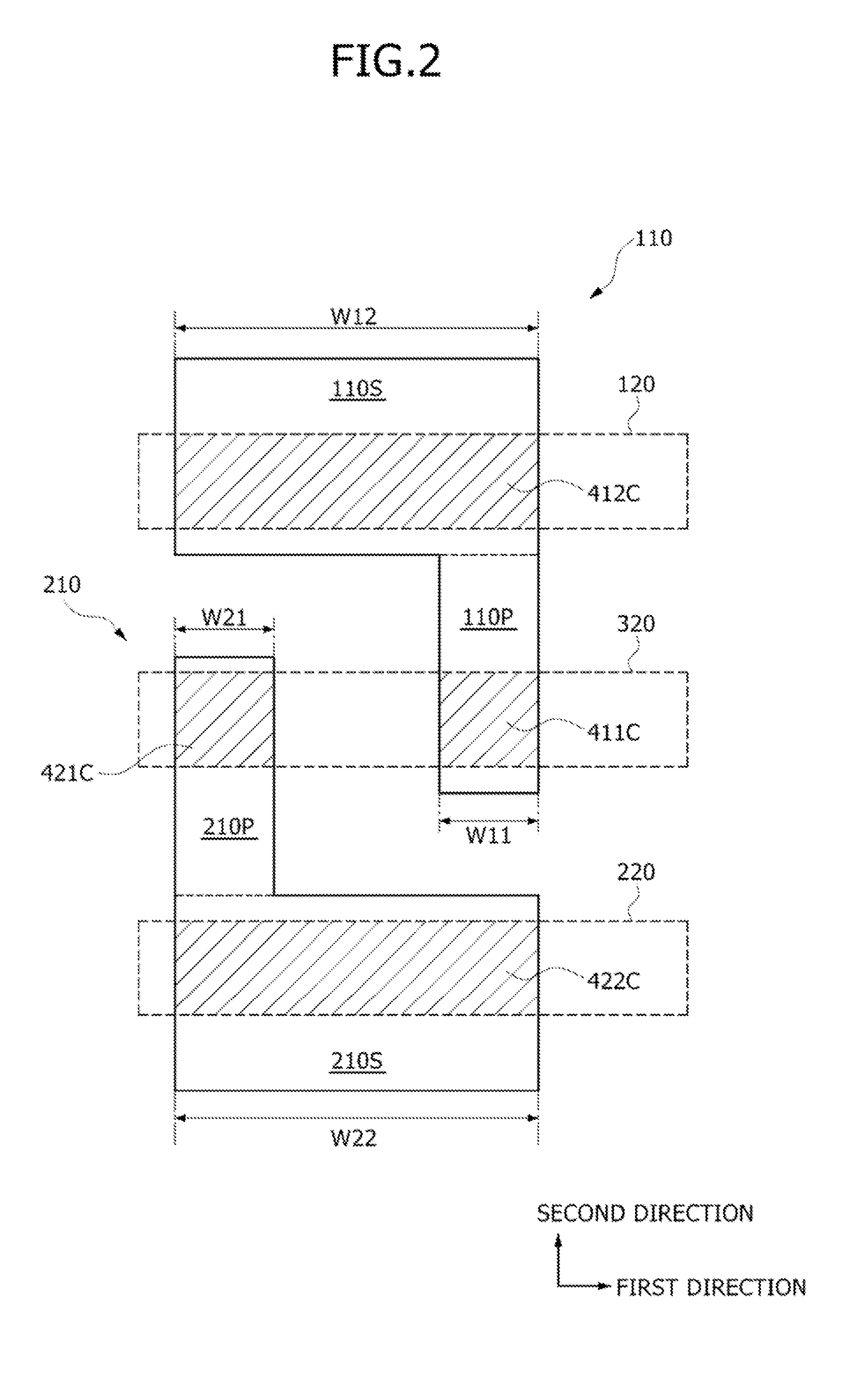
The patent text describes various embodiments of anti-fuse type OTP memory cells and arrays. These cells include a first active region with a first program region and a second selection region, a second active region with a second program region and a second selection region, a program gate intersecting the first and second program regions, a first selection gate intersecting the first selection region, and a second selection gate intersecting the second selection region. The memory cells can be located at cross points of program lines and bit lines. The arrays include program lines, word lines, and bit lines. The technical effects of these embodiments include improved programming precision, reliability, and efficiency of the anti-fuse type OTP memory cells.

Problems solved by technology

Nonvolatile memory devices retain their stored data even when their power supplies are blocked.

Method used

the structure of the environmentally friendly knitted fabric provided by the present invention; figure 2 Flow chart of the yarn wrapping machine for environmentally friendly knitted fabrics and storage devices; image 3 Is the parameter map of the yarn covering machine
View more

Image

Smart Image Click on the blue labels to locate them in the text.
Viewing Examples
Smart Image
  • Anti-fuse type one-time programmable memory cell and anti-fuse type one-time programmable memory cell arrays
  • Anti-fuse type one-time programmable memory cell and anti-fuse type one-time programmable memory cell arrays
  • Anti-fuse type one-time programmable memory cell and anti-fuse type one-time programmable memory cell arrays

Examples

Experimental program
Comparison scheme
Effect test

Embodiment Construction

[0033]An anti-fuse element may be formed to initially have an insulated state (i.e., an electrical open state) and may be programmed to have a conductive state (i.e., an electrical short state) if a voltage equal to or greater than a critical voltage is applied thereto. Accordingly, a programmable anti-fuse element may be employed in an anti-fuse type OTP memory cell. In general, anti-fuse type OTP memory cells may include an anti-fuse transistor and a selection transistor. Anti-fuse type OTP memory cells may only be programmed once. Thus, it may be necessary to design anti-fuse type OTP memory cells to include a redundancy scheme. That is, the anti-fuse type OTP memory cell may include a couple of anti-fuse transistors and a couple of selection transistors. In such a case, the number of decoders for driving the anti-fuse type OTP memory cells may increase. A voltage applied to gates (I.e., anti-fuse memory gates or program gates) of the anti-fuse transistors may be higher than a vo...

the structure of the environmentally friendly knitted fabric provided by the present invention; figure 2 Flow chart of the yarn wrapping machine for environmentally friendly knitted fabrics and storage devices; image 3 Is the parameter map of the yarn covering machine
Login to View More

PUM

No PUM Login to View More

Abstract

An anti-fuse type OTP memory cell includes a first active region having a first program region with a first width and a first selection region with a second width that is greater than the first width, a second active region spaced apart from the first active region and having a second program region with a third width and a second selection region with a fourth width that is greater than the third width, a program gate intersecting the first program region and the second program region, a first selection gate intersecting the first selection region, and a second selection gate intersecting the second selection region.

Description

CROSS-REFERENCE TO RELATED APPLICATION[0001]The present application claims priority under 35 U.S.C 119(a) to Korean Application No. 10-2014-0122624, filed on Sep. 16, 2014, which is incorporated herein by reference in its entirety.BACKGROUND[0002]1. Technical Field[0003]Various embodiments of the present disclosure relate to nonvolatile memory devices and, more particularly, to anti-fuse type one-time programmable (OTP) memory cells and anti-fuse type OTP memory cell arrays.[0004]2. Related Art[0005]Nonvolatile memory devices retain their stored data even when their power supplies are blocked. Such nonvolatile memory devices may include read only memory (ROM) devices, OTP memory devices and rewritable memory devices. Generally, the nonvolatilememory devices are realized by using a complementary metal-oxide-semiconductor (CMOS) compatible process.[0006]The OTP memory devices may be categorized as either fuse type OTP memory devices or anti-fuse type OTP memory devices. Each of memory...

Claims

the structure of the environmentally friendly knitted fabric provided by the present invention; figure 2 Flow chart of the yarn wrapping machine for environmentally friendly knitted fabrics and storage devices; image 3 Is the parameter map of the yarn covering machine
Login to View More

Application Information

Patent Timeline
no application Login to View More
IPC IPC(8): G11C17/18G11C17/16G11C13/00
CPCG11C17/16G11C17/18G11C13/0004G11C2213/71G11C2213/72H01L23/5252H01L2924/0002G11C29/74H10B20/25H01L2924/00H10B41/30H10B20/20
Inventor PARK, SUNG KUN
Owner SK HYNIX INC
Features
  • R&D
  • Intellectual Property
  • Life Sciences
  • Materials
  • Tech Scout
Why Patsnap Eureka
  • Unparalleled Data Quality
  • Higher Quality Content
  • 60% Fewer Hallucinations
Social media
Patsnap Eureka Blog
Learn More