
Tightening mechanisms and applications including the same
a technology of tightening mechanism and lace, which is applied in the direction of fastenings, garment fasteners, metal-working apparatuses, etc., can solve the problems of unappealing, damaged or unintentionally actuated exposed lace tightening mechanism, and various drawbacks of existing lacing systems
- Summary
- Abstract
- Description
- Claims
- Application Information
AI Technical Summary
Benefits of technology
Problems solved by technology
Method used
Image

Examples
Embodiment Construction
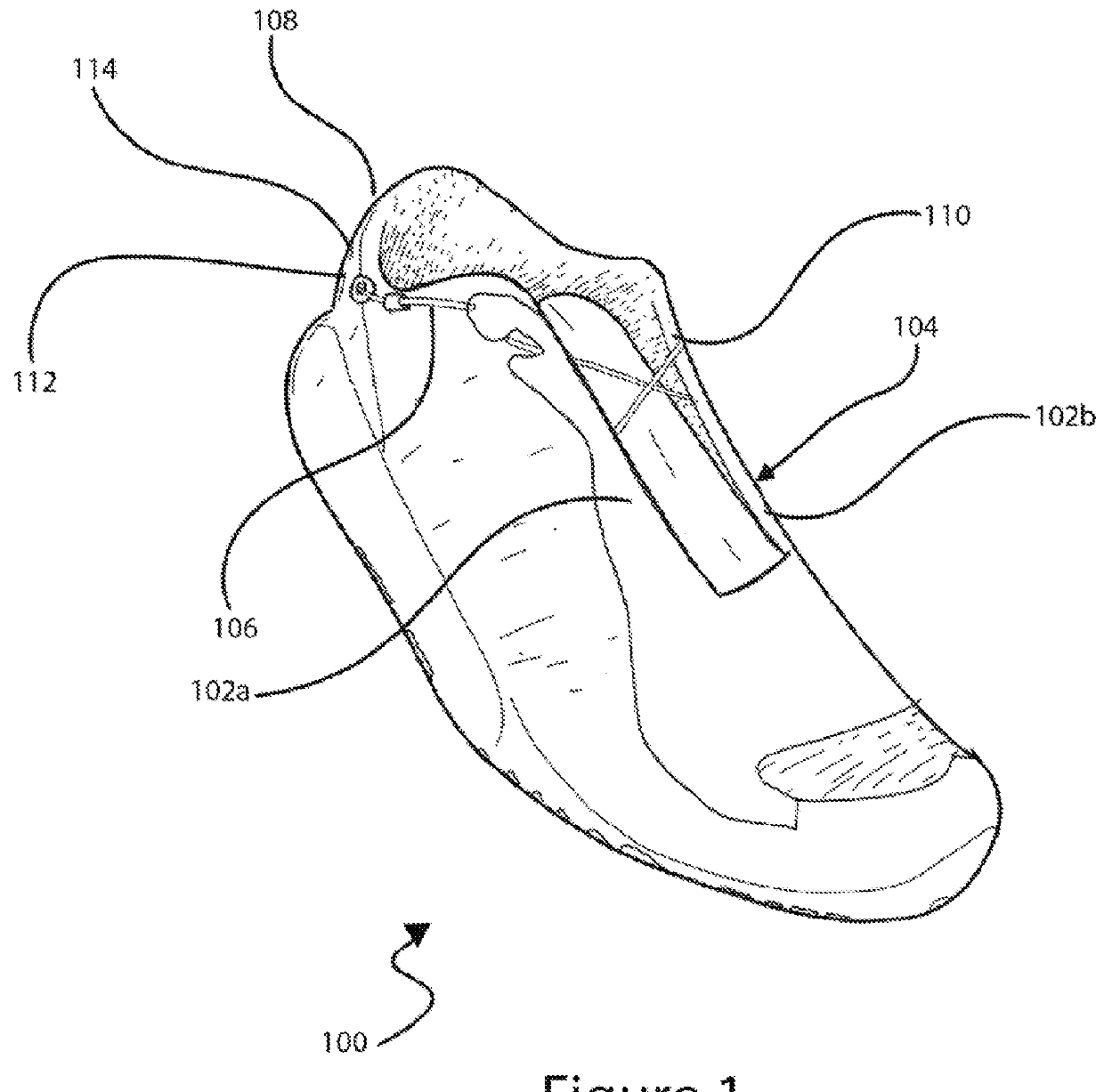
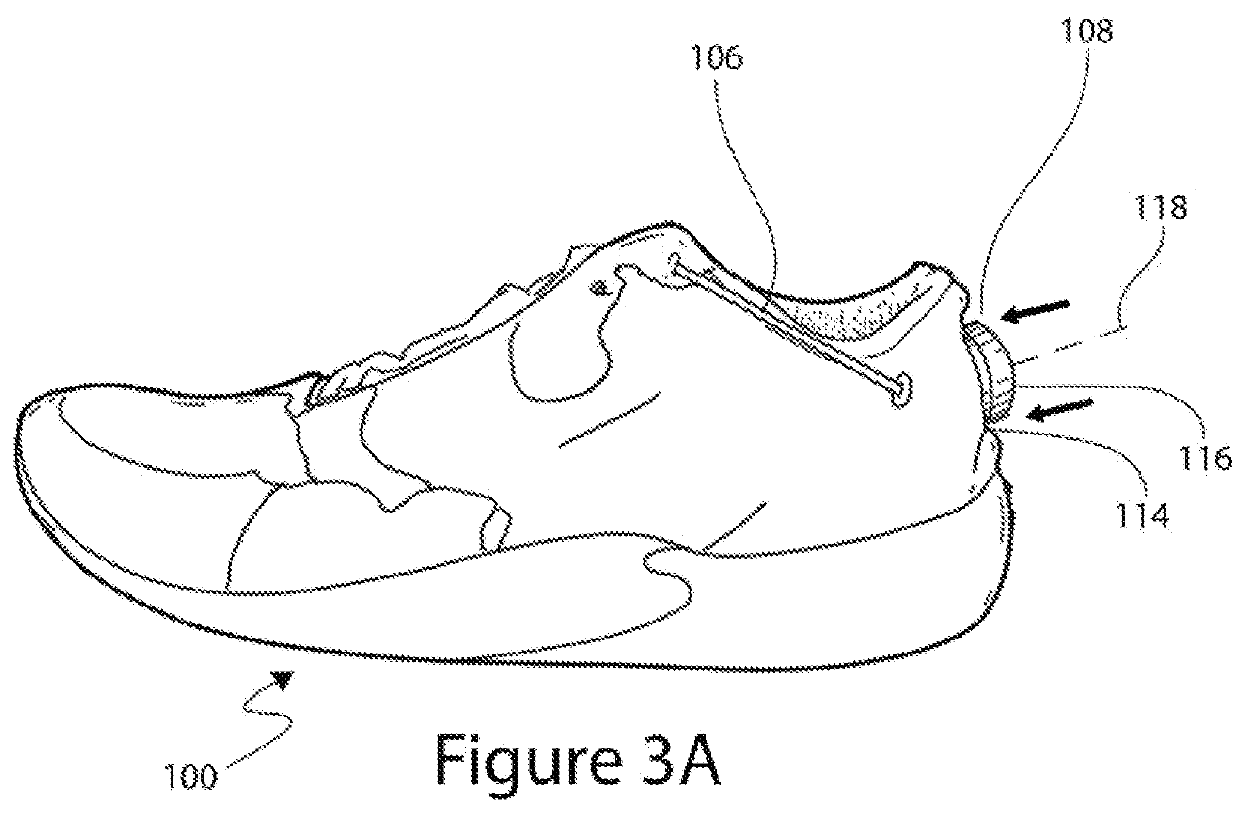
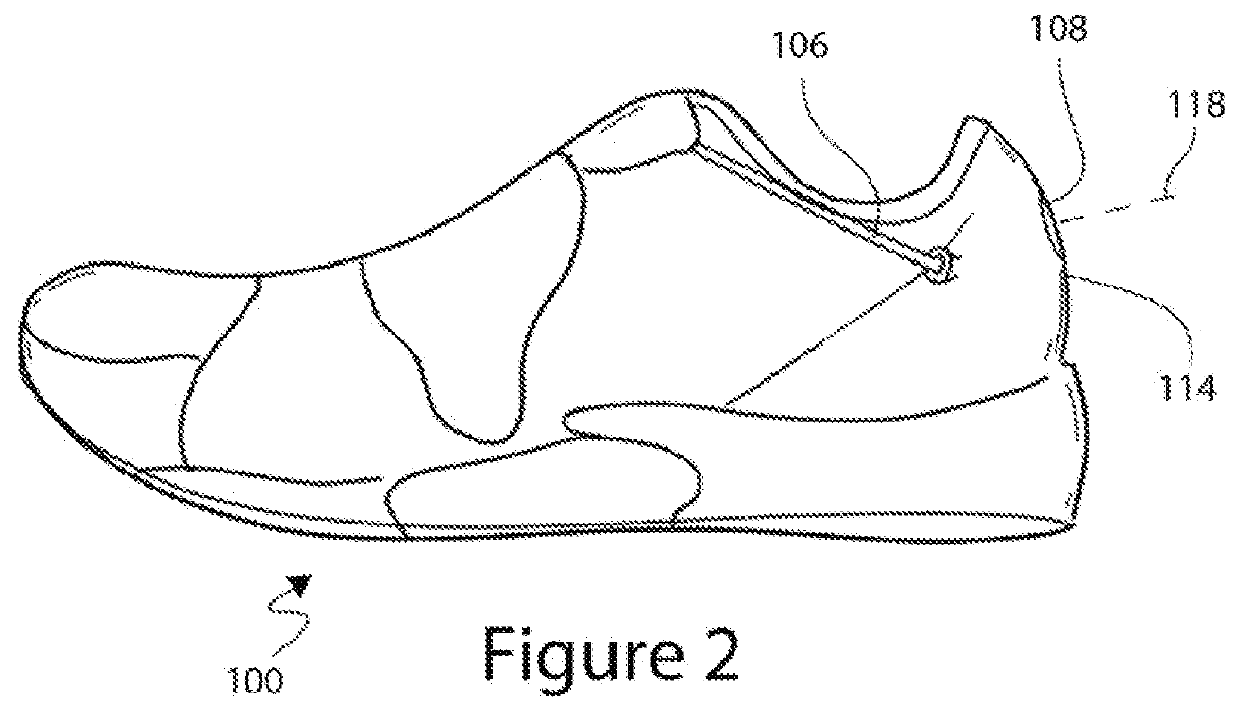
[0083]FIG. 1 is an isometric view of an example embodiment of a shoe 100 that includes a reel-based tightening system. Although many embodiments are discussed herein as relating to shoes or other footwear, the embodiments disclosed herein can also related to other types of wearable articles, and to other objects that can be tightened and / or loosened (e.g., boots, hats, belts, sandals, gloves, braces, backpacks, snowboard bindings). The shoe 100 of FIG. 1 can include a first portion 102a and a second portion 102b that can be drawn towards each other to tighten the shoe 100 and can be moved away from each other to loosen the shoe 100. The first and second portions 102a and 102b can be spaced apart forming a gap 104 therebetween, or, in some embodiments, the first and second portions 102a and 102b can touch or overlap. A tension member, such as a lace 106, can extend between the first and second portions 102a and 102b so that increased tension on the lace 106 can cause the first and se...
PUM
| Property | Measurement | Unit |
|---|---|---|
| thicknesses | aaaaa | aaaaa |
| radial distance | aaaaa | aaaaa |
| compressible | aaaaa | aaaaa |
Abstract
Description
Claims
Application Information
 Login to View More