
Liquid crystal display device
a liquid crystal display and liquid crystal technology, applied in the direction of liquid/fluent solid measurement, instruments, optical elements, etc., can solve the problems of low direct effect of liquid crystal layer on the liquid crystal layer, low voltage holding ratio, and high impurity control levels, so as to prevent image sticking, reduce the voltage holding ratio, and increase the ion density
- Summary
- Abstract
- Description
- Claims
- Application Information
AI Technical Summary
Benefits of technology
Problems solved by technology
Method used
Image

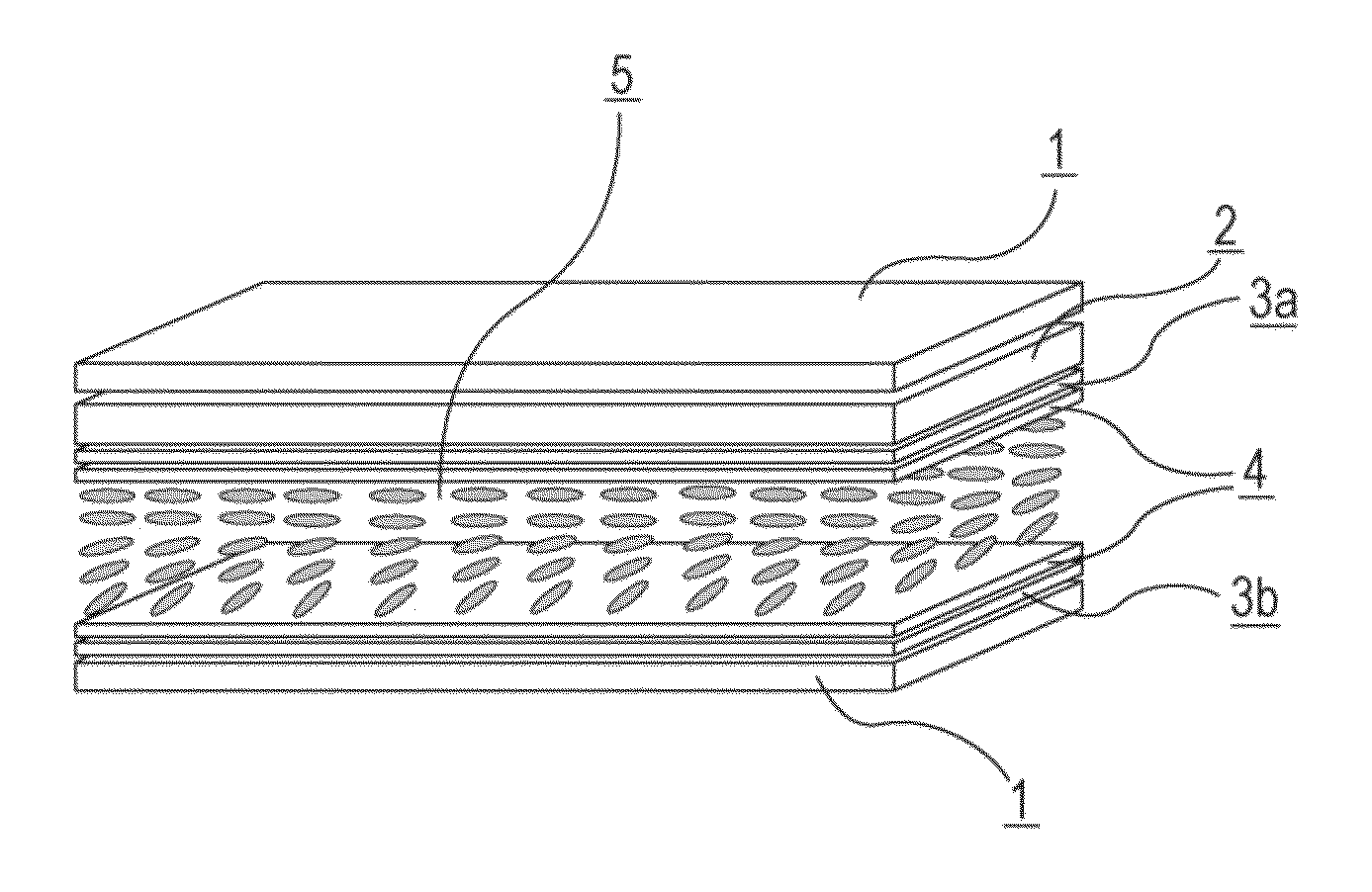
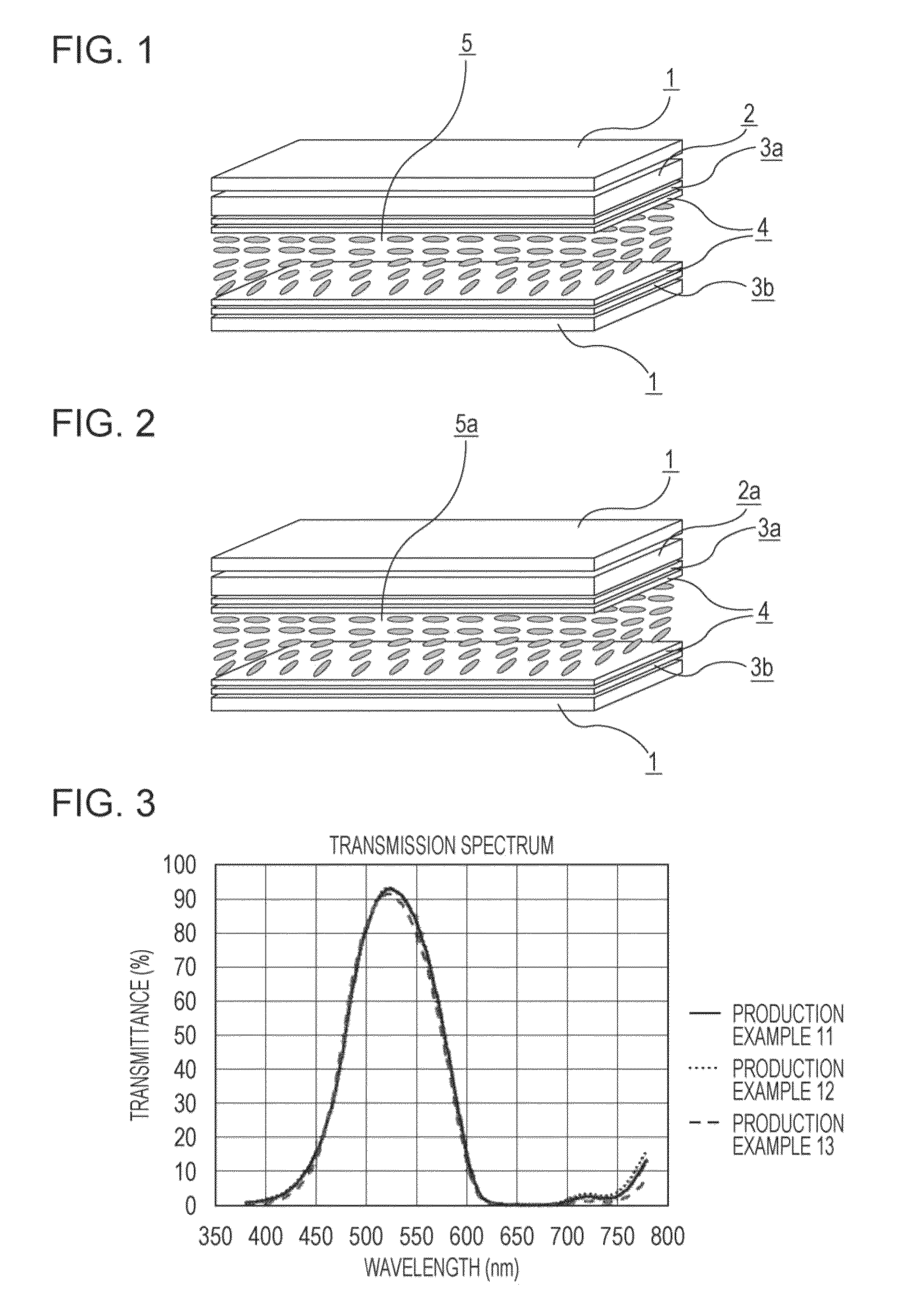
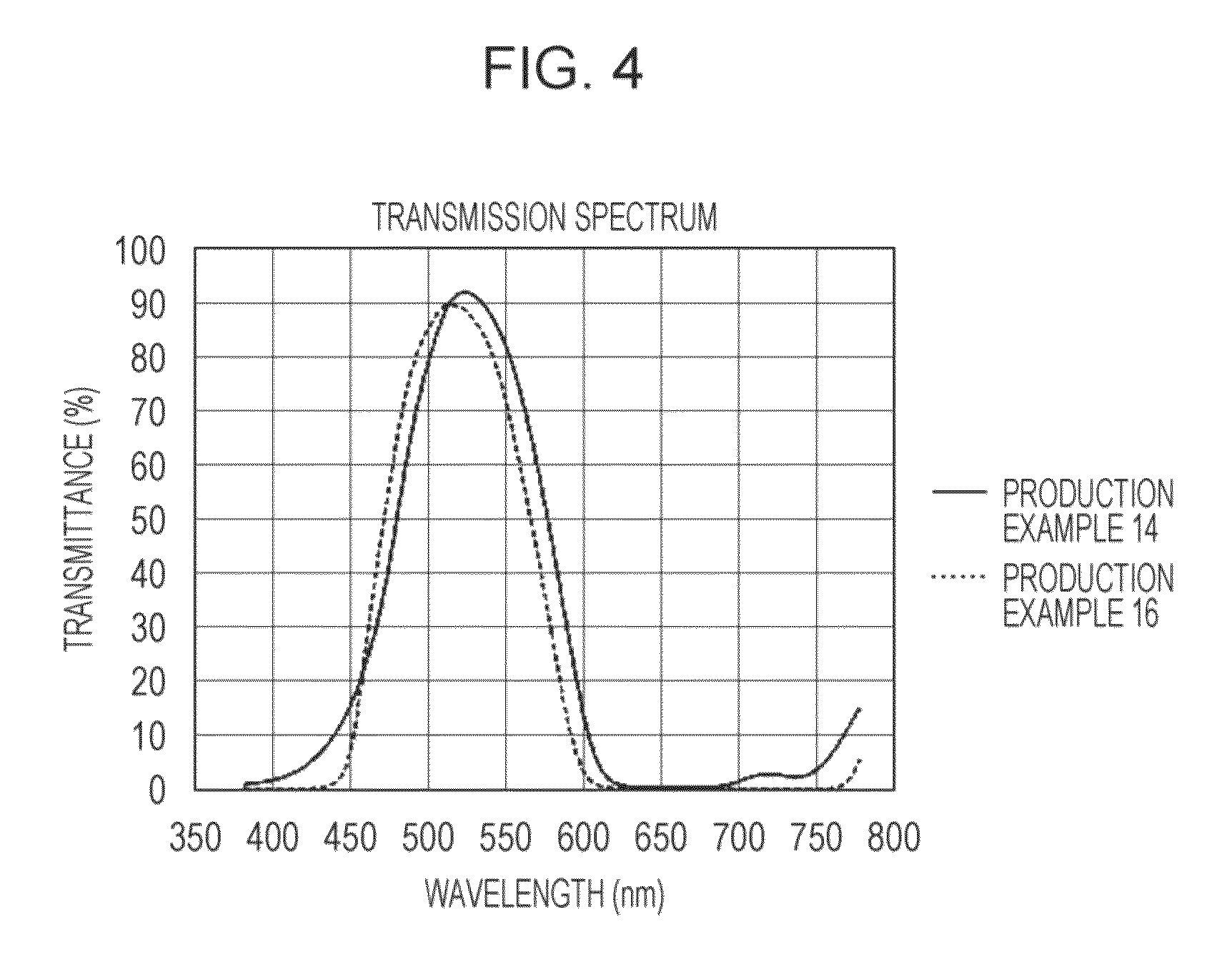
Examples
synthetic example 1
Synthesis of Copolymer a
[0168]A mixture containing 68 parts of ethyl methacrylate, 29 parts of 2-ethylhexyl methacrylate, 3 parts of thioglycolic acid, and 0.2 parts of a polymerization initiator (“Perbutyl (registered trademark) O” [active component: t-butyl peroxy-2-ethylhexanoate manufactured by NOF CORPORATION]) was added dropwise to 100 parts of xylene, which was kept in a nitrogen stream at 80° C., under stirring for four hours. After the completion of the addition, 0.5 parts of “Perbutyl (registered trademark) O” was added every four hours and the mixture was stirred at 80° C. for 12 hours. After the completion of the reaction, xylene was added to control the non-volatile content. Thus, a xylene solution of a copolymer a having a non-volatile content of 50% was prepared.
synthetic example 2
Synthesis of Copolymer b
[0169]A mixture containing 66 parts of ethyl methacrylate, 28 parts of 2-ethylhexyl methacrylate, 6 parts of thioglycolic acid, and 0.3 parts of a polymerization initiator (“Perbutyl (registered trademark) O” [active component: t-butyl peroxy-2-ethylhexanoate manufactured by NOF CORPORATION]) was added dropwise to 100 parts of xylene, which was kept in a nitrogen stream at 80° C., under stirring for four hours. After the completion of the addition, 0.5 parts of “Perbutyl (registered trademark) O” was added every four hours and the mixture was stirred at 80° C. for 12 hours. After the completion of the reaction, an appropriate amount of xylene was added to control the non-volatile content. Thus, a xylene solution of a copolymer b having a non-volatile content of 50% was prepared.
synthetic example 3
Synthesis of Polymer P
[0170]A mixture containing 54.5 parts of xylene, 19.0 parts of the copolymer a obtained in Synthetic Example 2, 38.0 parts of the copolymer b, and 7.5 parts of a 15% aqueous polyallylamine solution (“PAA-05” manufactured by Nitto Boseki Co., Ltd., number-average molecular weight: about 5000) was charged into a flask equipped with a stirrer, a reflux condenser, a nitrogen blowing tube, and a thermometer. The reaction was caused to proceed under stirring in a nitrogen stream at 140° C. for eight hours while water was distilled off using a separator and xylene was refluxed to a reaction solution.
[0171]After the completion of the reaction, an appropriate amount of xylene was added to control the non-volatile content. Thus, a polymer P, which was a modified polyamine, having a non-volatile content of 40% was prepared. The weight-average molecular weight of the resin was 11000 and the amine value was 16.0 mgKOH / g.
PUM
| Property | Measurement | Unit |
|---|---|---|
| volume fraction | aaaaa | aaaaa |
| particle size | aaaaa | aaaaa |
| particle size | aaaaa | aaaaa |
Abstract
Description
Claims
Application Information
 Login to View More