
Vibrio natriticus capable of strongly degrading enteromorpha protein and application of vibrio natriticus in preparation of organic fertilizer
A technology for sodium-requiring vibrio and protein degradation, applied in the field of microorganisms, can solve the problems of resource utilization of no natrivibrio, few types of strains, and degradation of enteromorpha by no natrivibrio, so as to achieve easy fermentation production, The effect of simple equipment and good application potential
Patent Information
- Authority / Receiving Office
- CN · China
- Current Assignee / Owner
- Publication Date
- 2022-05-13
Smart Images
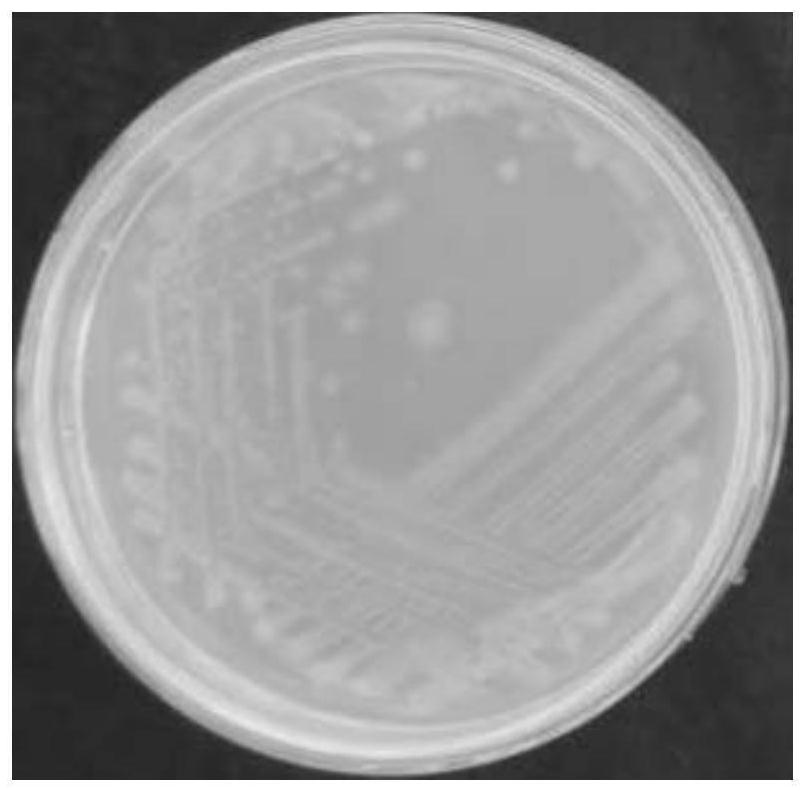
Figure 1 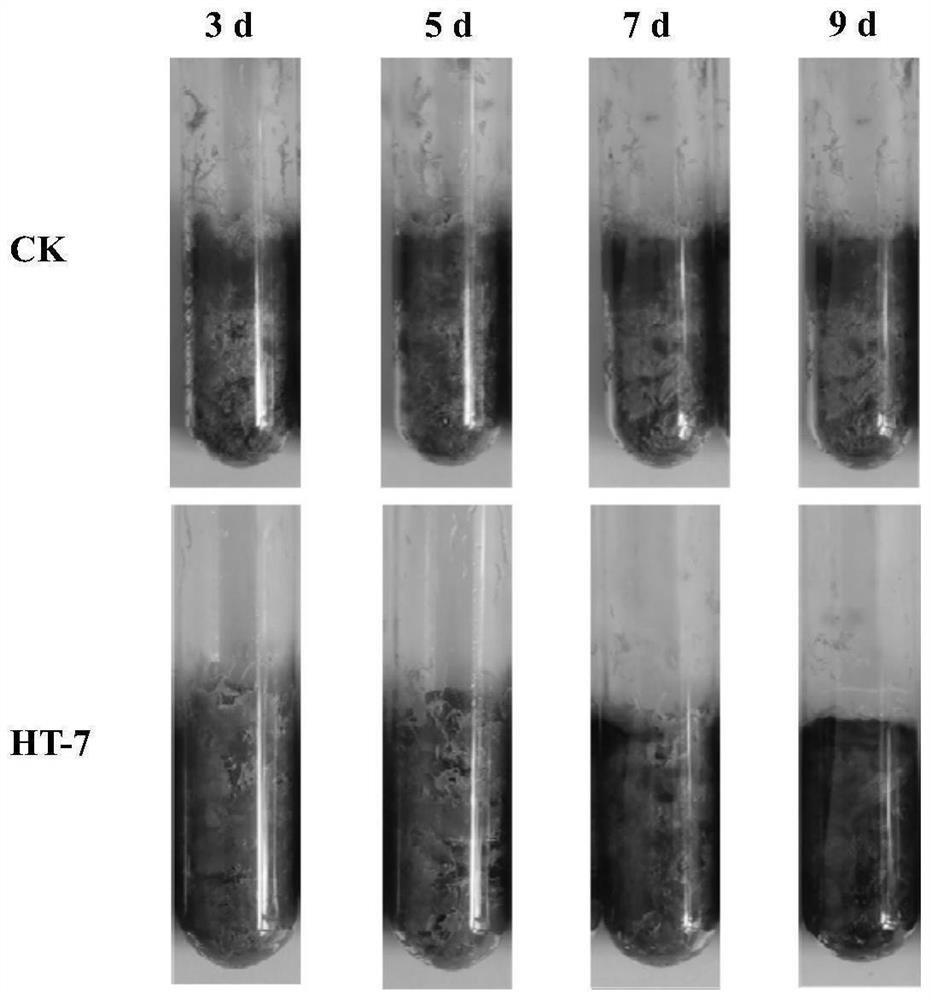
Figure 2 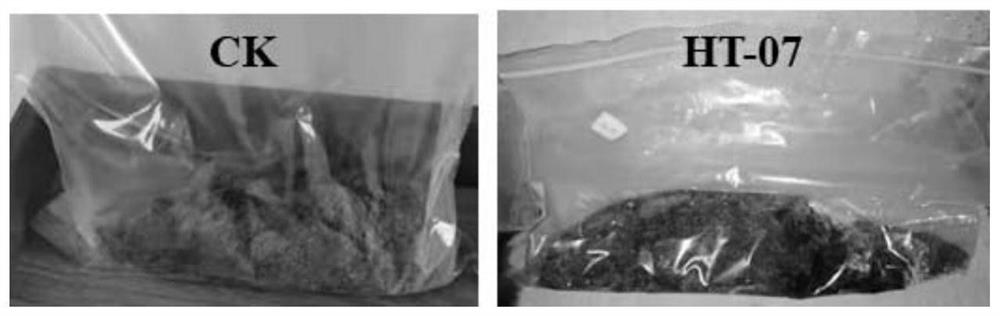
Figure 3
Abstract
Description
technical field
[0001] The invention relates to a strain of natrigovibrio capable of degrading enteromorpha protein and its application in the preparation of organic fertilizer, which belongs to the technical field of microbes. Background technique
[0002] Enteromorpha prolifera is a large green algae, commonly known as moss strips and seaweed, which belongs to the Ulvaceae plant of the Chlorophyta Ulvae order. In recent years, seawater eutrophication caused by algal blooms such as Enteromorpha has become an important manifestation of marine environmental pollution, and a large number of algal bodies salvaged during the treatment process are difficult to dispose of. At present, temporary stockpiling and landfill are commonly used rapid disposal methods of Enteromorpha, but this process will produce secondary pollution, mainly including the impact of leachate and odorous gas on the environment. Therefore, how to realize the harmless and comprehensive utilization of Enteromo...
Examples
Embodiment 1
[0023] Example 1: Isolation and Identification of Bacterial Strains
[0024] 1. Isolation of Strain HT-7
[0025] Separation was carried out on NA medium by the dilution coating method, and the sample was a water sample containing Enteromorpha rot collected from a bathing beach in Huangdao District, Qingdao City, Shandong Province. The specific separation method is as follows:
[0026] (1) Sterilization: Autoclave at 0.1MPa, 121°C for 30 minutes for the experimental supplies used, such as petri dishes, pipette tips, and sterile water, and set aside;
[0027] (2) Bacterial sample dilution: mix the water sample with crushed rotten Enteromorpha at a ratio of 9:1, place it in a sterile Erlenmeyer flask containing glass beads, vibrate at 120r / min for 30min, and filter it with four layers of sterile gauze. Bacteria samples were obtained; take 6 test tubes containing 9mL sterile water, numbered 10 in sequence -1 ~10 -6 ; Draw 1mL bacterial sample from the Erlenmeyer flask and put...
Embodiment 2
[0047] Embodiment 2: preparation of fermented bacterial agent of vibrio natrium HT-7
[0048] (1) Dip a small amount of purified strains with an inoculation loop into a 50mL Erlenmeyer flask containing 10mL of seed liquid medium, and culture at a constant temperature of 120r / min and 20°C for 24h to obtain the seed liquid;
[0049] Seed liquid medium, that is, NB-containing medium: peptone 10g, beef powder 3g, NaCl 5g, water 1000mL, pH value 7.3±0.1;
[0050] (2) Inoculate the seed solution prepared in step (1) into the fermentation medium, the inoculum size is 1.5%, and ferment and cultivate at a constant temperature of 20° C. for 24 hours to obtain the fermentation solution (shake flask microbial agent) of Narovibrio HT-7, The number of live bacteria is 2~5×10 10 cfu / g. Fermenting each bacterial strain in a shake flask can obtain the shake flask inoculum of each bacterial strain.
[0051] Fermentation medium (mass ratio): glucose 2%, starch 1.8%, yeast extract powder 1.5%,...
Embodiment 3
[0052] Example 3: Research on the degradation function of Vibrio natrium HT-7
[0053] (1) Verification of the function of Enteromorpha degraded by Narvibrio HT-7
[0054] Refer to Example 2 to make the fermentation bacterial agent of Natrivibrio HT-7; take 5g of fresh Enteromorpha and place it in a test tube to keep the compactness consistent; add 1mL of Navibrio HT-7 bacterial agent in the test tube Add 1mL fermentation medium to the control group; repeat each treatment 3 times; tighten the stoppers to provide an anaerobic environment; place them at 20°C, observe them on 3d, 5d, 7d and 9d, and record the appearance of Enteromorpha.
[0055] The results showed that, compared with the control, the color of Enteromorpha changed from green to light after 3 days of application of Narvibrio HT-7 bacterial agent; after 5 days of treatment, the color of Enteromorpha turned brown and deepened, and began to hydrate; after 7 days of treatment , Enteromorpha begins to turn black; after...