
Method for quickly detecting fruiting performance of pleurotus nebrodensis
A technology of Pleurotus basilica and its performance, which is applied in the field of detection and identification of edible fungi, can solve the problems that there are no reports of rapid detection of the fruiting performance of the Pleurotus basilica strain, and achieve low cost, strong reliability, and simple and easy method Effect
- Summary
- Abstract
- Description
- Claims
- Application Information
AI Technical Summary
Problems solved by technology
Method used
Image

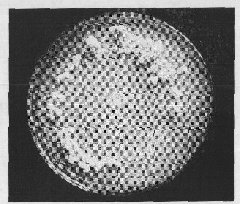
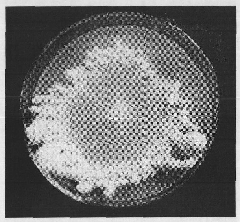
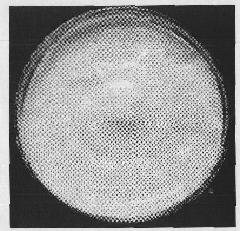
Examples
Embodiment 1
[0027] Example 1 Screening and identification of fruiting performance of Pleurotus bailing strain
[0028] Proceed as follows:
[0029] There are 3 Pleurotus bailing strains involved in this test, numbered respectively 485, 489 and 1407, which are preserved in the China Agricultural Microorganism Culture Collection Center; wherein 485 strains are the wild bacterium collected from Xinjiang Mulei by the inventor in 2004. Bacterial strains; 489 bacterial strains are Zhongnong No. 1, which is the strain selected by the inventor through polyspore hybridization, and has been preserved in the General Microbiology Center of China Microbiological Culture Collection Management Committee in 2005. The preservation number is: CGMCC 1300 (see the patent "a kind of Bailing Mushroom New Variety and Strain Production and Cultivation Method" (patent number: ZL200510052226.7)); 1407 strain is a wild strain collected by the inventor in 2009 from Tacheng, Xinjiang.
[0030] (1) Culture medium pre...
Embodiment 2
[0034] Example 2 Bailing Pleurotus cultivation test
[0035] Proceed as follows:
[0036] (1) Cultivation raw material formula: 90% cottonseed hulls, 6% corn flour, 2% lime, 1% gypsum, 1% potassium dihydrogen phosphate, and the water content is 1:1.5-1.6.
[0037] (2) Inoculation time: inoculate on August 28, the strains are 485, 489 and 1407 strains in Example 1 respectively, and 100 bags of each variety are inoculated.
[0038] (3) Mycelia management: cultivating in a shading culture room, controlling the culture temperature at 20-26°C, and ventilating twice a day for 30 minutes each time. Turn the pile once every 10 days or so in order to produce bacteria evenly.
[0039] (4) Post-ripening conditions: after the hyphae are overgrown, the temperature of the cultivation room is controlled at 20-22° C., the relative air humidity is controlled at 70%, and a small amount of scattered light is appropriately given. After ripening time 40d.
[0040] (5) Budding-inducing methods ...
PUM
 Login to View More
 Abstract
Description
Claims
Application Information
 Login to View More