Greenhouse planting method of anoectochilus roxburghii lindl tissue culturing seedlings

A technology of tissue culture and planting methods, applied in botany equipment and methods, horticulture, applications, etc., can solve the problems of susceptibility to diseases and insect pests, low survival rate, etc., and achieve the effect of rapid planting

CN103858645AActive Publication Date: 2014-06-18厦门乐莲乐生物科技有限公司
4 Cites 10 Cited by

Patent Information

Authority / Receiving Office
CN · China
Patent Type
Applications(China)
Current Assignee / Owner
Publication Date
2014-06-18

Smart Images

  • Figure 1
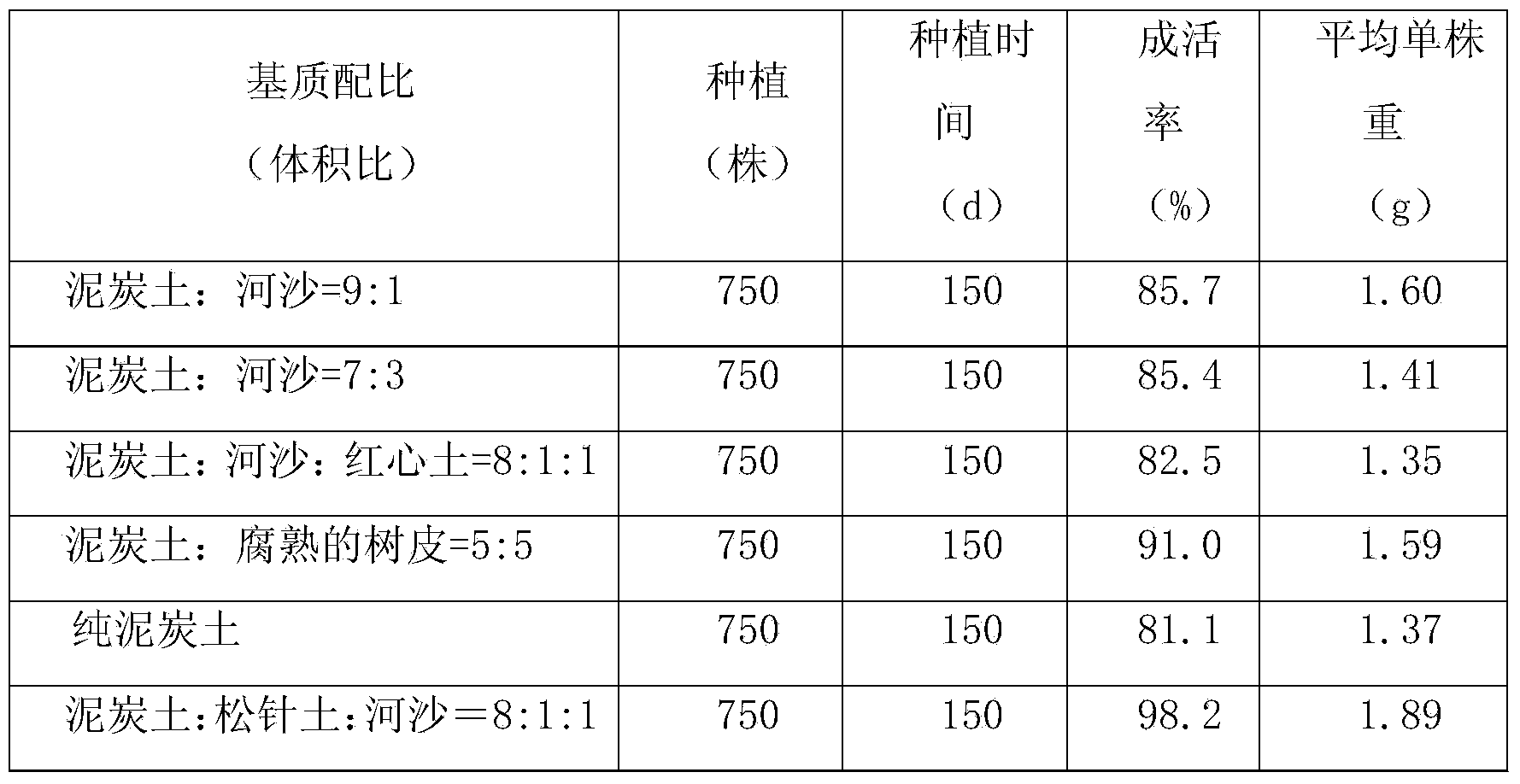
    Figure 1
  • Figure 2
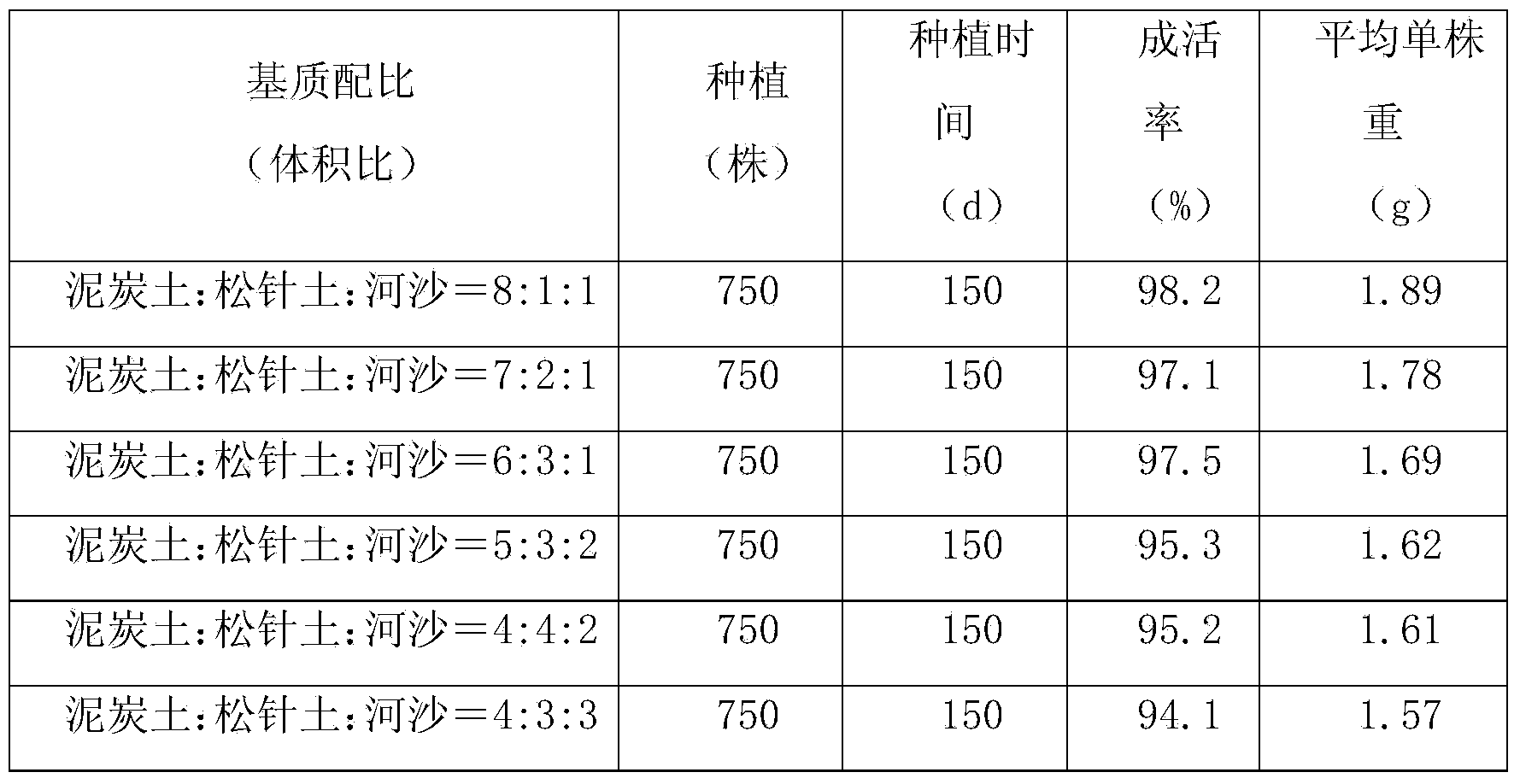
    Figure 2
Patent Text Reader

Abstract

The invention discloses a greenhouse planting method of anoectochilus roxburghii lindl tissue culturing seedlings. The greenhouse planting method comprises the following steps of matrix disinfecting: slightly-acidic matrixes which are formed by mixing peat soils, pine needle soils and river sands in a 8:1:1 volume proportion are adopted by planting matrixes, and a steam sterilizing method is adopted for carrying out disinfecting treatment before planting; planting: the anoectochilus roxburghii lindl tissue culturing seedlings are planted on the disinfected matrixes, single-plant deep planting is carried out, and the depth is subject to a situation that first stem nodes above roots are embedded in the matrixes, and second stem nodes get close to the surface layers of the matrixes; environment controlling: the planted seedlings are put in a greenhouse of which the light illumination, the temperature and the humidity can be controlled for being cultured, the light illumination is controlled under 3000 Lux, the temperature is controlled under 30 DEG C, and the humidity is maintained to be greater than 80%. According to the greenhouse planting method of the anoectochilus roxburghii lindl tissue culturing seedlings, which is disclosed by the invention, no pesticide is needed to be used by the anoectochilus roxburghii lindl planting, no pest and disease damage is generated, the plants are robust, and the survival rate is high.
Need to check novelty before this filing date? Find Prior Art

Description

technical field

[0001] The invention relates to the field of biotechnology, in particular to a greenhouse planting method for tissue cultured seedlings of A. clematis. Background technique

[0002] Anoectochilus roxburghii (Wall.) Lindl is a perennial herbaceous plant of the Orchidaceae genus. It is also known as golden clematis, golden thread grass, golden thread tiger's head plantain, black ginseng, etc. It is a traditional and precious medicinal material. It has the effects of clearing heat and detoxifying, dispelling wind and dampness, nourishing yin and moistening lungs, and lowering blood pressure. At the same time, the clematis is small and beautiful, with beautiful leaf shape and golden veins arranged in a net shape, which has a very high ornamental value.

[0003] Natural clematis seeds have low germination rate and reproduction rate, slow growth, coupled with large-scale human excavation, ecological environment damage, and wild clematis resources are becoming incr...

Examples

Embodiment

[0016] The invention discloses a greenhouse planting method of tissue cultured seedlings of A. clematis, comprising the following steps

[0017] 1. Tissue culture bottle seedling hardening

[0018] Clematis clematis tissue culture bottle seedlings were moved from the cultivation room to the seedling hardening shed, and the seedlings were hardened in a greenhouse with controllable light and temperature for 20 days. The first 15 days were for the seedling training without opening the cover, and the last 5 days were for the seedling hardening with the cover open. The purpose of seedling hardening is to improve the degree of lignification of seedlings, to fully develop roots, and to grow strong stems, while the purpose of uncapping is to make seedlings better adapt to the planting environment. The light in the seedling shed is controlled below 3500Lux, the light time is 10 hours a day, and the temperature is below 30°C.

[0019] 2. Substrate disinfection

[0020] The substrates ...