Method for controlling animal robot to turn on basis of ventral posterior medial nucleus electrical stimulation

An animal robot and electrical stimulation technology, applied in the direction of using feedback control, etc., can solve the problems of narrowing the application range of animal robots, occupying training time, and limited learning ability of rats, achieving good application prospects, high work efficiency, and omitting training the effect of time

CN104679028AInactive Publication Date: 2015-06-03ZHEJIANG UNIV
4 Cites 7 Cited by

Patent Information

Authority / Receiving Office
CN · China
Patent Type
Applications(China)
Current Assignee / Owner
Publication Date
2015-06-03
Estimated Expiration
Not applicable · inactive patent

Smart Images

  • Figure 1
    Figure 1
  • Figure 2
    Figure 2
  • Figure 3
    Figure 3
Patent Text Reader

Abstract

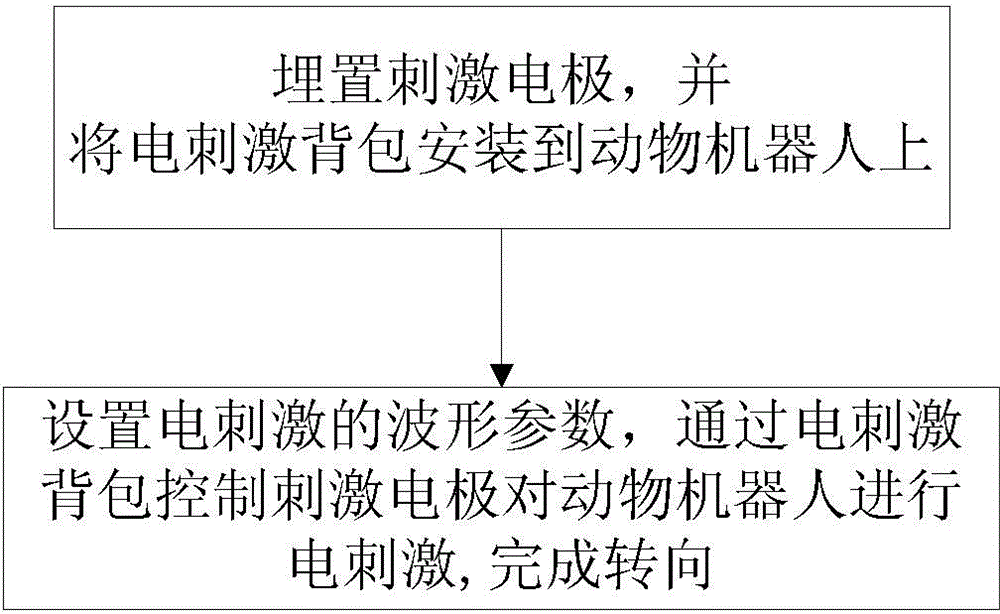
The invention relates to a method for controlling an animal robot to turn on the basis of ventral posterior medial nucleus electrical stimulation. The method comprises the steps that two stimulating electrodes are respectively imbedded into VPM (Ventral Posterior Medial Nucleus) regions on both sides of the animal robot, the electrodes are fixed on skulls with dental cement, and an electrical stimulation backpack is installed on the animal robot; waveform parameters of electrical stimulation are set by an upper computer and are transmitted to the electrical stimulation backpack at the back of the animal robot in a wireless mode, the stimulating electrodes are controlled by the electrical stimulation backpack, so as to perform electrical stimulation on the animal robot, and corresponding thalamus-cortex projection loops are activated, so that the animal robot generates a virtual feeling, so as to complete turning. According to the method, a traditional method that the animal robot learns to turn by reward training is eliminated, turning is realized directly through the electrical stimulation, the controllability over a turning angle is realized, a large amount of training time is saved, the working efficiency is high, and the method has good application prospects in the field of animal robot navigation.
Need to check novelty before this filing date? Find Prior Art

Description

technical field

[0001] The invention relates to an animal robot, in particular to a method for controlling the steering of an animal robot based on the electric stimulation of the ventral posterior intermediate nucleus of the thalamus. Background technique

[0002] "Animal robot" refers to the use of the animal's motor function and power supply system, starting from the transfer of the animal's feelings or innervation, to realize the control of the animal's movement and certain behaviors. In recent years, with the development of brain-computer interface (Brain-Computer-Interface, BCI) technology, it has been realized to directly intervene in the brain of animals through external stimuli. Implanting microelectrodes in specific areas of the animal's brain provides electrical stimulation, allowing the animal to produce virtual sensations, including reward, fear, and touch. Because this electrical stimulation is controllable by humans, humans can control animals to produce thes...

Examples

Embodiment Construction

[0034] A method for controlling the steering of an animal robot (rat) based on electrical stimulation of the thalamus according to the present invention will be described in detail below in conjunction with the accompanying drawings.

[0035] This method is accomplished with the following stimulation systems, including:

[0036] Host computer, the host computer is used to set the stimulation waveform parameters;

[0037]The electrical stimulation backpack communicates wirelessly with the host computer, accepts the stimulation waveform parameters set by the host computer, and generates corresponding electrical stimulation signals;

[0038] The stimulating electrodes (two) are used to transmit the electrical stimulation signal generated by the electrical stimulation backpack to give electrical stimulation to the designated position in the brain of the animal robot.

[0039] In this embodiment, data transmission is realized between the upper computer and the electric stimulation...