
Polygon accurate drawing method based on electronic map and application method thereof
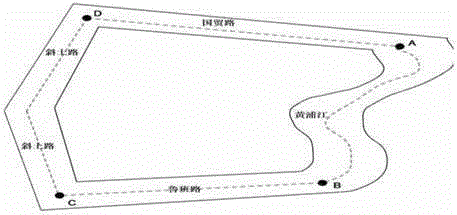
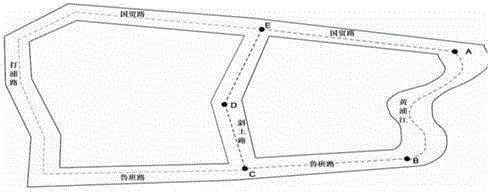
An electronic map and polygonal technology, applied in maps/plans/charts, educational tools, instruments, etc., can solve the problems of inability to accurately distinguish fuzzy borders of rivers and roads, non-overlapping, overlapping of adjacent borders, etc., to avoid border overlap or inconsistency fit effect
- Summary
- Abstract
- Description
- Claims
- Application Information
AI Technical Summary
Problems solved by technology
Method used
Image

Examples
no. 1 example
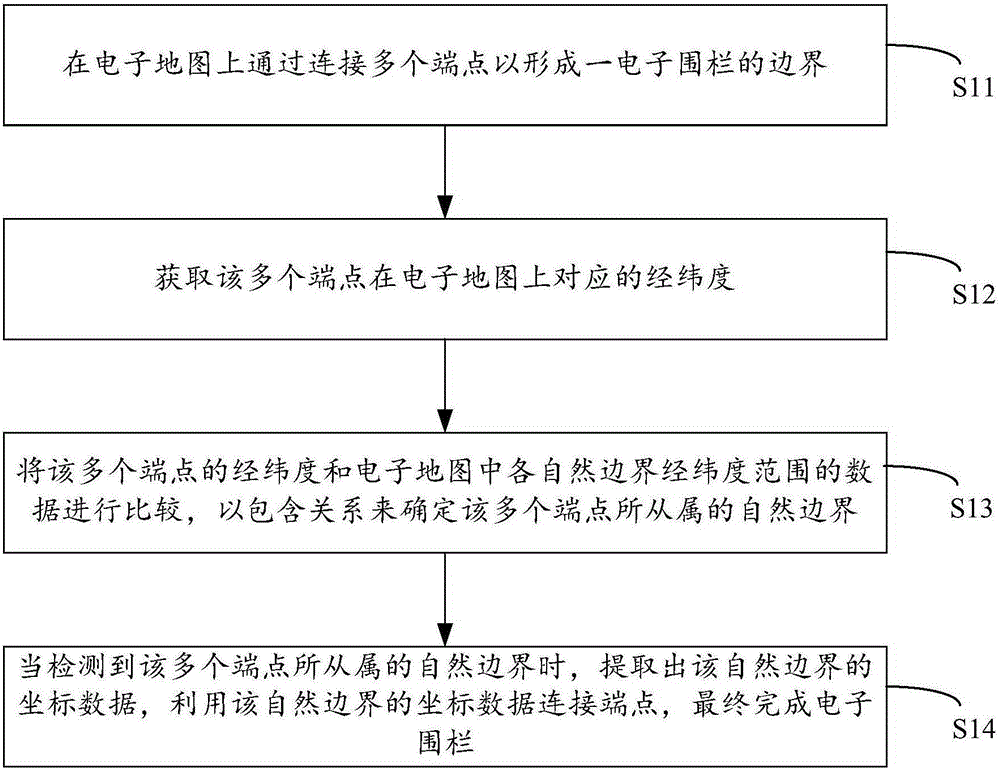
[0034] figure 1 The flowchart of the first embodiment of the electronic map-based polygon precise drawing method of the present invention is shown. See figure 1 , the specific implementation of the method in this embodiment is as follows.
[0035] Step S11: Form a boundary of an electronic fence by connecting multiple endpoints on the electronic map.
[0036] Step S12: Obtain the latitude and longitude corresponding to the plurality of endpoints on the electronic map.
[0037] Step S13: Compare the latitude and longitude of the plurality of endpoints with the data of the latitude and longitude range of each natural boundary in the electronic map, and determine the natural boundaries to which the endpoints belong according to the inclusion relationship.
[0038] Step S14: When the natural boundary to which the multiple endpoints belong is detected, extract the coordinate data of the natural boundary, use the coordinate data of the natural boundary to connect the endpoints, a...
PUM
 Login to View More
 Abstract
Description
Claims
Application Information
 Login to View More