
Chelate-type plant growth regulator
A plant growth regulator, chelating technology, applied in plant growth regulators, plant growth regulators, biocides, etc., can solve the problems of long chelation time, soil compaction, and difficult release of nutrients, and achieve sustainable Long-lasting effect, promoting plant growth and increasing product effect
- Summary
- Abstract
- Description
- Claims
- Application Information
AI Technical Summary
Problems solved by technology
Method used
Image

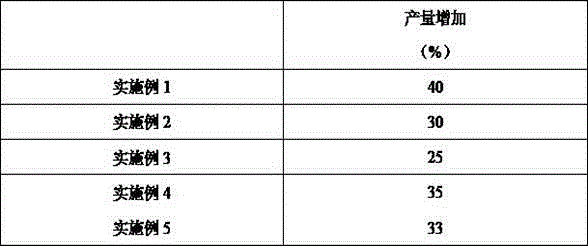
Examples
Embodiment 1
[0029] Chelating type plant growth regulator, the proportioning by weight of each component is: 0.35 part of sodium o-nitrophenolate, 0.7 part of sodium p-nitrophenolate, 0.4 part of 5-nitroguaiacol sodium, 0.85 part of Polygonum cuspidatum, 4 parts of urea, 1.8 parts of potassium nitrate, 3 parts of activator, 7 parts of chelating agent. Wherein, the chelating agent is made of the following components by weight: 3.5 parts of dried lemon peel, 0.75 part of dried orange peel, 7 parts of rice washing water, and 0.05 part of sodium carboxymethylcellulose.
[0030] The preparation method comprises the following steps:
[0031] S1. Wash the dried lemon peel and dried citrus peel, dry them, crush them, put them in rice washing water, heat them to 55°C, and soak them for 11 hours;
[0032] S2. Add sodium carboxymethyl cellulose to the rice washing water, and stir evenly to obtain a chelating agent;
[0033] S3. Mix the chelating agent, sodium o-nitrophenolate, sodium p-nitrophenola...
Embodiment 2
[0037] Chelating type plant growth regulator, the weight ratio of each component is: 0.4 part of sodium o-nitrophenolate, 0.6 part of sodium p-nitrophenolate, 0.3 part of 5-nitroguaiacol sodium, 0.7 part of Polygonum cuspidatum, 1 part of urea, 1 part of potassium nitrate, 2 parts of activator, 5 parts of chelating agent. Wherein, the chelating agent is made of the following components by weight: 2.5 parts of dried lemon peel, 0.5 part of dried orange peel, 6.25 parts of rice washing water, and 0.025 part of sodium carboxymethylcellulose.
[0038] The preparation method comprises the following steps:
[0039] S1. Wash the dried lemon peel and dried citrus peel, dry, crush, place in rice washing water, heat to 50°C, and soak for 10 hours;
[0040] S2. Add sodium carboxymethyl cellulose to the rice washing water, and stir evenly to obtain a chelating agent;
[0041] S3. Mix the chelating agent, sodium o-nitrophenolate, sodium p-nitrophenolate, sodium 5-nitroguaiacol and potass...
Embodiment 3
[0045] Chelating type plant growth regulator, the weight ratio of each component is: 0.5 part of sodium o-nitrophenolate, 0.8 part of sodium p-nitrophenolate, 0.5 part of 5-nitroguaiacol sodium, 0.95 part of Polygonum cuspidatum, 5 parts of urea, 2 parts of potassium nitrate, 5 parts of activator, 8 parts of chelating agent. Wherein, the chelating agent is made of the following components by weight: 3.75 parts of dried lemon peel, 1.25 parts of dried orange peel, 7.5 parts of rice washing water, and 0.075 part of sodium carboxymethylcellulose.
[0046] The preparation method comprises the following steps:
[0047] S1. Wash the dried lemon peel and dried citrus peel, dry, crush, place in rice washing water, heat to 60°C, and soak for 12 hours;
[0048] S2. Add sodium carboxymethyl cellulose to the rice washing water, and stir evenly to obtain a chelating agent;
[0049] S3. Mix the chelating agent, sodium o-nitrophenolate, sodium p-nitrophenolate, sodium 5-nitroguaiacol and pot...
PUM
 Login to View More
 Abstract
Description
Claims
Application Information
 Login to View More