Decoding method and apparatus
A decoding method and algorithm technology, applied in the field of decoding methods and devices, can solve problems such as low accuracy rate and decoding error, and achieve the effect of improving accuracy rate
- Summary
- Abstract
- Description
- Claims
- Application Information
AI Technical Summary
Problems solved by technology
Method used
Image


Examples
example 1
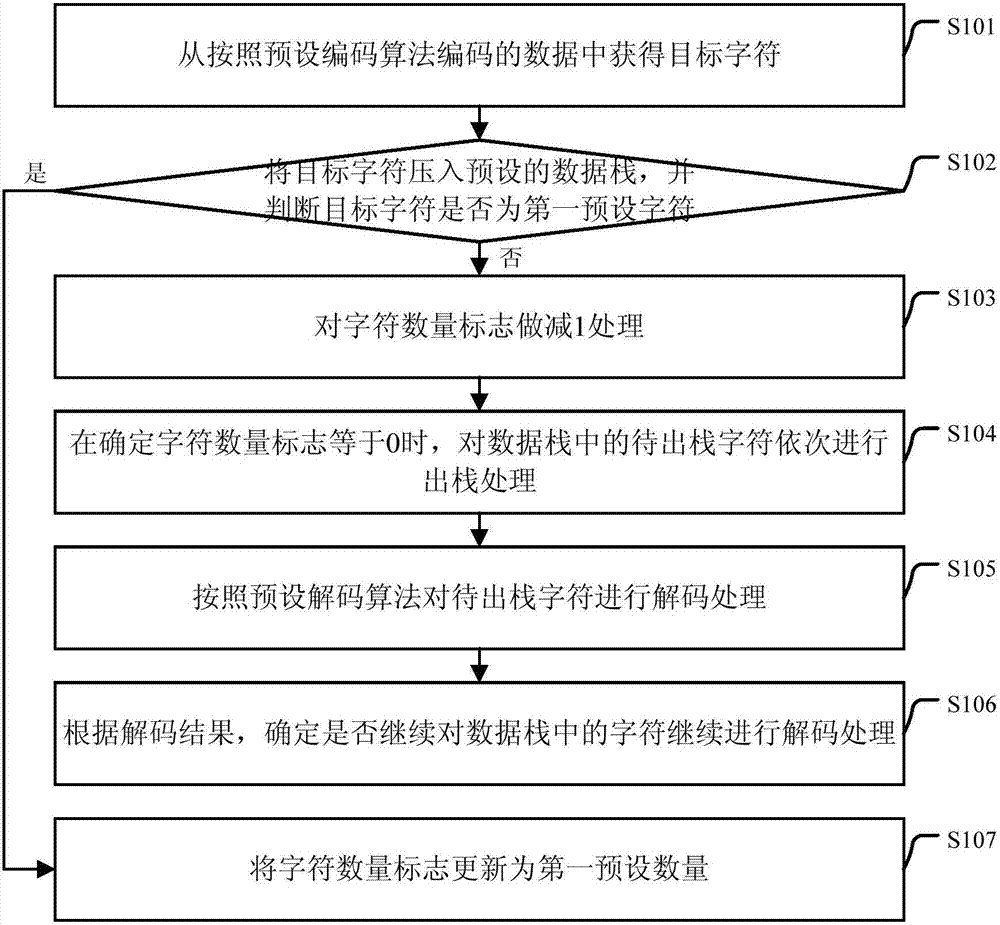
[0107] Example 1: Decode %41
[0108] A1. Read the first character %, in the data stack: %, the number of characters: 2;
[0109] After reading %, it is pushed into the data stack, in the data stack: %, the first character is consistent with %, and the number of characters is updated to: 2, indicating that there are two remaining characters that have not been pushed into the data stack after % is pushed into the stack, no If the decoding condition is met, go to read the second character;
[0110] A2, read the second character 4, in the data stack: 4, %, character number sign: 1;
[0111] After reading 4, push it into the data stack, the data stack is: 4, %, the second character is inconsistent with %, and the number of characters is updated to: 1, indicating that there is one remaining unpushed into the data stack after % is pushed into the stack character, still cannot be decoded, go to read the third character;
[0112] A3. Read the third character 1, the data stack: empty,...
example 2
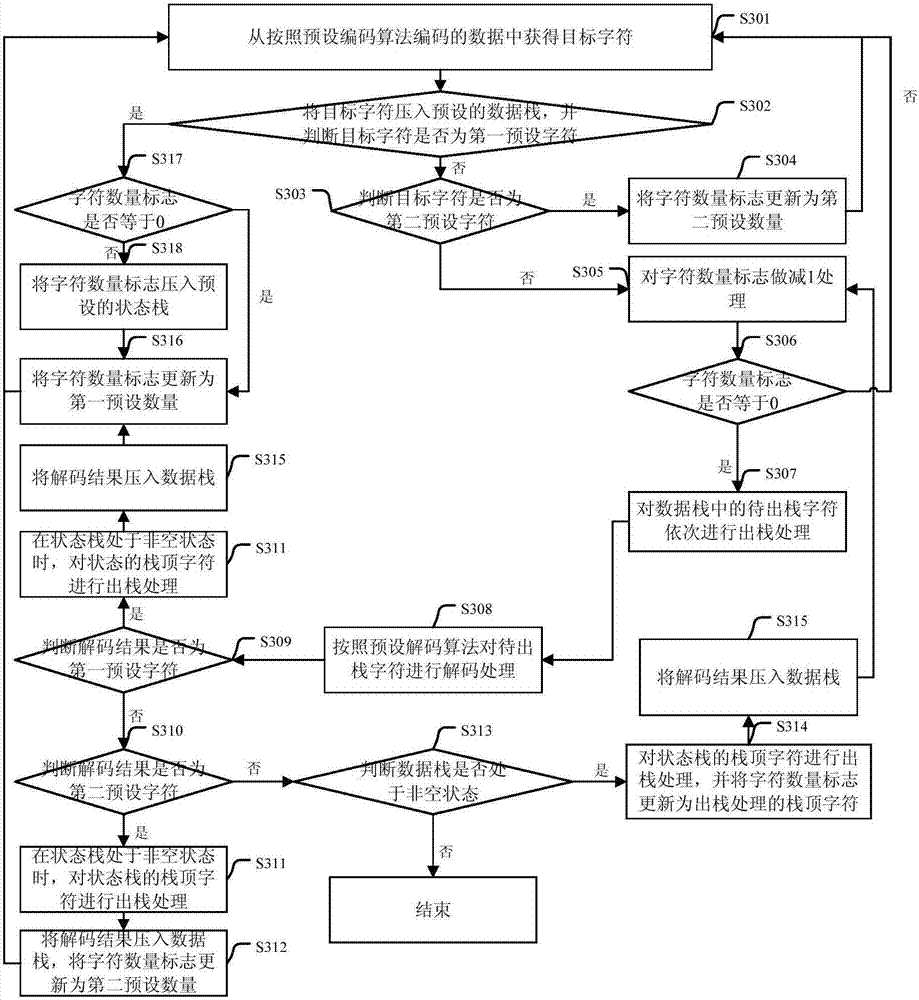
[0114] Example 2: Decode %4%31
[0115] B1, read the first character %, in the data stack: %, the number of characters: 2;
[0116] After reading %, push it into the data stack. In the data stack: %, the first character is the same as %, and the number of characters is updated to: 2, indicating that the remaining two data that have not been pushed into the stack after the % read in this step are pushed into the stack The characters on the stack do not meet the decoding conditions, go to read the second character;
[0117] B2, read the second character 4, in the data stack: 4, %, character quantity sign: 1;
[0118] After reading 4, push it into the data stack. In the data stack: 4, %, the second character is inconsistent with %, and the number of characters is updated to: 1, indicating that there is one remaining unpressed % after being read in B1. The characters entered into the data stack still cannot be decoded, and go to read the third character;
[0119] B3, read the t...
example 3
[0125] Example 3: Decode %%341
[0126] C1. Read the first character %, in the data stack: %, the number of characters: 2;
[0127] After reading %, push it into the data stack. In the data stack: %, the first character is the same as %, and the number of characters is updated to: 2, indicating that the remaining two data that have not been pushed into the stack after the % read in this step are pushed into the stack The characters on the stack do not meet the decoding conditions, go to read the second character;
[0128] C2. Read the second character %, in the data stack: %, %, character number sign: 2;
[0129] After reading %, push it into the data stack, in the data stack: %, %, the second character is the same as %, and the number of characters is updated to: 2, indicating that the remaining two unpressed after the % read in this step is pushed into the stack If the character entered into the data stack does not meet the decoding condition, go to read the third characte...
PUM
 Login to View More
 Abstract
Description
Claims
Application Information
 Login to View More
 - R&D
- Intellectual Property
- Life Sciences
- Materials
- Tech Scout
- Unparalleled Data Quality
- Higher Quality Content
- 60% Fewer Hallucinations
Browse by: Latest US Patents, China's latest patents, Technical Efficacy Thesaurus, Application Domain, Technology Topic, Popular Technical Reports.
© 2025 PatSnap. All rights reserved.Legal|Privacy policy|Modern Slavery Act Transparency Statement|Sitemap|About US| Contact US: help@patsnap.com