
Microbial agent as well as preparation method and application
A microbial agent and microbial technology, applied in the field of microbial agent and its preparation, can solve the problems of not killing pathogenic bacteria from the root, incomplete treatment, polluting the environment, etc., achieving flexible use methods and reducing the use of drugs Effect
- Summary
- Abstract
- Description
- Claims
- Application Information
AI Technical Summary
Problems solved by technology
Method used
Image


Examples
Embodiment 1
[0020] Screening of functional microorganisms
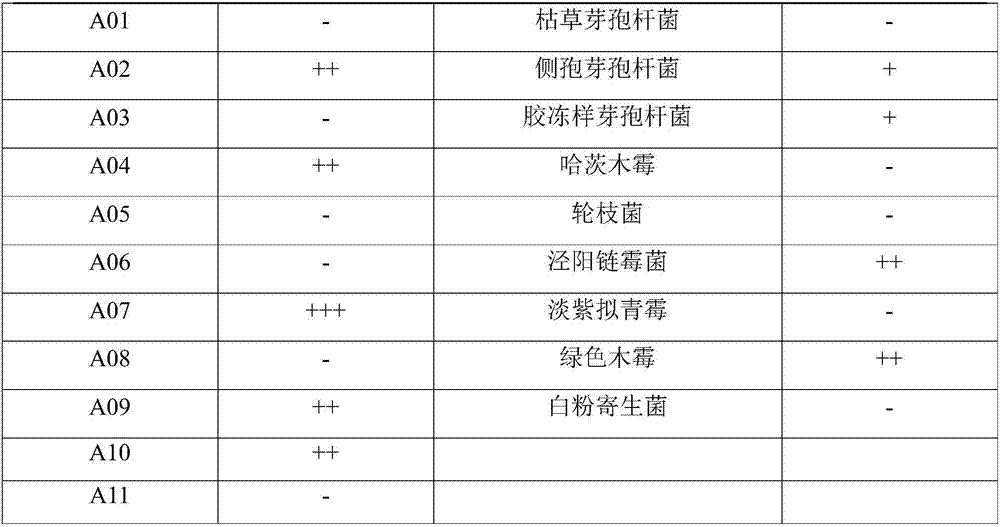
[0021] In tomato canker disease-infected areas, soil samples were collected from areas with lesser disease levels, as well as leaf samples of diseased plants without disease, and microorganisms were isolated, cultivated and preserved. After preliminary screening, 7 strains of bacteria were obtained from soil samples. Numbered A01-A07, 4 strains were isolated from leaf samples, numbered A08-A11. At the same time, Bacillus subtilis, Bacillus sporogenes, Bacillus jelly-like, Trichoderma harzianum, Verticillium, Streptomyces Jingyang, Paecilomyces lilacinus, and yellow were selected from the laboratory strain bank for plant disease control. Trichoderma, powdery mildew parasite 9 strains. The antibacterial test was carried out on 11 strains of primary screening strains and 9 strains of laboratory strains to observe the inhibitory effect of each strain on the pathogenic bacteria of tomato canker. The specific results are as follows: ...
Embodiment 2
[0027] preparation of microbial agents
[0028] A: Mix Streptomyces jingyang, Streptomyces lavender, Streptomyces aureus, and Trichoderma viride in a ratio of 1:1:1:1 to make microbial powder.
[0029] B: Glucose, whey powder, and magnesium sulfate are mixed in a ratio of 60:35:5 to prepare a nutritional supplement.
[0030] C: Mix trehalose, ascorbic acid, and copper sulfate in a ratio of 50:40:10 to prepare a protective agent.
[0031] D: The microbial bacterial powder, nutrient, and protective agent were mixed evenly, and vacuum-packed to prepare a microbial bacterial agent. The measured viable bacteria amount in the bacterial agent was 2.4 billion / g.
Embodiment 3
[0033] Investigate the antibacterial effect and dosage of microbial agents through experiments
[0034] Tomato seedlings were planted in a pot experiment. After 5 days, the seedlings with the same growth were selected, and the pathogenic bacteria were inoculated by artificial inoculation. After the symptoms of the disease appeared, they were placed in different isolated areas for later use. The microbial bacterial agent prepared in Example 1 was diluted 500 times, 1000 times, 1500 times, 2000 times, 2500 times and 3000 times respectively to prepare bacterial liquids of different concentrations, and sprayed the diseased seedlings according to the normal spraying speed. Then manage according to the conventional method, spray once every 7 days, and observe the disease of the plants.
[0035] Through experiments, it was found that in the groups diluted 2500 times and 3000 times, the spread of symptoms slowed down significantly, but it was still spreading slowly, indicating that th...
PUM
 Login to View More
 Abstract
Description
Claims
Application Information
 Login to View More