
Detection method of main active ingredients in folium ginkgo-radix salviae miltiorrhizae vasodistal soft capsule
A detection method, Xinnaotong technology, applied in measuring devices, material separation, analysis of materials, etc., can solve the problems of less ingredients, insufficient sensitivity, and inability to reflect the overall chemical profile of Yindan Xinnaotong Soft Capsules, etc.
- Summary
- Abstract
- Description
- Claims
- Application Information
AI Technical Summary
Problems solved by technology
Method used
Image

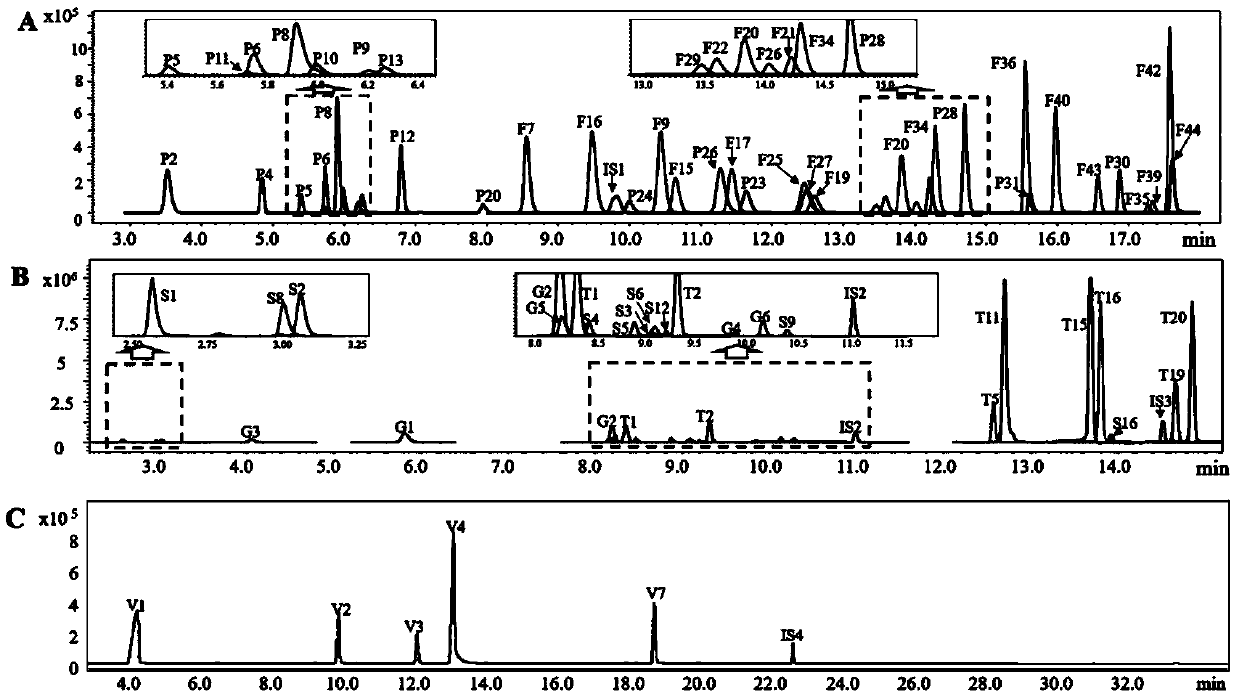
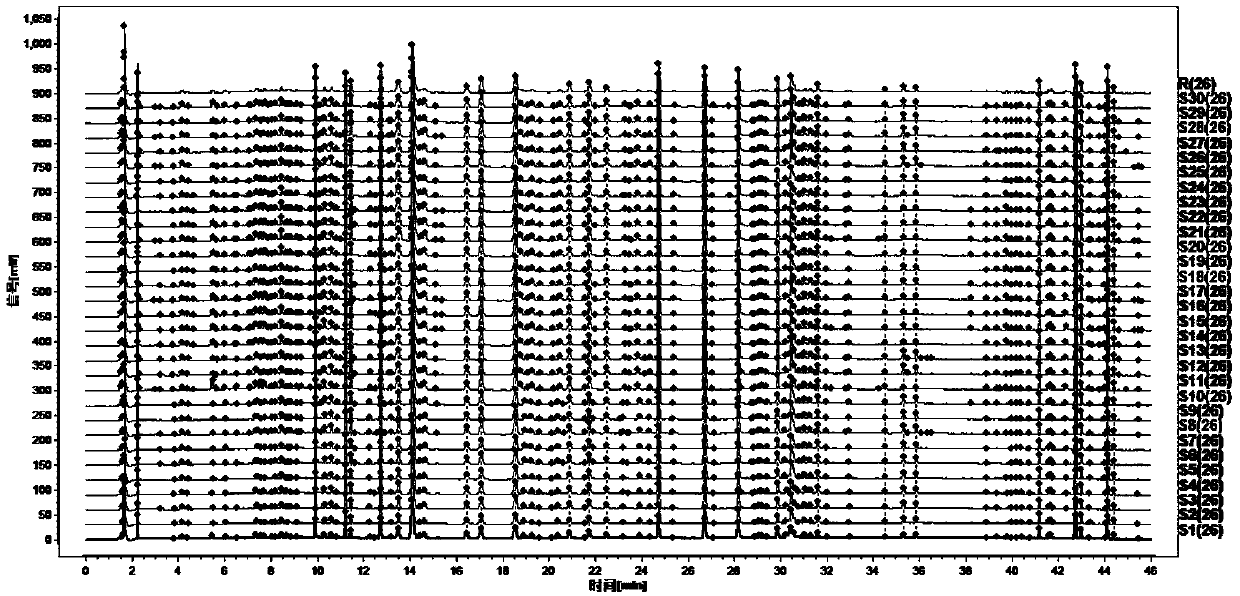
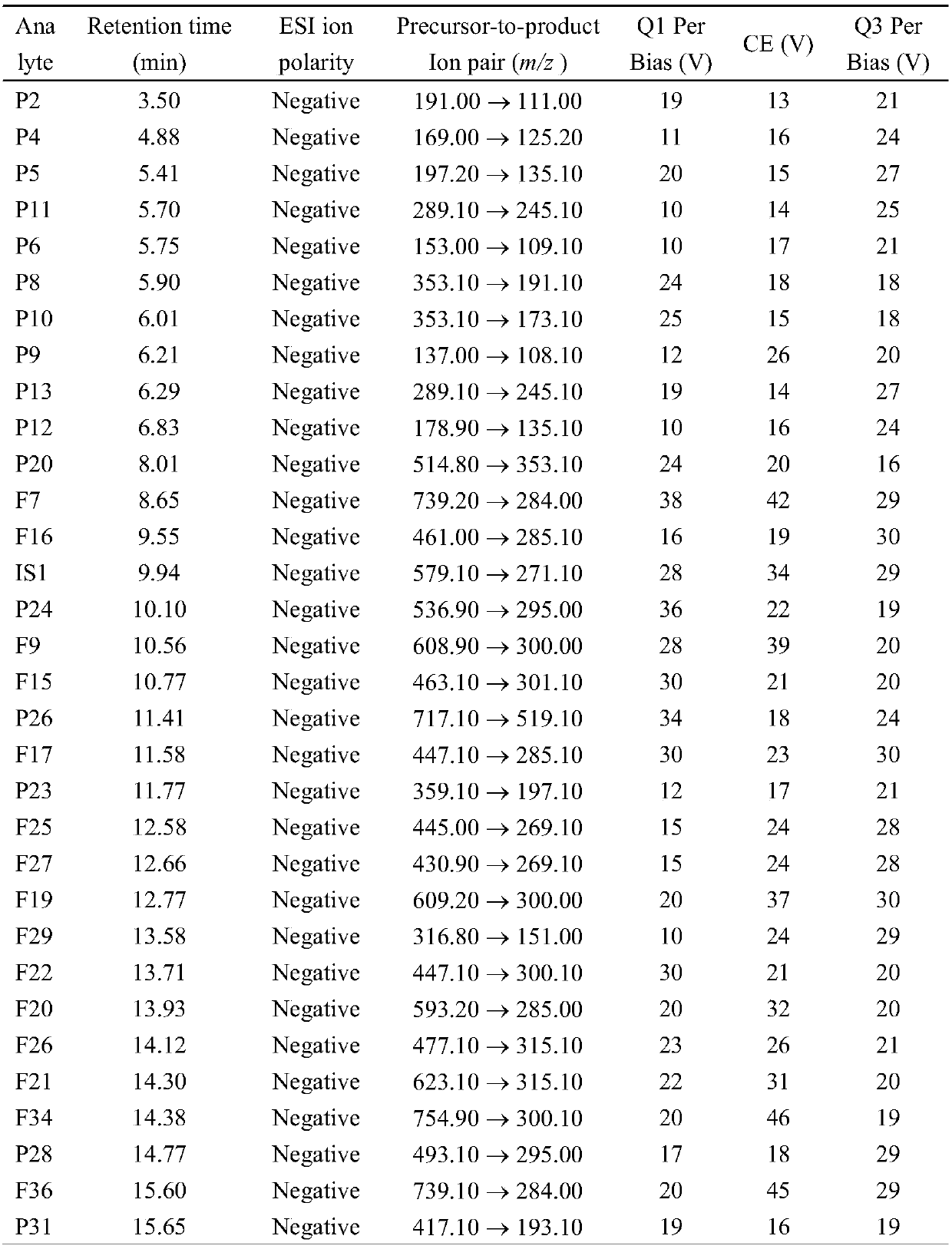
Examples
Embodiment Construction
[0039] The present invention will be further described below in conjunction with the accompanying drawings and embodiments, but not as a basis for limiting the present invention.
[0040] The following are examples of the present invention.
[0041] Sample information:
[0042] 30 different batches of Yindan Xinnaotong soft capsule samples (batch number: 20170725-20170754).
[0043]Citric Acid (P2), Gallic Acid (P4), Danshensu (P5), Catechin (P11), Protocatechuic Acid (P6), Chlorogenic Acid (Chlorogenic acid, P8), protocatechualdehyde (Protocatechualdehyde, P9), cryptochlorogenic acid (Cryptochlorogenic acid, P10), caffeic acid (Caffeic acid, P12), epicatechin (Epicatechin, P13), isochlorogenic acid B (Isochlorogenic acid B, P20), Rosmarinic acid (Rosmarinic acid, P23), Lithospermic acid (Lithospermic acid, P24), Salvianolic acid B (Salvianolic acid B, P26), Salvianolic acid A (Salvianolic acid A, P28 ), Salvianolic acid D (Salvianolic acid D, P31), Salvianolic acid C (Salv...
PUM
 Login to View More
 Abstract
Description
Claims
Application Information
 Login to View More