
Microgrid distributed power supply decentration optimization operation method based on power generation prediction
A technology for distributed power generation and power generation prediction, which is applied in the direction of single-network parallel feeding arrangement, etc., and can solve problems such as difficult coordination relations, differences, and line impedance influences
Patent Information
- Authority / Receiving Office
- CN · China
- Current Assignee / Owner
- Publication Date
- 2020-03-06
Smart Images
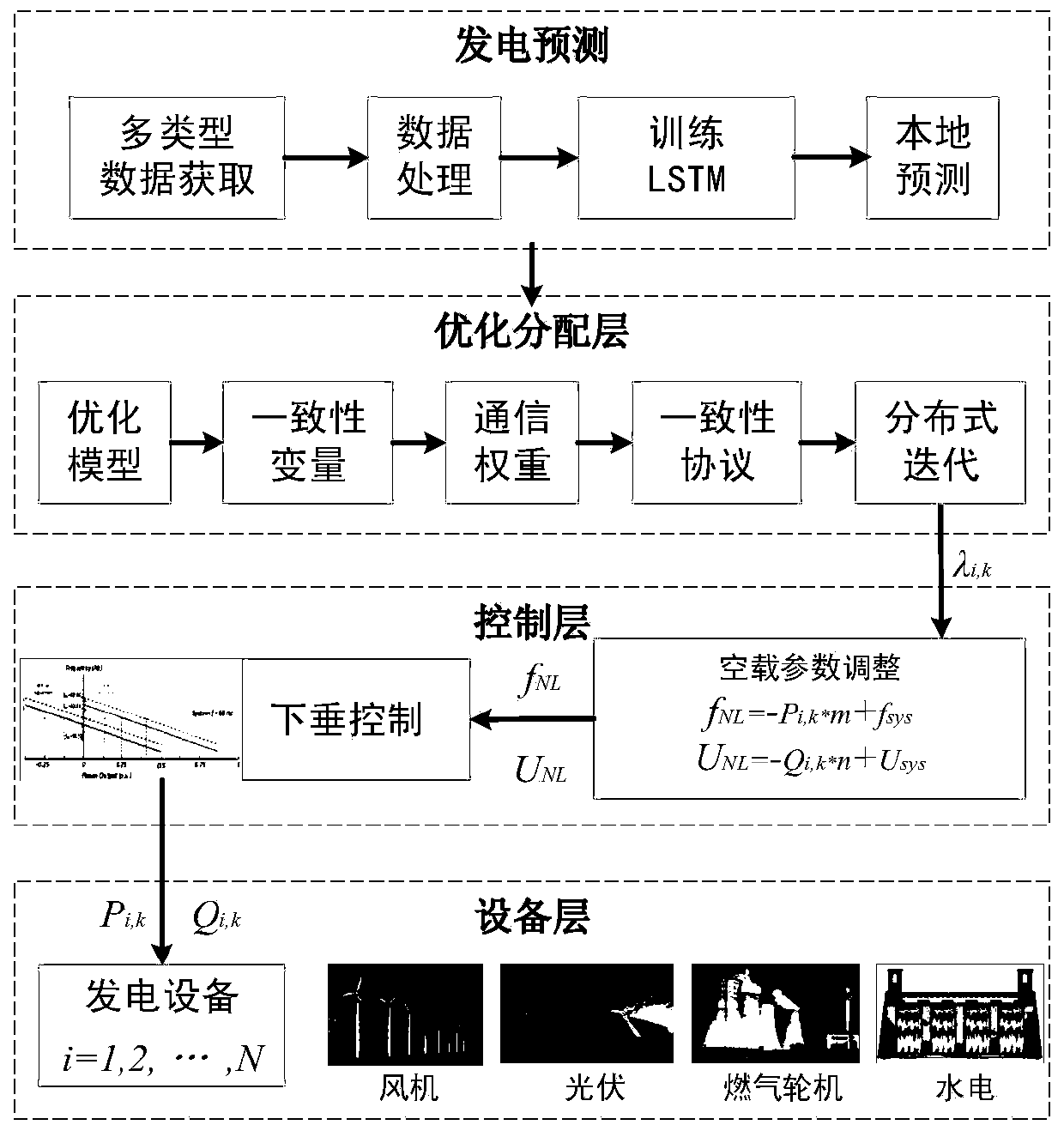
Figure 1 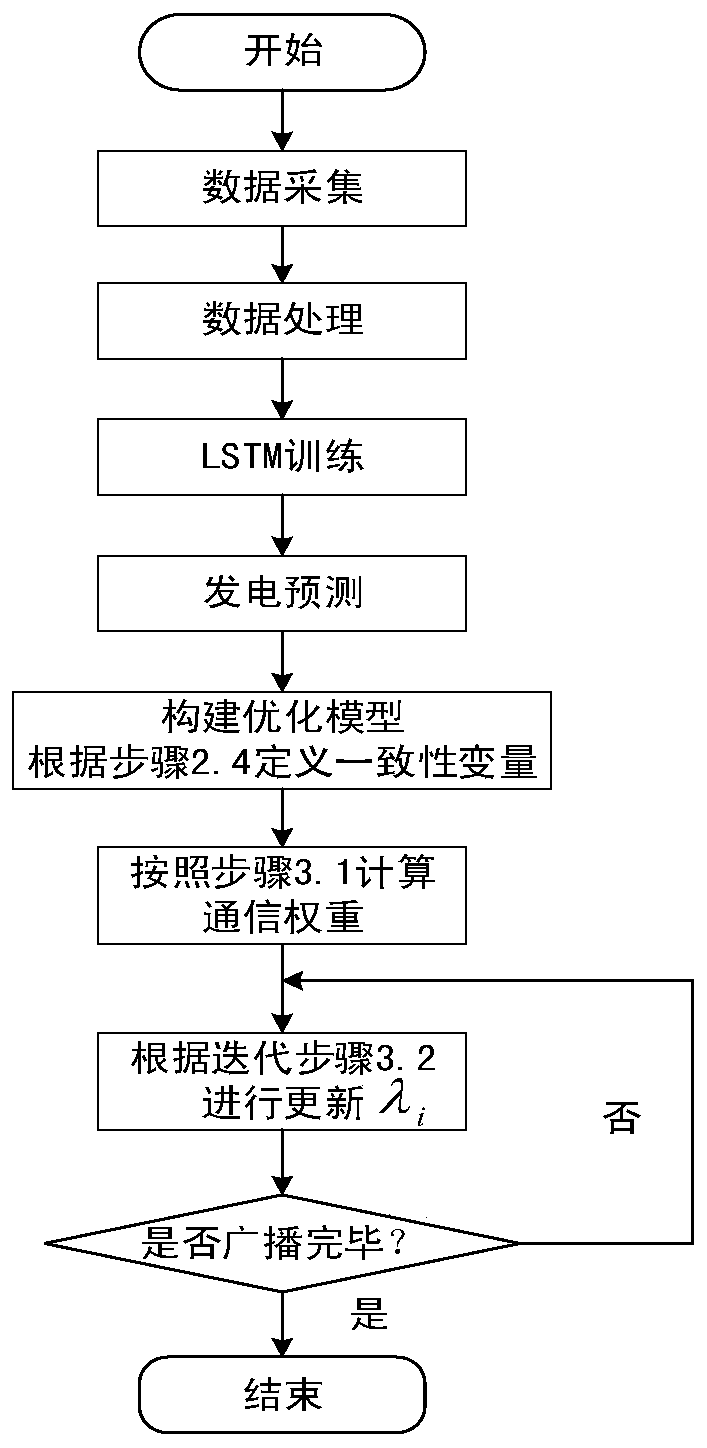
Figure 2 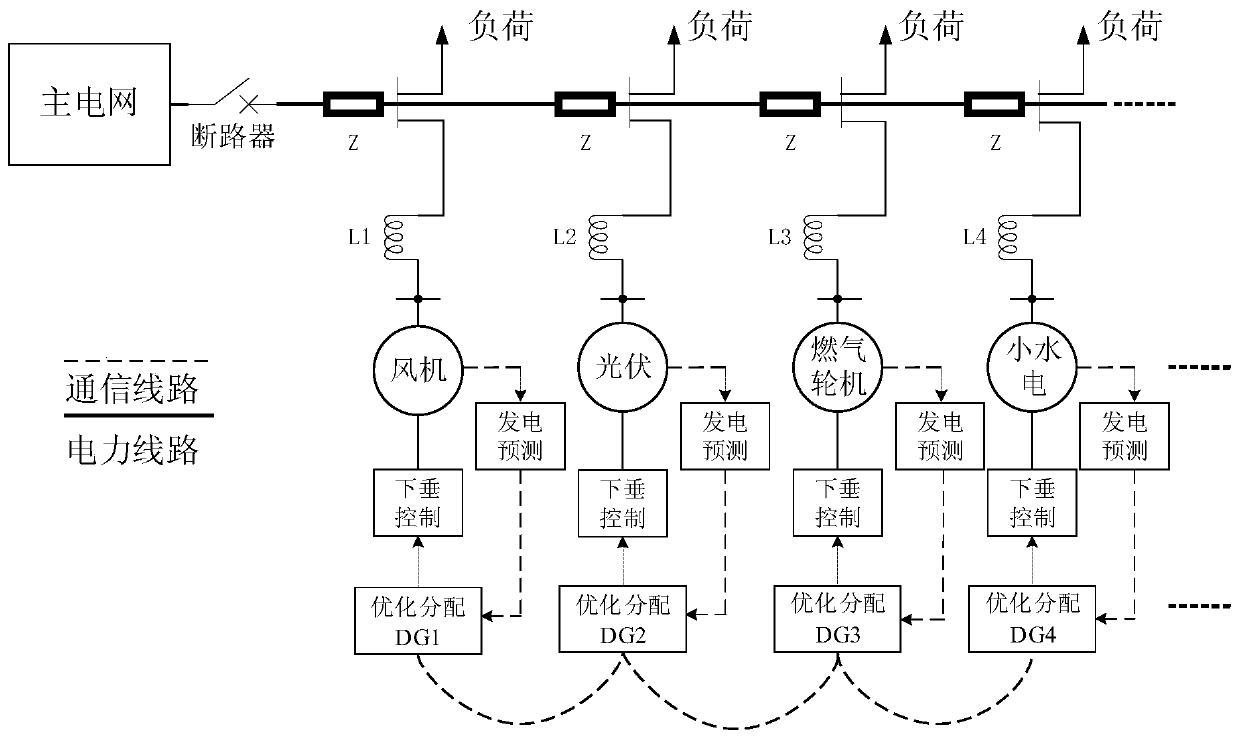
Figure 3
Abstract
Description
technical field
[0001] The invention relates to the technical field of optimized operation of a power system micro-grid, in particular to a method for decentralized optimal operation of distributed power sources in a micro-grid based on power generation prediction. Background technique
[0002] With people's emphasis on the utilization of sustainable and clean energy, more and more renewable distributed generators (DGs) are connected to the microgrid, which brings risks and challenges to the stable operation of the microgrid. Therefore, it is urgent to study effective control methods to ensure the stable and reliable operation of the microgrid, especially the economical and efficient power distribution strategy is the basis for optimal operation and control. At this stage, the relevant research on the optimal operation of distributed power sources in microgrids can be divided into two categories: centered and non-centered optimization methods according to different optimizat...
Examples
Embodiment Construction
[0066] The specific implementation manners of the present invention will be further described in detail below in conjunction with the accompanying drawings.
[0067] A decentralized optimization operation method for microgrid distributed power generation based on power generation prediction, such as figure 1 shown, including the following steps:
[0068] Step 1: Based on multiple types of data, use the long-term short-term memory network, that is, the LSTM method to predict the local power generation of each distributed power source. The specific method is:
[0069] Step 1.1: Collect information such as regional microgrid historical power generation data, regional weather information, date type, etc., every 15 minutes, with a total of 96 points collected every day;
[0070] Step 1.2: Data preprocessing, perform data preprocessing on the collected data, eliminate outlier data, replace outliers with adjacent day interpolation, and form a training data set;
[0071] Step 1.3: U...