[0002] At present, in the process of coal mining, a large number of operations are completed underground. There are shafts and inclined shafts underground. During mining, equipment needs to be moved through the tunnel, such as hydraulic support equipment, testing instruments, etc. Both need to be moved underground. The existing transportation devices for underground equipment are large in size. During the transportation process, the inertia of the transfer movement is large, which affects its start-stop action. The seismic capacity is poor, and most of them rely on the ground for transportation. It is necessary to lay tracks on the ground or level the surface for transportation and movement. After the tracks are laid, it will be inconvenient for the operators to move, prone to tripping, etc., and there are potential safety hazards. At the same time, underground transportation In the middle, due to the narrow roadway, the equipment is easy to collide with the side wall of the roadway when moving, which affects the stability and integrity of the equipment
[0003] Publication No. CN108408345A discloses a detection and transportation device for underground electromechanical equipment for mines, which includes a device casing, a fixing sleeve is welded on the top of the device casing, and booster boxes are symmetrically installed at both ends of the fixing sleeve, and the upper end of the fixing sleeve is welded in the middle There are connecting rings, vent pipes are inlaid on the left and right sides of the fixed sleeve, suction pipes are installed on both sides of the upper end of the device shell, a device door is installed on the front surface of the device shell through hinges, and the upper end of the device door is installed There is an observation window, and the inside of the device shell includes a carrying case and a test device. The lower end of the device shell is welded with a support frame, and the lower end of the support frame is symmetrically installed with guide rail wheels. The invention has a fixed internal volume, poor transport fixity for some equipment, and the need to lay guide rails on the ground, which increases the workload and is not convenient for the simultaneous deployment of ground operations
[0004] Publication No. CN205743989U discloses a rail-type mine underground electromechanical equipment transportation device. An inverted T-shaped suspension frame is arranged in the middle of the inner upper end of the mine support frame, and the left and right sides of the inverted T-shaped suspension frame are clamped with rotating Driving rollers, the outer side of the rotating driving rollers is connected to the transportation bracket of the electromechanical equipment; a pair of anti-sway rollers are arranged on the middle and outer sides of the transportation bracket of the electromechanical equipment, and the anti-sway rollers and the sliding track grooves are engaged with each other; the sliding track grooves are fixed inside the mine support frame In the middle: a pair of binding and fixing bandages are arranged on the inner side of the transport bracket for electromechanical equipment. The structure of the device swings seriously, and the equipment shakes violently, which affects the safety of passing
[0005] Publication No. CN107191221A discloses a rail-type underground electromechanical equipment transportation device for mines, including a fixed beam and a transport device main body. Rod three, the vertical pole two is welded between the vertical pole one and the vertical pole three, the transport device top cover is welded on the top of the transport device main body, the transport device top cover is welded with a hook hole, the The surface of the main body of the transportation device is cut with a transparent observation port, and the bottom of the main body of the transportation device is welded with a number of support columns, and the bottom of the support columns is welded with a protective support, and the left and right sides of the protective support are evenly welded with universal runners. The structure of the device is too flexible, and there is no protective buffer structure for the side wall of the roadway when the corner is deflected, and the inertial swing of the equipment is relatively large during the start-stop phase



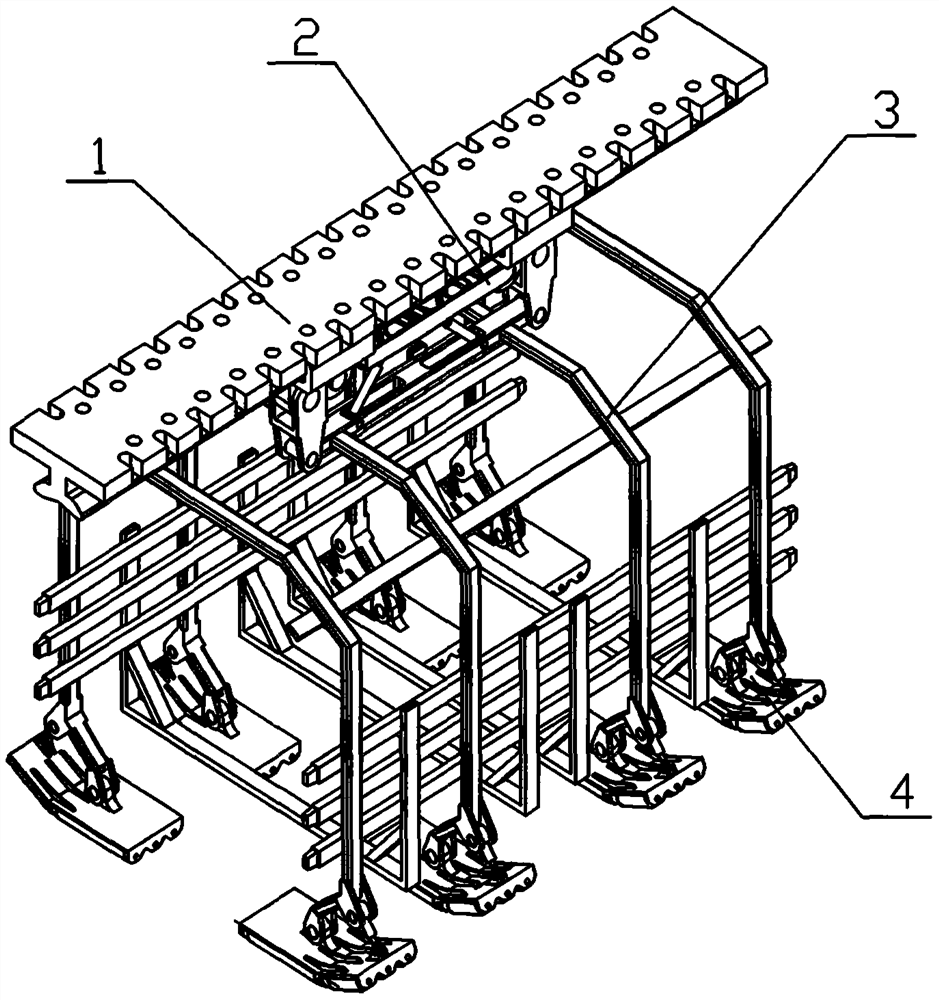
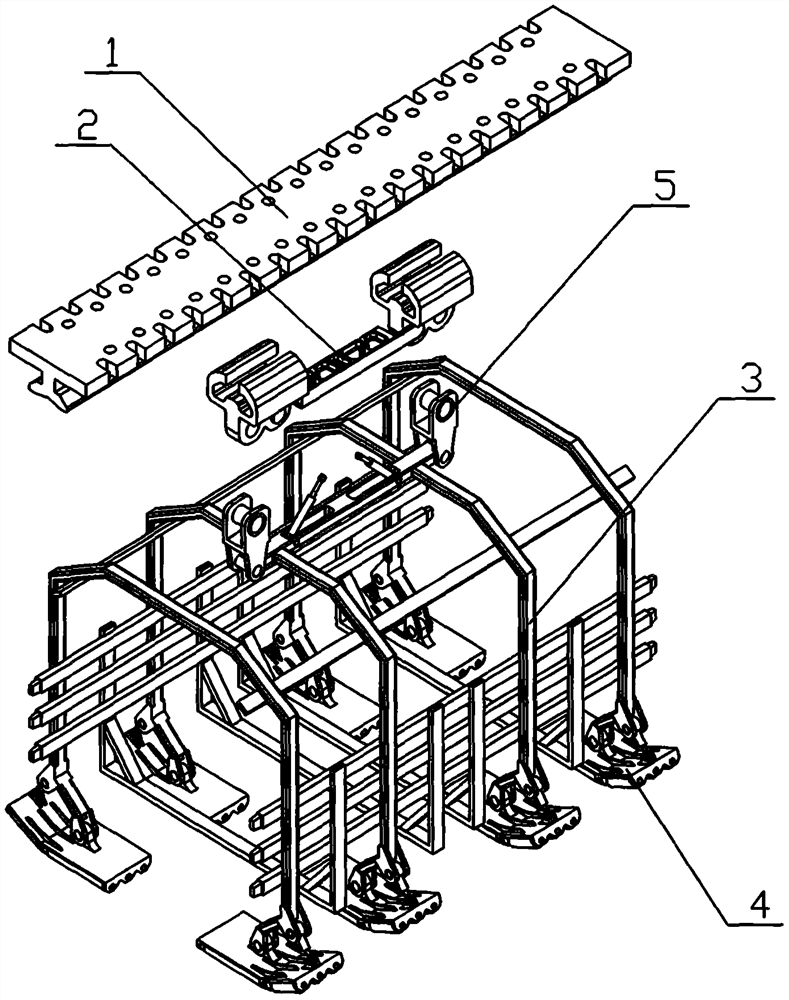
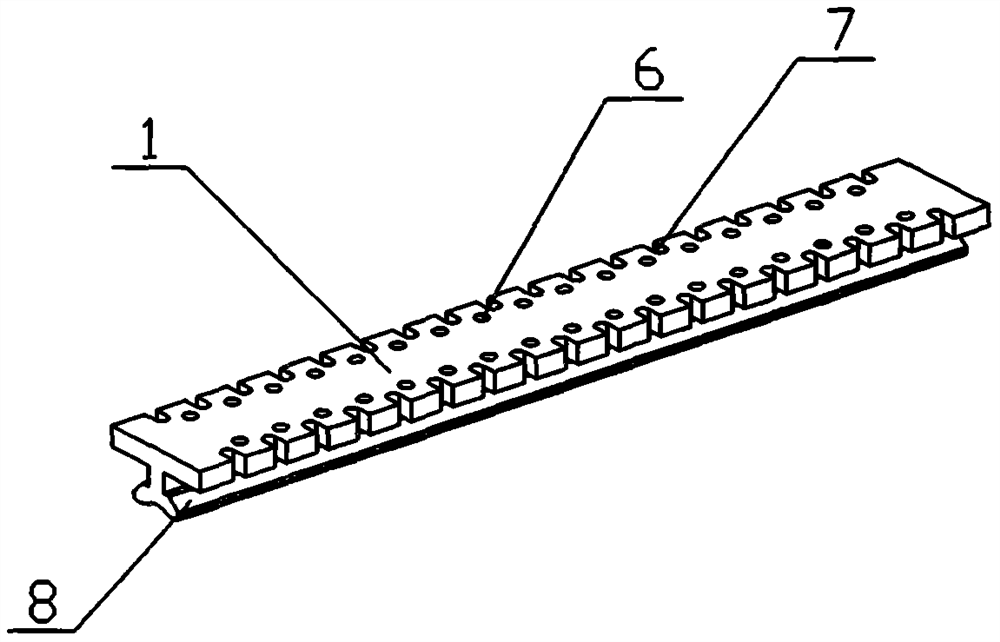
 Login to View More
  Login to View More