
High-yield T lymphocyte cloning technology for finding tumor specific antigen and tumor specific antigen determinant
A tumor-specific, lymphocyte-based technology, applied in the field of high-yield T-lymphocyte cloning technology, can solve problems such as T-lymphocyte death
- Summary
- Abstract
- Description
- Claims
- Application Information
AI Technical Summary
Problems solved by technology
Method used
Image

Examples
Embodiment 1
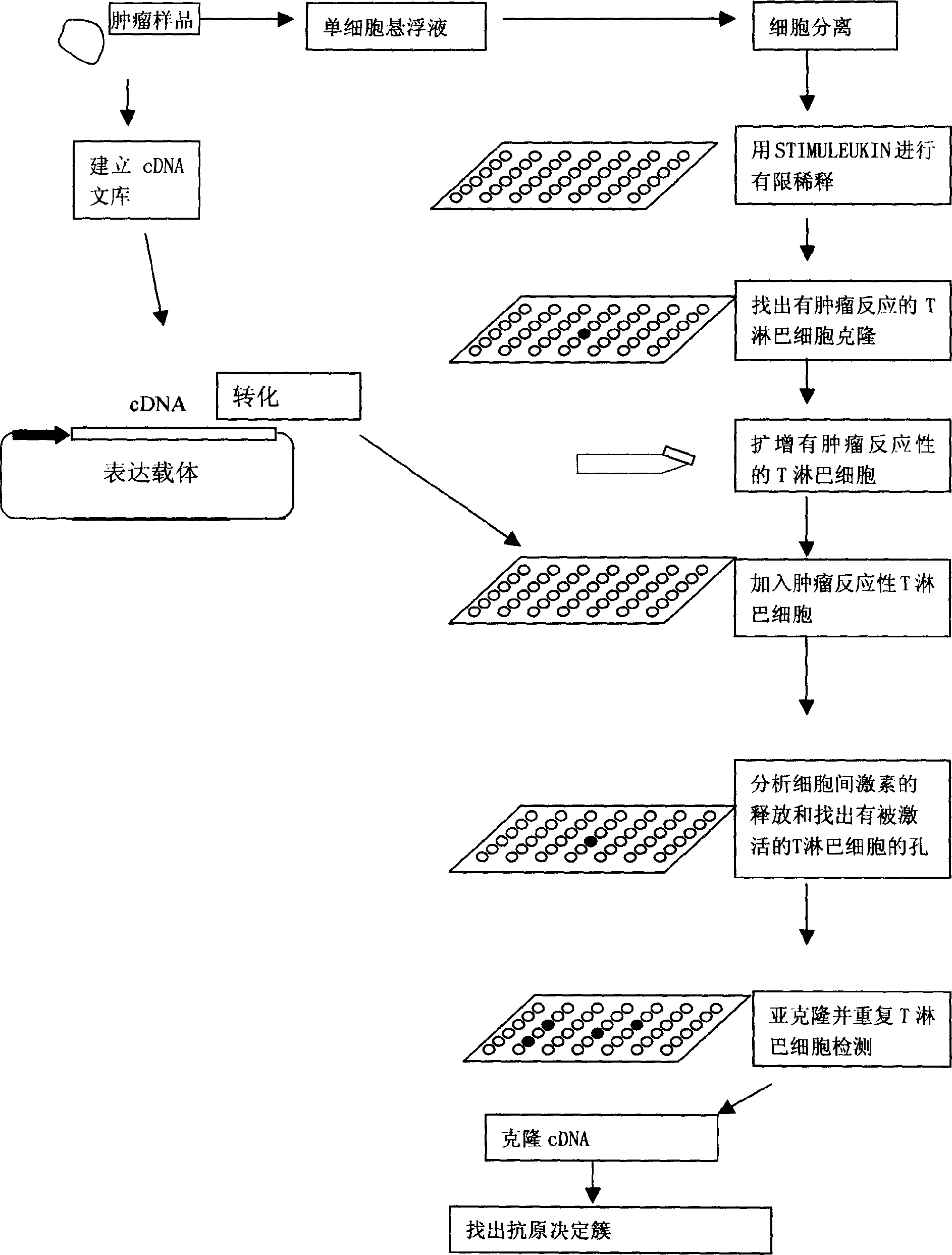
[0043] As shown in Figure 1, a typical example of HITC technology can be described as follows:
[0044] 1. Identify and expand tumor-reactive T lymphocytes
[0045] 1. Excision of tumor samples: Tumor samples are obtained from patients.
[0046] 2. Single-cell suspension: A part of the tumor sample is treated with various enzymes or processed by automatic mechanical force to make it into a single-cell suspension.
[0047] 3. Cell separation: use antibody-coated magnetic beads to separate CD4-positive and CD8-positive cells, while the remaining cells (mainly tumor cells) are cultured as attached cells.
[0048] 4. Limiting dilution with STIMULEUKIN (new auxin mixture): Based on the need for T lymphocyte cloning, the isolated CD4-positive and CD8-positive T lymphocytes are diluted, and then point to cultures that have been killed by irradiation. Cell-covered 96-well plates, with a maximum of one cell per well, are injected with STIMULEUKIN to expand these single-cell clones. ...
PUM
 Login to View More
 Abstract
Description
Claims
Application Information
 Login to View More