
Light-emitting element and light-emitting device
A technology of light-emitting elements and light-emitting layers, which is applied in the direction of electroluminescent light sources, lighting devices, electrical components, etc., and can solve problems such as service life problems
- Summary
- Abstract
- Description
- Claims
- Application Information
AI Technical Summary
Problems solved by technology
Method used
Image

Examples
Embodiment approach
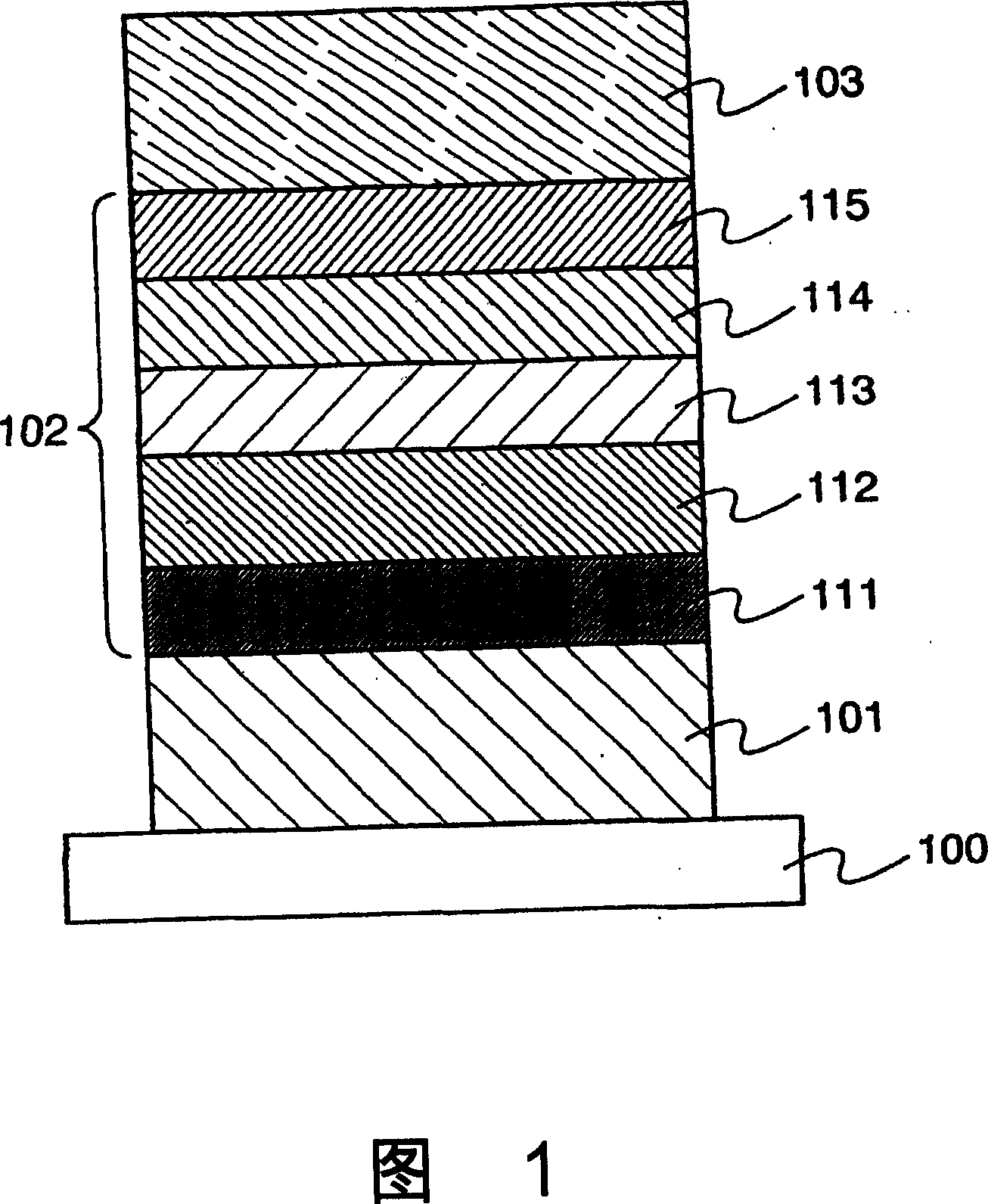
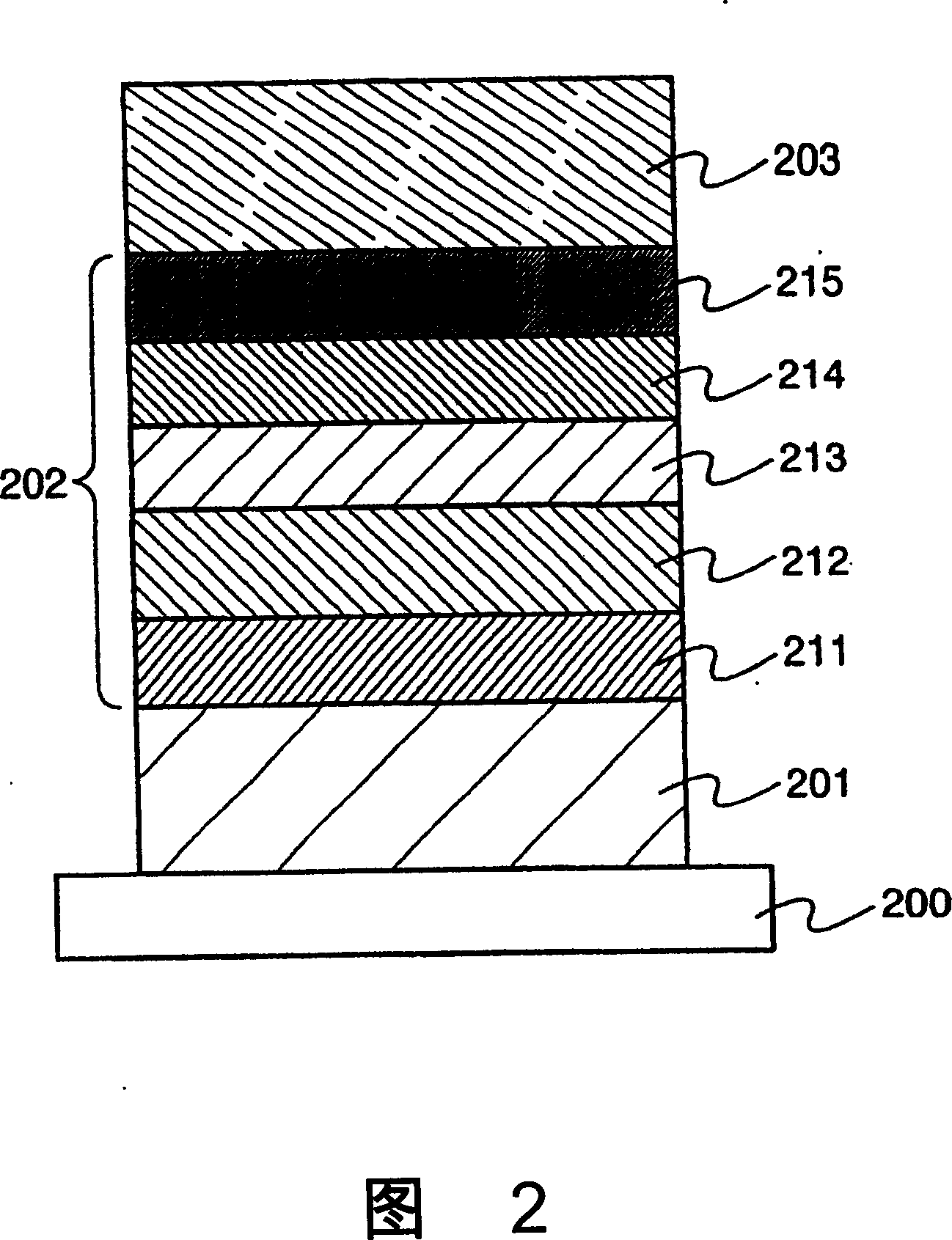
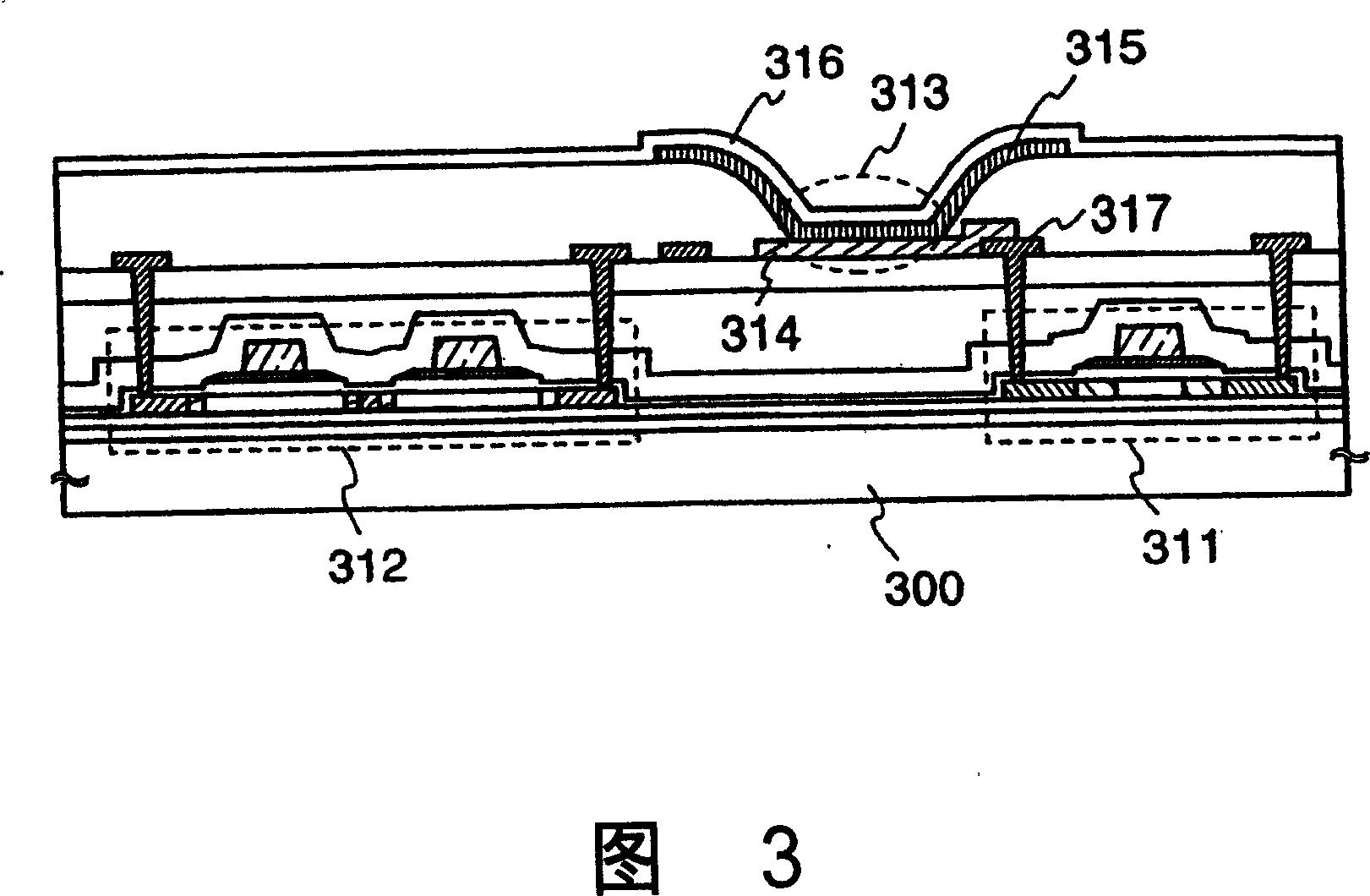
[0275] Hereinafter, the present invention will be described in detail based on embodiments. However, naturally the present invention is not limited to these embodiments. First, synthesis examples of organometallic complexes used in the light-emitting device of the present invention and properties of these organometallic complexes will be described. Then, the structure of the light-emitting device of the present invention and its manufacturing method will be described, and examples of light-emitting devices will be described.
Embodiment approach 1
[0276] [Embodiment 1: Synthesis example of organometallic complex and properties of the complex]
Synthetic example 1
[0278] This synthesis example is {2,3-bis(4-fluorophenyl)quinoxalinato (quinoxalinato)} (acetylacetonato) iridium (III) represented by formula (16) (abbreviation: Ir(Fdpq) 2 (acac)) synthesis example.
[0279]
[0280] First, 3.71 g of 4,4'-difluorobenzoyl and 1.71 g of o-phenylenediamine were heated and stirred in a solvent (200 mL of chloroform) for 6 hours. The reaction solution was cooled to room temperature, washed with HCl (1N) and a saturated aqueous solution of sodium chloride, and dried over magnesium sulfate. The solvent was removed to obtain the ligand HFdpq (2,3-bis(4-fluorophenyl)quinoxaline) (pale yellow powder, yield: 99%).
[0281] The synthesis scheme and structural formula of the ligand HFdpq are shown in the following formula (60).
[0282]
[0283] 2 Cl] 2 >
[0284] Using a mixture of 30 mL of 2-ethoxyethanol and 10 mL of water as solvent, with 3.61 g of ligand HFdpq (2,3-bis(4-fluorophenyl)quinoxaline) and 1.35 g of iridium chloride (IrCl 3 ·HCl...
PUM
| Property | Measurement | Unit |
|---|---|---|
| thickness | aaaaa | aaaaa |
| thickness | aaaaa | aaaaa |
| thickness | aaaaa | aaaaa |
Abstract
Description
Claims
Application Information
 Login to View More