However, as the metal solidifies it shrinks, resulting in shrinkage cavities which in turn result in unacceptable imperfections in the final casting.
The application of the moulding sand and subsequent high pressures may cause damage and breakage of the feeder sleeve, especially if the feeder sleeve is in direct contact with the pattern plate prior to ram up, and with increasing casting complexity and productivity requirements, there is a need for more dimensionally stable moulds and consequently, a tendency towards higher ramming pressures and resulting sleeve breakages.
The feeder sleeve (102) is in direct contact with the pattern (122), which can be detrimental when an exothermic sleeve is employed since it can result in a poor
surface finish, localised
contamination of the casting surface and even sub-surface casting defects.
This is unsatisfactory in terms of knock-off and the space taken up by the feeder system on the pattern.
The retaining elements will build up in the moulding sand over time and thereby contaminate it.
This is particularly troublesome where the retaining elements are made from exothermic material since they may react creating small explosive defects.
Certain grades of
ductile iron and particular casting configurations may adversely influence the effectiveness of feed performance through the neck of certain metal feeder elements.
Additionally, certain moulding lines or casting configurations may result in over compression (collapsing of the feeder element or telescoping of the feeder system) resulting in the base of the sleeve being in close proximity to the casting surface separated by only a
thin layer of sand.
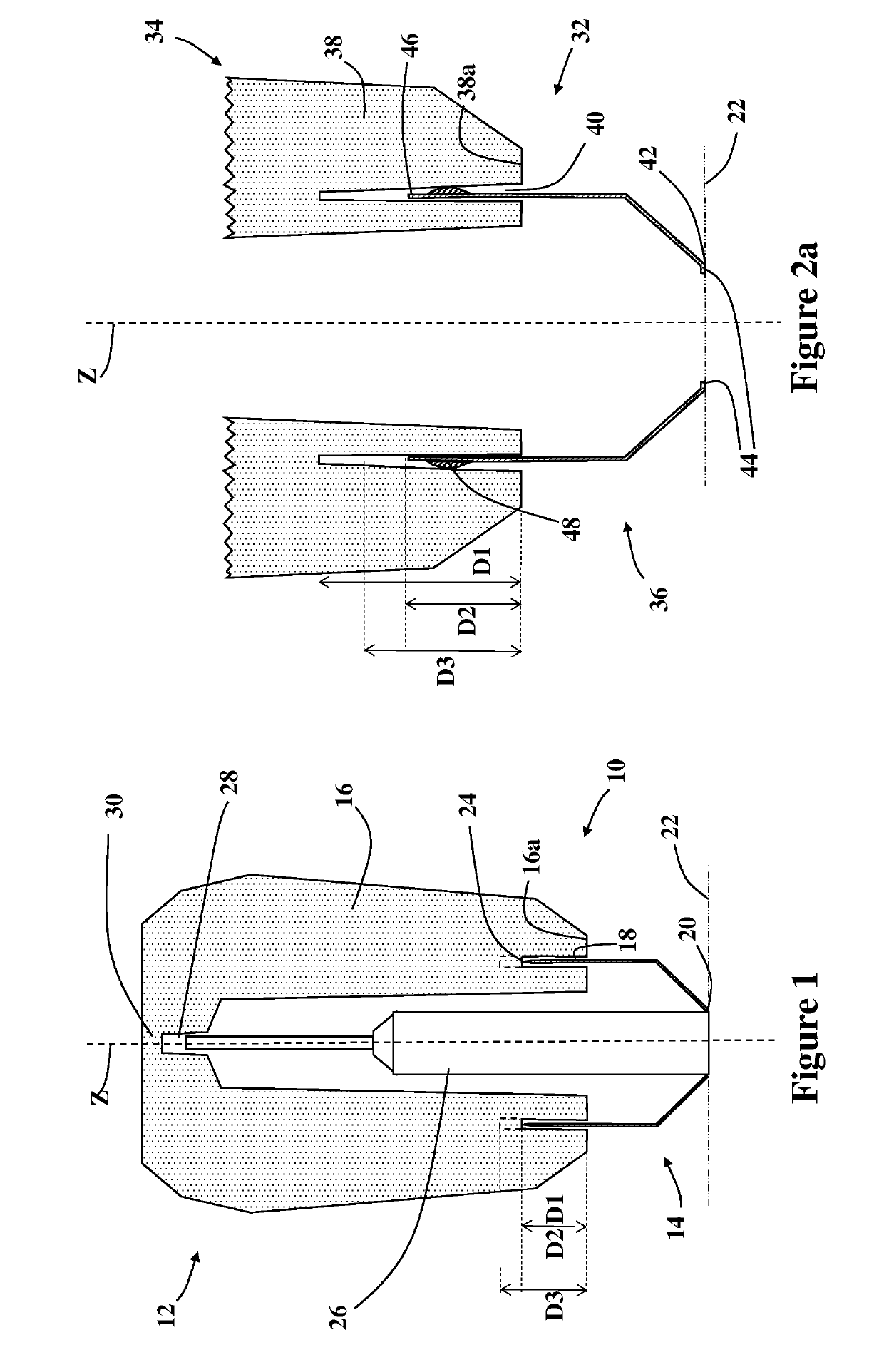
Hence, the high
compression pressure causes relative movement between the feeder sleeve and the tubular body rather than uncontrolled breakage of the feeder sleeve that may result in defects in the casting.
A
sharp point can pierce the feeder sleeve material and may gouge out a channel during ram-up.
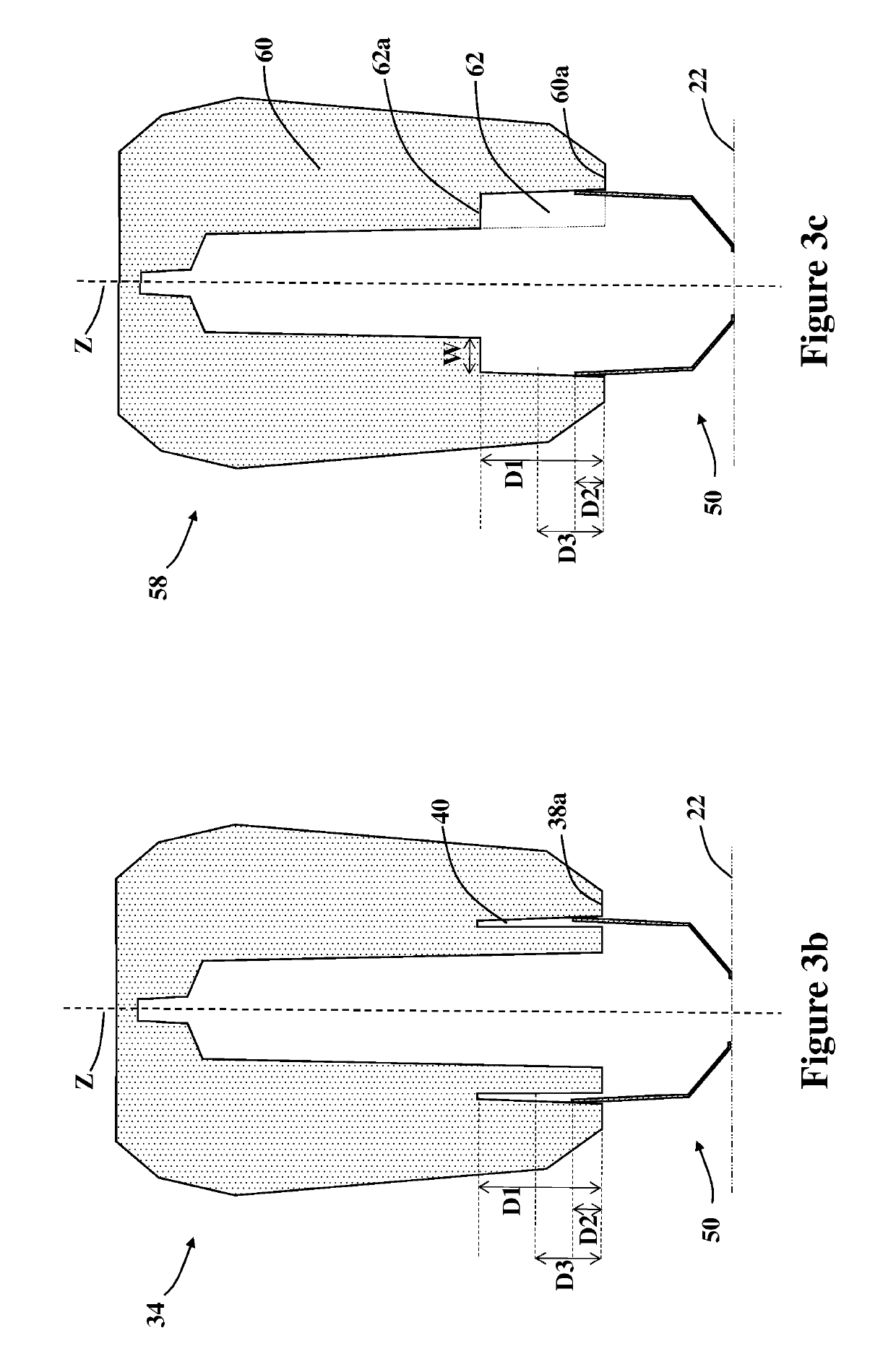
Feeder sleeve material is not generally strong enough to withstand moulding pressures at small thickness, whereas a thicker tubular body requires a wider cut-out in the sidewall and therefore increases the size (and associated cost) of the feeder system as a whole.
Additionally, a tubular body comprising feeder sleeve material may also cause poor
surface finish and defects where it is in contact with the casting.
However, care must be taken to ensure that the system is not closed; there is a risk that moulding sand would penetrate into the feeder sleeve through any gaps between the edge of tubular body and the feeder sleeve.
Neither is its mode of manufacture particularly limited, it may be manufactured for example using either the vacuum-forming process or core-shot method.
This movement and contact of the roof with the pin may cause small fragments of sleeve to break off and fall into the casting cavity, resulting in poor casting
surface finish or localised
contamination of the casting surface.


 Login to View More
  Login to View More