Fiber-reinforced composite structure

a composite structure and fiber reinforcement technology, applied in the field of fiber reinforcement composite structures, can solve the problems of relative viscosity core materials that cannot rapidly fill the cavity, cannot rapidly and fully penetrate or impregnate fibrous layers, and prior art composite structures tend to be relatively weaker than otherwise desired

US20020102390A1Inactive Publication Date: 2002-08-01SABIC GLOBAL TECH BV
60 Cites 28 Cited by

Patent Information

Authority / Receiving Office
US · United States
Patent Type
Applications(United States)
Current Assignee / Owner
Publication Date
2002-08-01
Estimated Expiration
Not applicable · inactive patent

Smart Images

  • Figure 1
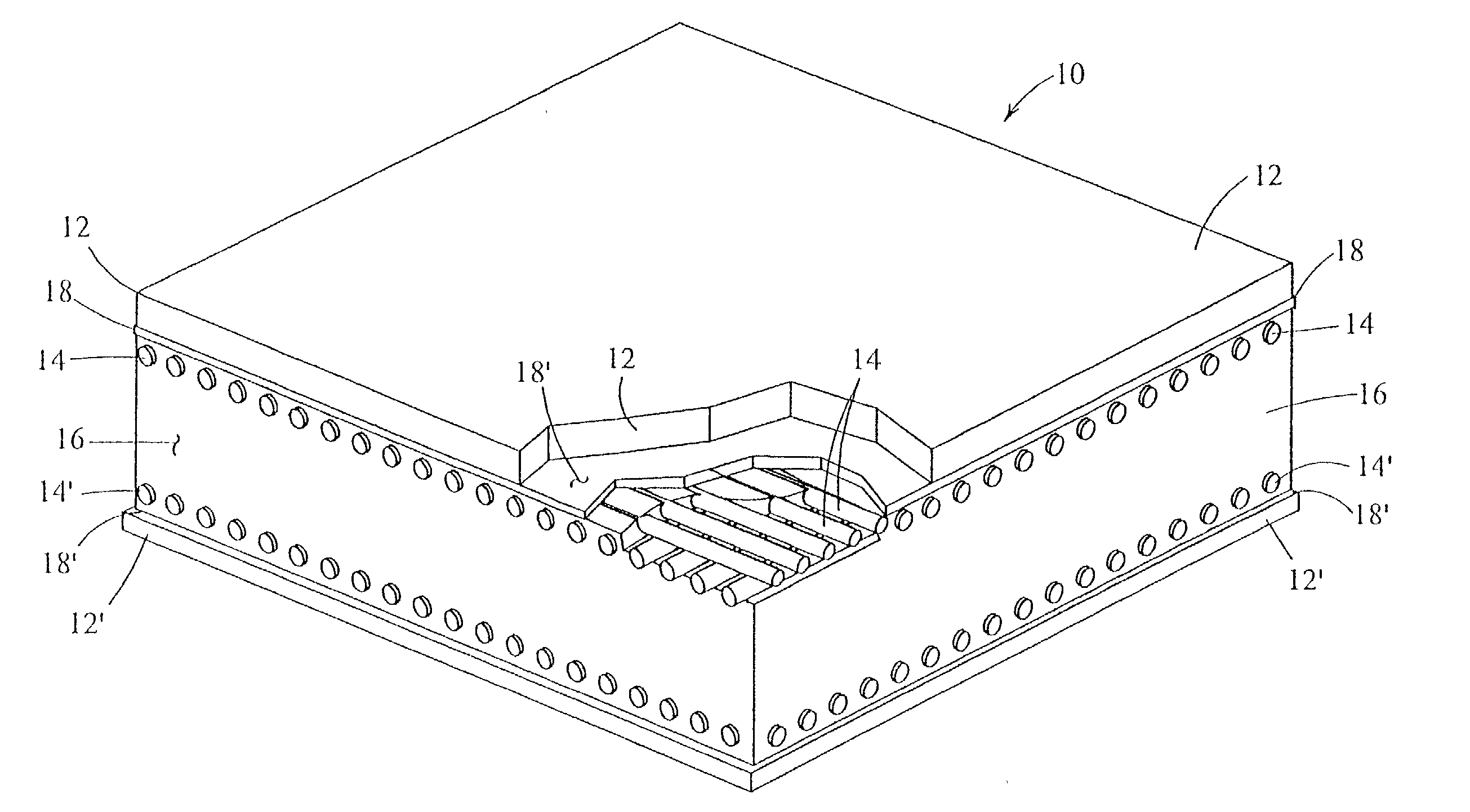
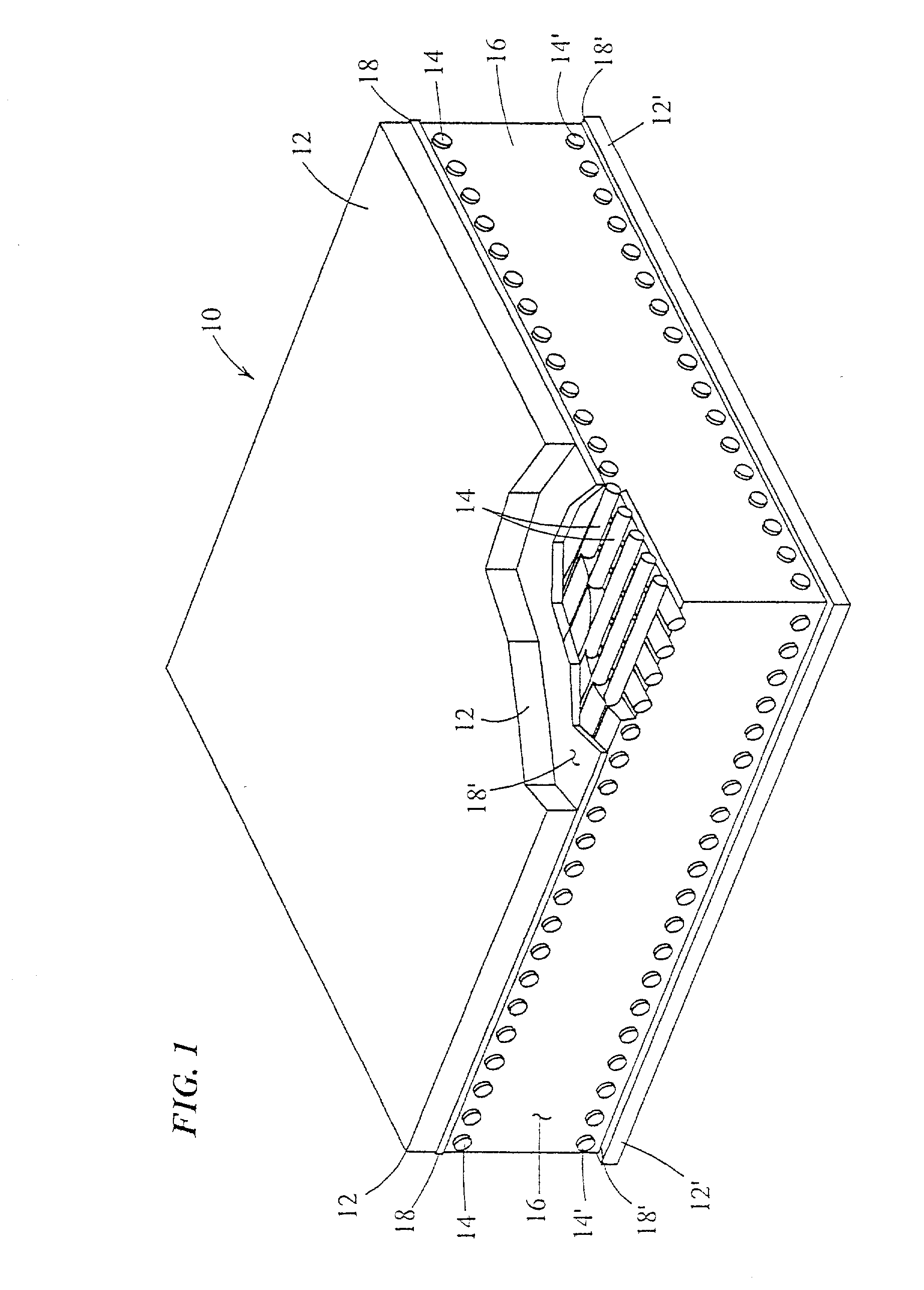
    Figure 1
  • Figure 2
    Figure 2
  • Figure 3
    Figure 3
Patent Text Reader

Abstract

A fiber-reinforced composite structure has two molded outer polymeric layers spaced apart from each other and defining a cavity therebetween. Each molded outer polymeric layer defines a sealing surface extending about a periphery of the respective layer, and the opposing sealing surfaces cooperate to define a hermetic seal extending about a periphery of the cavity. One or more multi-directional fiber reinforcement layers are adhesively attached in a discontinuous manner to each outer polymeric layer, and define a first region of the cavity extending between each respective outer polymeric layer and adjacent fiber reinforcement layer, and a second region of the cavity extending between the fiber reinforcement layers. A core is located between the two outer polymeric layers, and is made of a resinous core material capable of exhibiting a foamed character and a resinous character. The resinous core material has a blowing agent activatable upon exposure to a predetermined vacuum pressure within the cavity to convert the core material within the second region of the cavity from a resinous character to a foamed character and thereby fill the second region of the cavity with the foamed core material. Each multi-directional fiber reinforcement layer is impregnated with the core material exhibiting a relatively dense, resinous character, and each first region of the cavity is substantially filled with the core material exhibiting a resinous character to fixedly secure the multi-directional fiber reinforcement layers to the outer polymeric layers. A structural insert, such as a rigid plate adapted to receive fasteners, is embedded within the core material for attaching other devices or structures thereto.
Need to check novelty before this filing date? Find Prior Art

Description

[0001] The present invention relates to composite fiber-reinforced polymeric structures, and more particularly, to composite fiber-reinforced polymeric structures having at least two polymeric sheets in opposed spaced relationship such that a cavity is formed therebetween, at least one fibrous reinforcing layer bonded to the inner surface of at least one of the polymeric sheets, and a polymeric core material introduced under vacuum into the cavity between the polymeric sheets. The polymeric core material exhibits a resinous character in the region of the fibrous reinforcing layer to impregnate the fibrous layer and adhere the fibrous layer to the adjacent polymeric sheet, and exhibits a foamed character defined by a multiplicity of foam cells in the region on the opposite side of the fibrous layer relative to the polymeric sheet. The present invention is particularly suitable for forming relatively large composite structures, such as structural components for automobiles, trucks, re...

Examples

Embodiment Construction

of The Polymeric Core Material

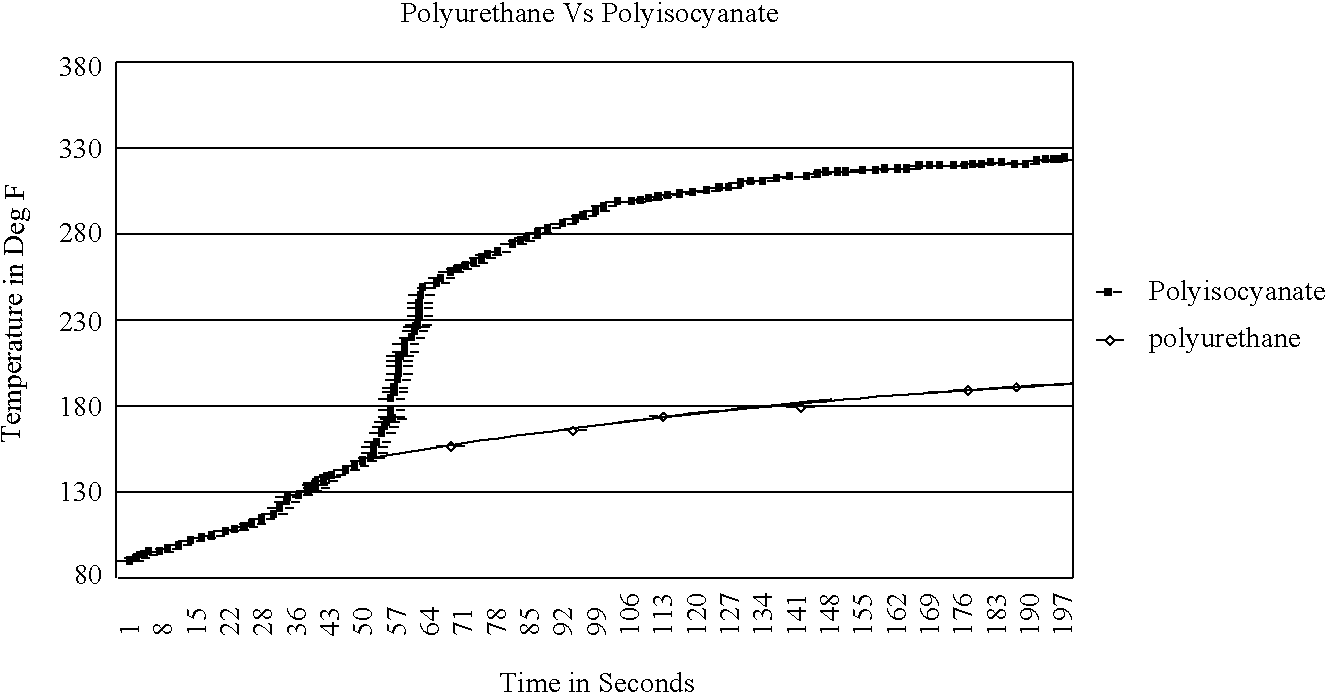
[0117] The process for producing a preferred embodiment of the polymeric core material 16 of the present invention comprises forming a polyurethane foam including:

[0118] i. Contacting a polyol mixture, an isocyanate, a blowing agent, and a catalyst to produce a reaction; and

[0119] ii. Expanding the reaction mixture to produce the polyurethane foam.

[0120] The first step in the process of the invention comprises provision of a reaction mixture comprising a polyol mixture, an isocyanate, a blowing agent, and a catalyst. As will be readily understood by one skilled in the pertinent art, the polyol mixture can be a single polyol, or can be a blend of two or more polyols. The exact chemical nature of each polyol is not particularly restricted. For example, the polyol can be made with one or both of ethylene oxide and propylene oxide, and may be a random or block polymer of one or more of polyoxypropylene diols, triols and tetrols, and ethylene oxide-capped di...