

Human prostate cell lines in cancer treatment
a prostate cancer and human prostate technology, applied in the field of human prostate cancer treatment, can solve the problems of lack of targeting capability, inability to meet the expectations of monoclonal antibodies, and insufficient non-specific immunomodulation to treat the majority of cancers, etc., and achieve the effects of increasing psa doubling times, increasing psadt, and increasing psad
- Summary
- Abstract
- Description
- Claims
- Application Information
AI Technical Summary
Benefits of technology
Problems solved by technology
Method used
Image

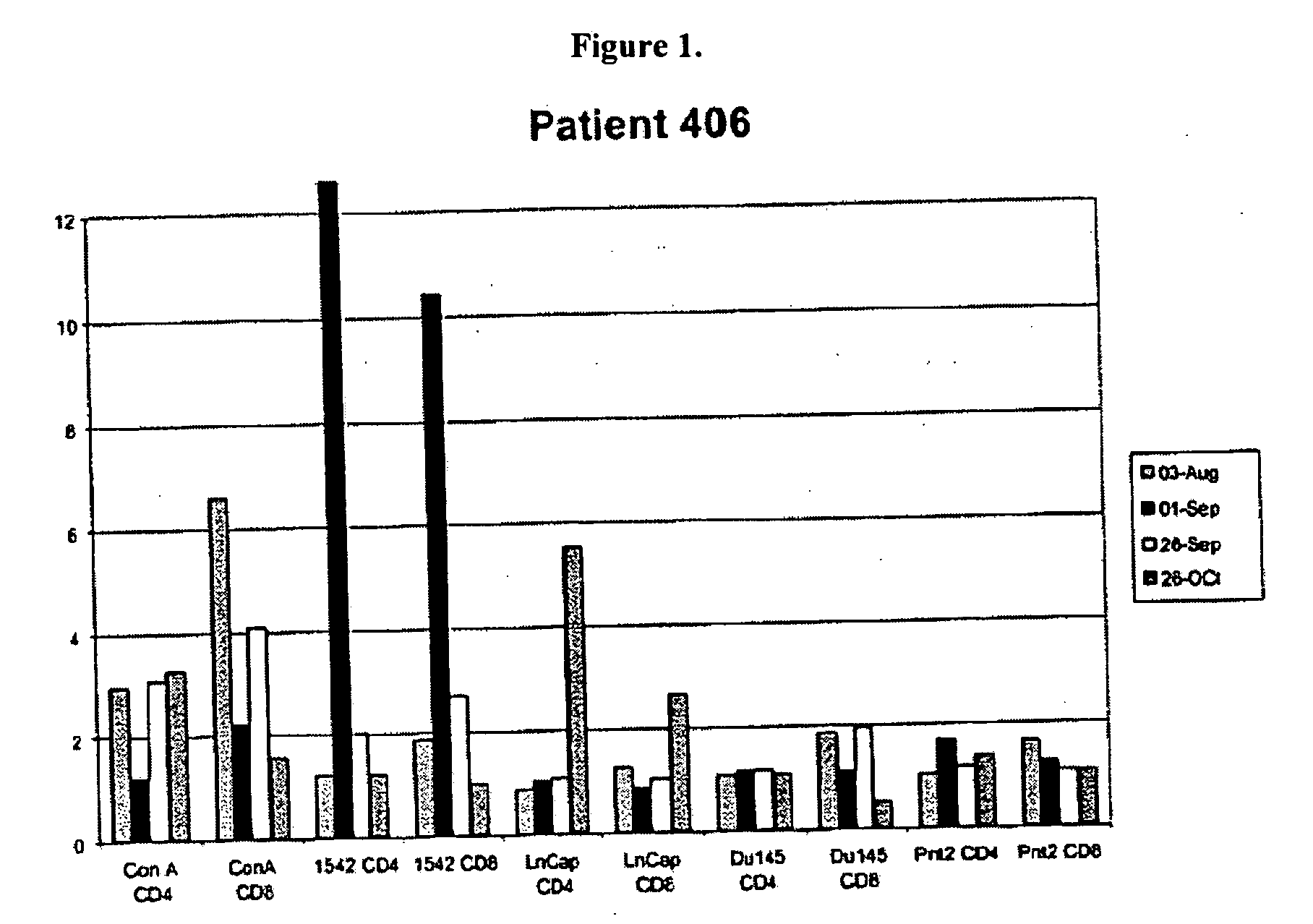
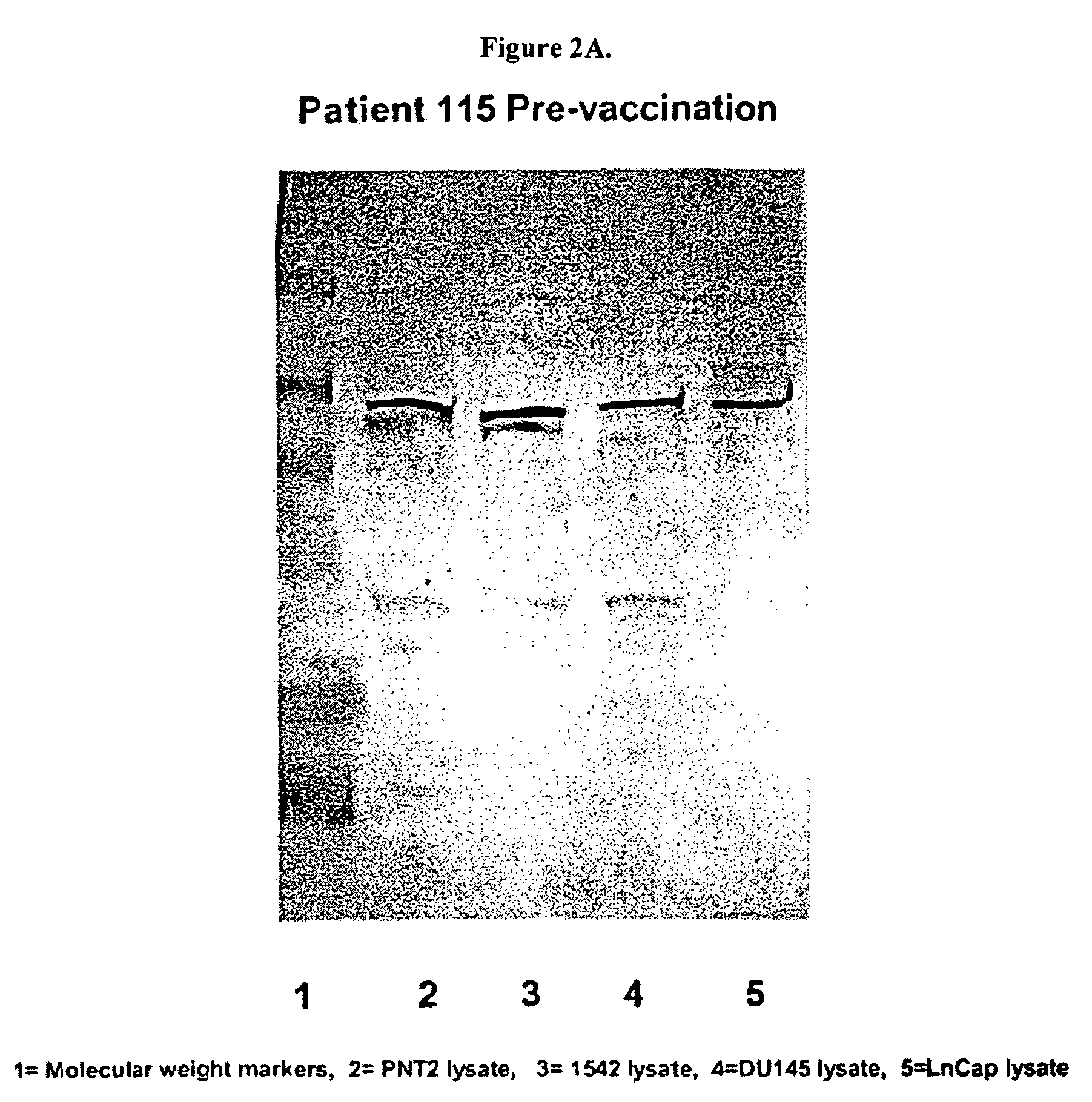
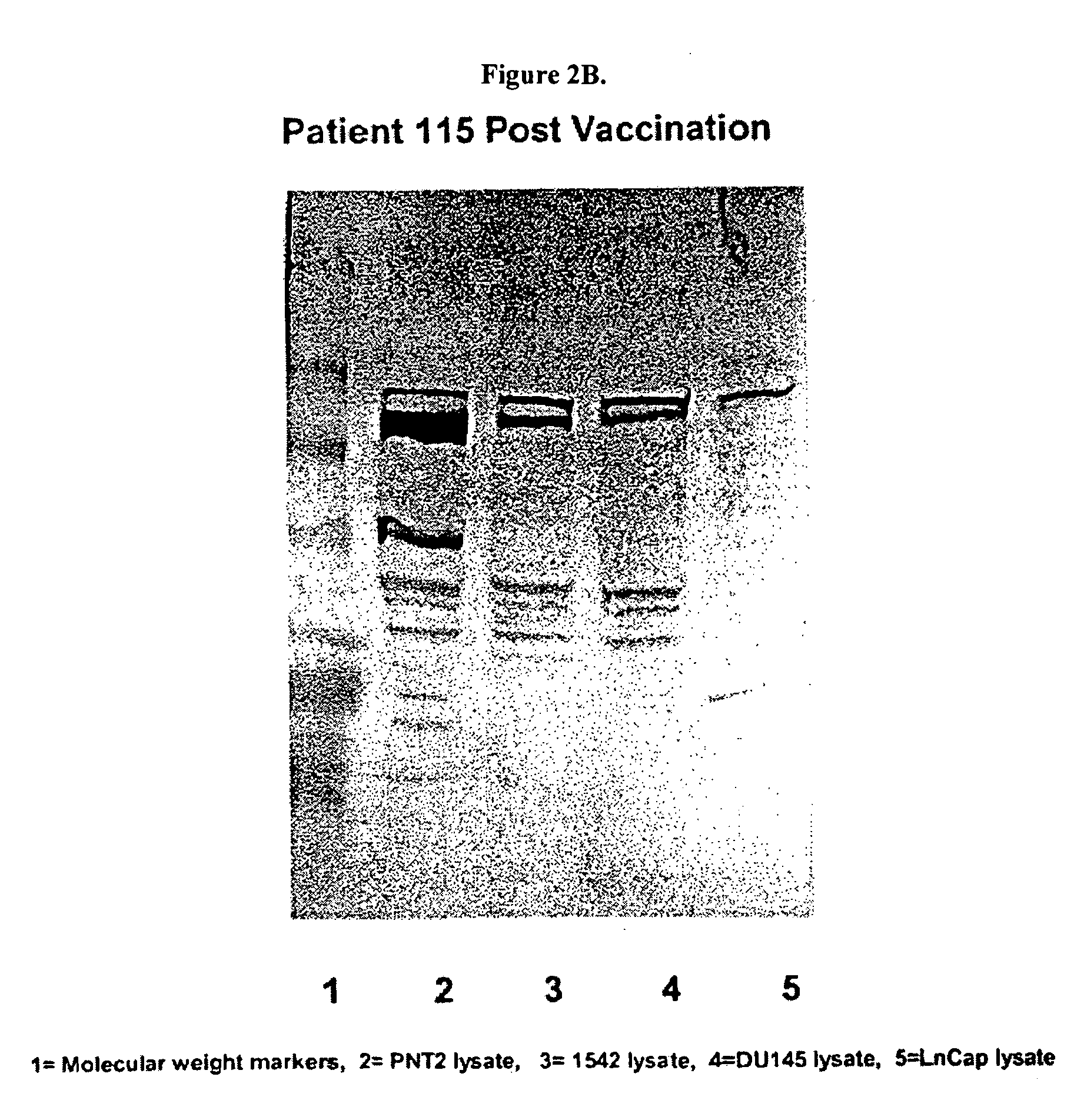
Examples
example 1
Growth, Irradiation, Formulation and Storage of Cells
[0060] An immortalised cell line derived from normal prostate tissue namely PNT2 was grown in roller bottle culture in RPMI 1640 media supplemented with 2 mM L-glutamine and 5% fetal calf serum (FCS) following recovery from liquid nitrogen stocks. Following expansion in T175 static flasks the cells were seeded into roller bottles with a growth surface area of 850 cm at 1-20×107 cells per roller bottle.
[0061] An immortalized cell line derived from primary prostate tissue namely NIH1542-CP3TX (ATCC No. CRL-12037) was grown in roller bottle culture in KSFM media supplemented with 25 μg / ml bovine pituitary extract, 5ng / ml of epidermal growth factor, 2 mM L-glutamine, 10 mM HEPES buffer and 5% fetal calf serum (FCS) (hereinafter called “modified KSFM”) following recovery from liquid nitrogen stocks. Following expansion in T175 static flasks the cells were seeded into roller bottles with a growth surface area of 1,700 cm2 at 2-5×10⁷ c...
example 2
Use of a Normal Melanocyte in a Murine Melanoma Protection Model Model
[0080] A normal melanocyte cell line was used in a vaccination protection model of murine melanoma utilising the B16.F10 as the challenge dose. The C57 mice received two vaccinations of either PBS, 5×10⁶ irradiated K1735 allogeneic melanoma cells or 5×10⁶ irradiated Melan P1 autologous normal melanocyte cells on days −14 and −7. Challenge on day 0 was with 1×10⁴ B16.F10 cells and tumor volume measured every three days from day 10 onwards. Animals were sacrificed when the tumor had grown to 1.5×1.5 cm measured across the maximum dimensions of the tumor. It was found that that vaccination with MelanIP cells offer some level of protection against this particularly aggressive murine tumour, as seen in FIG. 5.
example 3
Phase I / II Study
[0081] A phase I / II study was carried out with three types of allogeneic cells representing a normal prostate cell line, a prostate tumour derived cell line and a metastasised tumour cell line. A combined cell vaccine was given to patients having hormone refractory prostate cancer and safety, tolerability and efficacy, as measured by effect on survival and quality of life determined. The following criteria were used for inclusion of patients: patients of any age with histologically confirmed prostate cancer; patients with hormonal refractory disease following optimal first line LHRH treatment, or high dose bicalutamide (150 mg per day), or orchidectomy; progressive disease indicated by a rise in serum PSA on at least 2 successive occasions separated by at least 4 weeks; serum PSA level of at least 2 ng / ml at Week −2; WHO Performance Status of 0-2 at Week −4; a life expectancy of at least 6 months; the ability of the patient to read and understand the patient informa...
PUM
| Property | Measurement | Unit |
|---|---|---|
| surface area | aaaaa | aaaaa |
| volume | aaaaa | aaaaa |
| volume | aaaaa | aaaaa |
Abstract
Description
Claims
Application Information
 Login to View More